
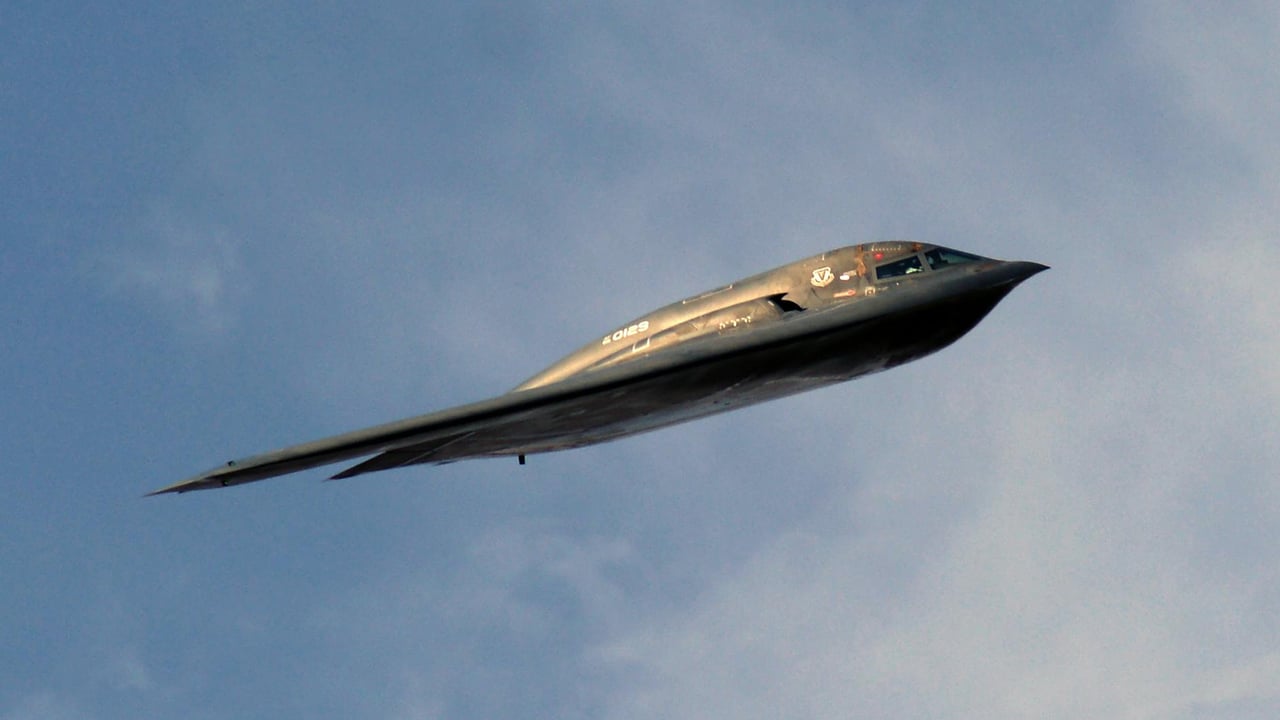

Video footage filmed at RAF Fairford and posted by a British journalist shows US Air Force B-1B strategic bombers undergoing weapons preparation that appears to include the removal of Launcher Load Frames and the staged presence of AGM-158 JASSMs and 2,000‑lb GBU‑31 JDAMs, specifically the BLU‑109 penetrator variant. The imagery suggests crews are preparing the aircraft to carry large, penetrator-equipped glide bombs internally — a capability that changes what targets those bombers could feasibly engage.
The move from cruise missiles to bomber-dropped JDAMs would raise both the scale and flexibility of strikes. JDAMs are cheaper and more numerous than long‑range cruise missiles and the BLU‑109‑based GBU‑31(V)3/B is designed for hardened and underground facilities, tasks previously reserved for stealth platforms like the B‑2 or achievable only in limited numbers by strike fighters.
Analysts note that the arming pattern seen on the ground may reflect growing local air superiority over parts of Iran that was not assured a week earlier. If the US can sustain enough control of contested airspace to dispatch non‑stealth bombers, campaign tempo and target sets can expand beyond what long‑range cruise missiles alone would deliver.
Operationally, the United States has concentrated bomber assets at RAF Fairford: recent arrivals brought the number of US strategic bombers at the base to about 15, including three B‑52s and as many as a dozen B‑1Bs. British Prime Minister Keir Starmer authorised US use of UK bases — a remit that also covers Diego Garcia — though it remains unclear whether the Indian Ocean outpost will be activated; large transports have moved in that direction and support aircraft remain staged there.
Potential targets for a bomber campaign include facilities associated with long‑range missile production, command‑and‑control bunkers, nuclear‑related infrastructure and the access points of underground missile storage. Striking those kinds of hardened or subterranean sites with non‑stealth bombers would materially broaden the potential effects of a campaign and could shorten the time needed to degrade such infrastructure compared with relying mostly on cruise missiles.
Constraints and risks persist. US and Israeli efforts over recent weeks have focused on suppressing and destroying Iranian air‑defence systems in western and coastal regions, and commanders are reportedly hesitant to expose heavy bombers to higher threat over eastern Iran. Logistics — tankers, basing, and munitions throughput — and political limits imposed by host nations also shape what is practicable.
The deployment carries strategic consequences well beyond the immediate battlefield. Hosting and arming US heavy bombers ties the UK more directly to potential kinetic escalation, raises the prospect of retaliatory attacks against US, British or regional assets, and complicates diplomatic avenues for de‑escalation. Observers should watch for bomber sorties, Diego Garcia activation, and any shifts in Iranian air‑defence posture or regional proxy responses as early indicators of a campaign widening.