
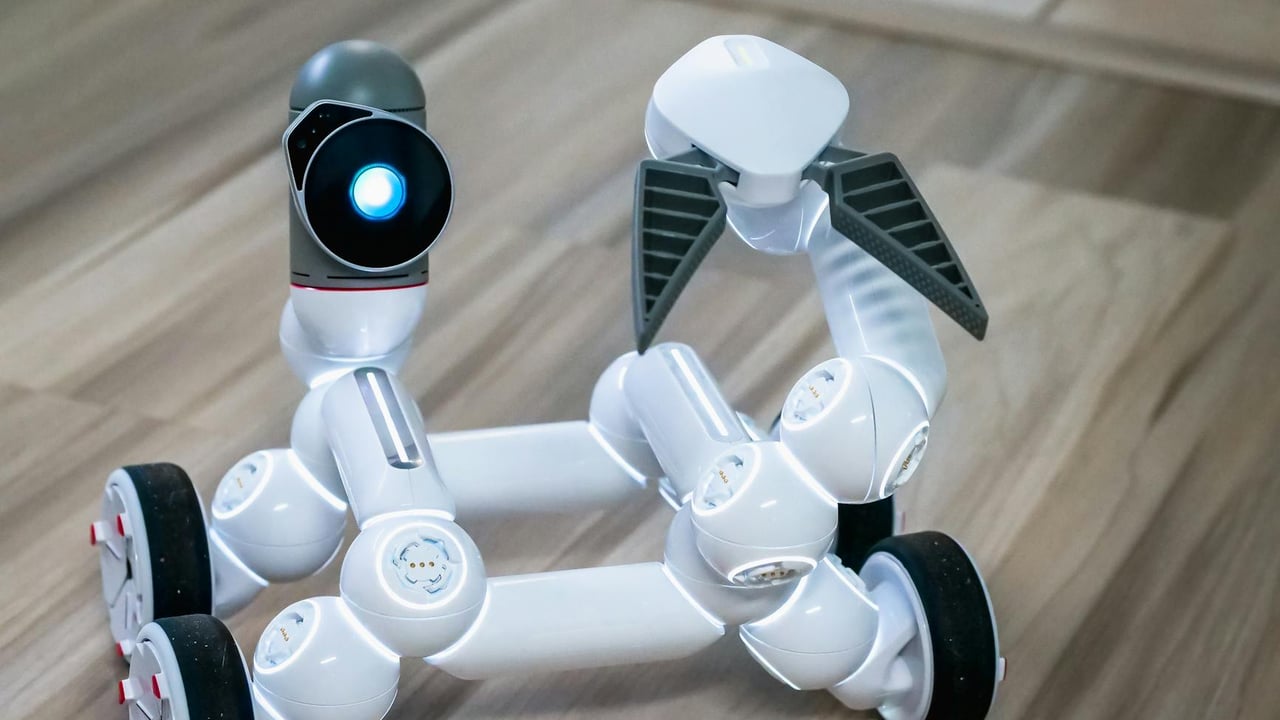

A late-night project-change notice from Zhejiang Rongtai has effectively punctured the company’s nearly year-long “robot” narrative. The firm announced it will replace an earlier plan to build a production line for 1.4万吨 mica paper, 4,500 tonnes of mica products and 7 million robot components in Thailand with two separate projects: a 1.4万吨 insulation and fire‑proof materials and 4,500‑tonne deep‑processing line, and a 7 million‑unit industrial lead‑screw manufacturing line. Investment amounts, implementation paths and the operating entities will also change, though the company says other terms remain the same and production is expected to start before the end of 2026.
The shifts are concrete. Zhejiang Rongtai plans to invest about $33 million (through a wholly owned subsidiary) to build the insulation materials and deep‑processing facility, buying roughly 250 pieces of equipment; a separate $38.9 million investment will fund around 500 machines to produce 7 million industrial lead screws. The company described the change as driven by business optimisation and regulatory filing compliance, and said splitting the original project should improve operational efficiency and better match market demand.
That explanation is pragmatic, but it also removes a splashy layer of narrative the market had rewarded. Rongtai’s core business is high‑temperature insulating mica products—used in EV thermal runaway protection, consumer appliances and cable insulation—and it is a market leader. Frost & Sullivan data cited by the company show the global new‑energy‑sector mica market swelling from roughly RMB 300 million in 2020 to RMB 4 billion in 2024, a compound annual growth rate around 85%; Rongtai estimates a 22.6% global market share in 2024 and the No. 1 position in China.
Despite market leadership in mica materials, the company has struggled to sustain a valuation premium on the basis of commodity‑like materials alone. In 2025 Rongtai moved aggressively into precision mechanical components—acquiring a 51% stake in Shanghai Diz Precision for RMB 165 million and buying 15% of Guangdong Jinli Transmission for RMB 101 million—and in December disclosed the ambitious Thailand project that explicitly included robot components. Those M&A moves and frequent announcements around humanoid and industrial robots helped send the share price from roughly RMB 20 at the start of the year to a peak near RMB 115, a rise of more than 400%.
The rally produced cashing‑out by several shareholders. Institutional and insider reductions were recorded through 2025: an institutional holder sold down in June, while company directors and related parties trimmed positions at various points, realising sizeable proceeds. A planned executive sell‑down announced for early 2026 was later terminated and, as of the company’s January disclosure, the named executives had not carried out further disposals.
For international readers, the episode illustrates how industrial stories—especially anything tied to robots—can disproportionately re‑rate commodity manufacturers in Chinese equity markets. It also highlights the limits of narrative‑driven valuation: the revised project is more prosaic, reasserting the company’s roots in electrical insulation and in precision mechanical parts such as lead screws rather than the higher‑status “robot components” label.
The practical stakes are clear. Building insulation materials and screw production in Thailand may deliver cost advantages and easier export logistics, and splitting the project could smooth regulatory clearance. Yet the commercial upside of producing industrial lead screws depends on winning manufacturing contracts in a capital‑intensive, competitive sector; the new project is less likely to persuade investors to maintain the frothy multiples assigned during the robot rally. Execution risk—overseas project delivery, procurement of hundreds of machines, and achieving stable customer orders—will determine whether the company’s repositioning generates sustainable returns or merely restores a more ordinary industrial multiple.