
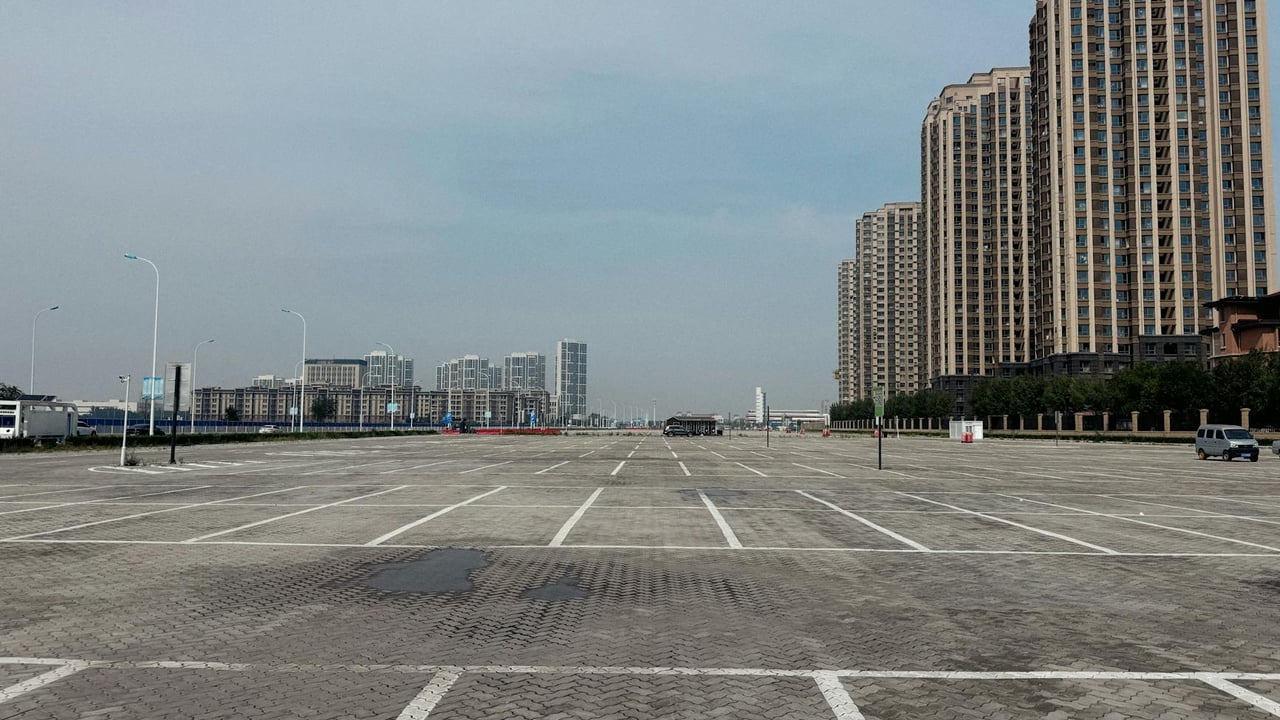

A joint notice from China’s Ministry of Natural Resources and the National Forestry and Grassland Administration saying that “newly added construction land, in principle, should not be used for commercial real-estate development” prompted a flurry of headlines claiming the government had cut off land supply to developers. The interpretation is overblown: the phrase targets a specific category of land quota, not the broader universe of developer land, and is intended to reallocate scarce incremental land to public goods rather than to bring the market to a halt.
“Newly added construction land” (新增建设用地) refers to incremental conversion of non-construction land — farmland, forest, wasteland and other rural uses — into land legally approved for construction. That incremental quota is limited and has long been earmarked mainly for infrastructure, major state projects, schools, hospitals and subsidized housing. Many commentators conflated this incremental category with the total pool of land developers access through auctions, urban renewal and redevelopment of existing built-up areas.
In practice, most land that private developers use already comes from the stock of urban land: parcels released by old-town renovation, factory relocations, and planned construction sites sold through auction or tender. Even if a small share of developers’ parcels originates from newly converted land, it is marginal relative to overall supply. The new notice therefore reiterates a longstanding administrative distinction rather than instituting an abrupt moratorium on developer land.
The timing matters: 2026 marks the start of the 15th Five‑Year Plan period, when Beijing has signalled a twin priority of safeguarding arable land and ecological redlines while promoting higher-quality urban growth. The guidance reiterates the policy goal of “optimising new supply and activating stock” and introduces a quantitative discipline: except for projects that need special siting — such as energy, transport and water infrastructure — newly added construction land in each locality should not exceed the area of stock land that is activated in the same year, in effect “one acre activated before one acre added.”
That constraint aims to curb outward, low-density urban sprawl and to nudge local governments and developers toward brownfield redevelopment, urban infill and repurposing idle land. Beijing has already taken steps to facilitate that transition: in 2025 the Ministry of Natural Resources, working with the Ministry of Finance, guided issuance of more than Rmb540 billion in special-purpose bonds to acquire and consolidate idle stock land so it can be cleaned up and offered as ready-to-develop parcels.
For the property sector the rule is less a cut-off than a signal of the next phase of reform. Developers that specialise in greenfield, peripheral projects will face tighter choices; firms with capacity for complex urban renewal, conversion of low-efficiency land and projects in well-served central locations will be advantaged. Local governments that rely heavily on land-sale revenue may encounter fiscal strain unless they accelerate stock activation or find alternative revenue sources.
Market implications are nuanced. The policy could lift the strategic value of well-located, quality plots and accelerate competition for central sites, putting upward pressure on prices for desirable stock land while reducing speculative greenfield expansion. Credit risks for marginal developers could rise if their business models depend on abundant newly converted land. Much will depend on local implementation and the practical availability of activated stock parcels, and on how exceptions for large infrastructure projects are applied.
Viewed in a broader policy arc, the notice fits Beijing’s longer-term push to rebalance the real-estate sector and urban development: restrain destructive land conversion, prioritise public goods and urban quality, and shift the industry from scale-driven growth to product, service and quality. It is a recalibration of supply-side tools rather than an immediate shock to housing delivery, but it will redistribute opportunities and pressures across the sector as local authorities and developers adapt.