

In mid-March Shanghai, the China Home Appliance and Consumer Electronics Expo (AWE 2026) felt less like a trade show and more like a preview of tomorrow’s household. Under the theme “AI technology, smarter life,” exhibitors staged everyday miracles: robots that climb stairs to clean, wheeled machines that fold clothes, AI glasses that translate and play music in real time, and fully automated kitchen arrays that cook and wash without human hands. The mood was electric and pragmatic — companies were no longer showing speculative demos but products aimed at immediate deployment in ordinary homes.
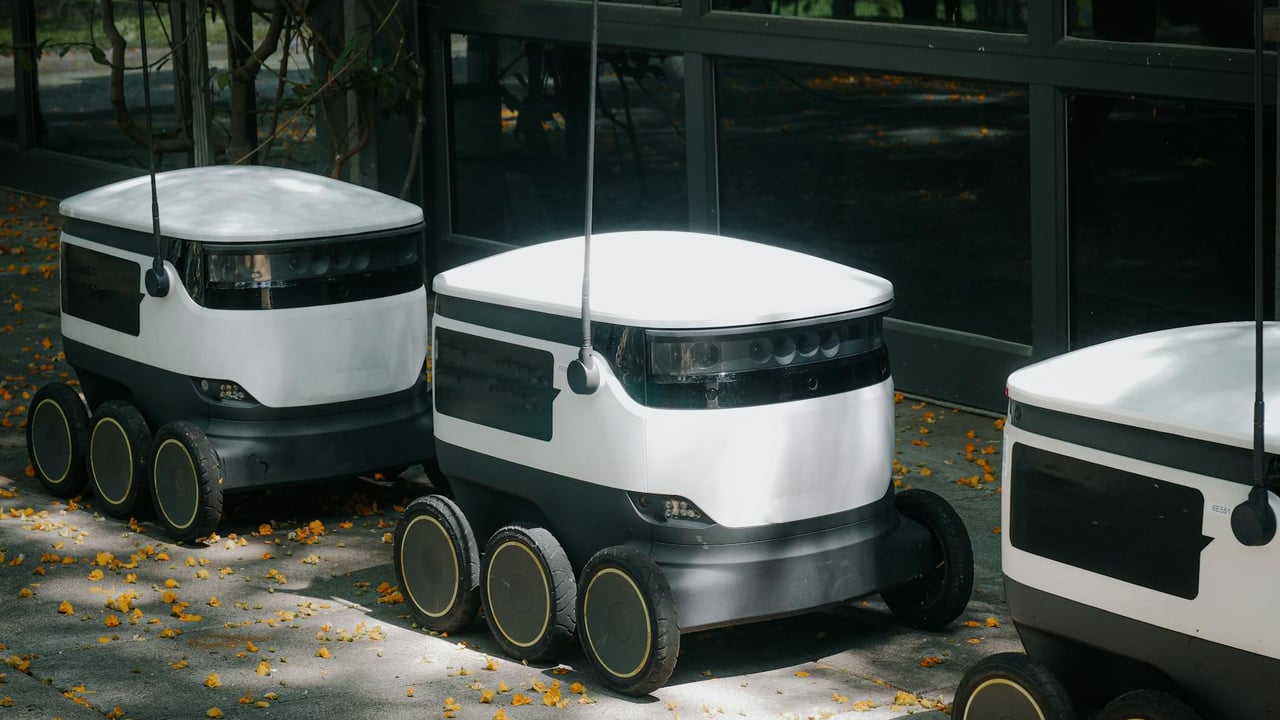
A conspicuous shift at AWE was the rising consensus around wheeled, embodied robots for domestic use. Several high-profile booths — Dreame (追觅科技), FOTILE (方太), Zeroth/Yuandian (元点智能) — showcased robots with wheel-based bases combined with articulated arms. Dreame’s vacuum pavilion and FOTILE’s debut of a “robotic kitchen” both prioritized stability, cost and rapid time-to-market over humanoid aesthetics. Executives and academics at the show framed this as a sober engineering choice: four wheels and a manipulator beat bipedal designs for endurance, safety and price in the messy, obstacle-filled home environment.
Behind the new hardware is a deeper AI transition. Exhibitors emphasized a move beyond large language models as pure chat engines toward two related frontiers: edge AI and embodied intelligence. Alibaba’s Qianwen assistant has been miniaturized into wearable AI glasses, while hearing-aid maker Orka unveiled an O1 Pro that runs bespoke speech-enhancement models on-device to shave latency down to milliseconds. Meanwhile, startups and incumbents are adopting “agent” frameworks that convert language understanding into sustained, goal-directed action inside physical products.
That agent trend is visible in the spread of OpenClaw — nicknamed the “AI lobster” or “xiaolongxia” in China — an open-source agent architecture that shifts interactions from conversational turn-taking to continuous task execution. Several exhibitors said they will integrate OpenClaw-style agents into household robots during their next product cycles. The payoff is clear: agents can maintain memory across tasks, plan multi-step chores and autonomously sense and correct failures, turning a vacuum or helper bot into something closer to a domestic servant.
Another strand of development at AWE was a push toward “physical” or embodied large models. Domestic teams unveiled base models intended to bridge perception, cognition and motor control — the software counterpart to China’s mature robot chassis industry. Presenters argued that mastering embodied foundation models is the real strategic bottleneck for robotics: hardware can be manufactured at scale in China, but endowing machines with robust, general-purpose physical intelligence remains a hard, research-heavy problem.
Commercial strategy followed technological advances. Established consumer brands presented integrated ecosystems, not just single devices. Haier publicly mapped AI-enabled lifestyle scenarios and expanded its family-robot portfolio; Dreame promoted a “people-car-home” chip-and-cloud ecosystem and described aggressive global ambitions after achieving high overseas revenue in 2025. Chip-maker MOVA disclosed plans that extend beyond appliances into 3D printing and aerial mobility, signaling how suppliers see new adjacencies for embodied AI.
China’s strengths — dense component supply chains, scale manufacturing and a large, data-rich home market — give its robotics players advantages in lowering costs and iterating quickly. Yet the show also highlighted limits. Investors and executives warned that global expansion is not a simple geography play: overseas markets are fragmented, regulatory regimes differ, and digital infrastructure varies. Lower-cost manufacturing centers are catching up, and software and services — not just hardware — will determine which Chinese firms establish durable leads abroad.
For consumers and buyers overseas, the immediate implication is that smarter, more useful robots will become cheaper and more available in the next two to three years. For global competitors and policymakers, AWE is evidence of a maturing industrial stack: China is moving from supplying components to packaging AI, software ecosystems and services into consumer products that can be marketed internationally. That convergence — embodied AI plus scalable manufacturing — could reshape the economics and politics of home robotics.
The wave of products at AWE 2026 should not be mistaken for the arrival of fully autonomous domestic servants. Technical hurdles remain in robust real-world manipulation, long-horizon planning and trustworthy safety behaviors. Nor are commercial moats assured: the open-source agent movement accelerates innovation but also lowers barriers for competitors. Still, if today’s demos translate into fielded products at scale, the next era of consumer electronics will be defined less by smarter phones and more by appliances that act autonomously on their owners’ behalf.