
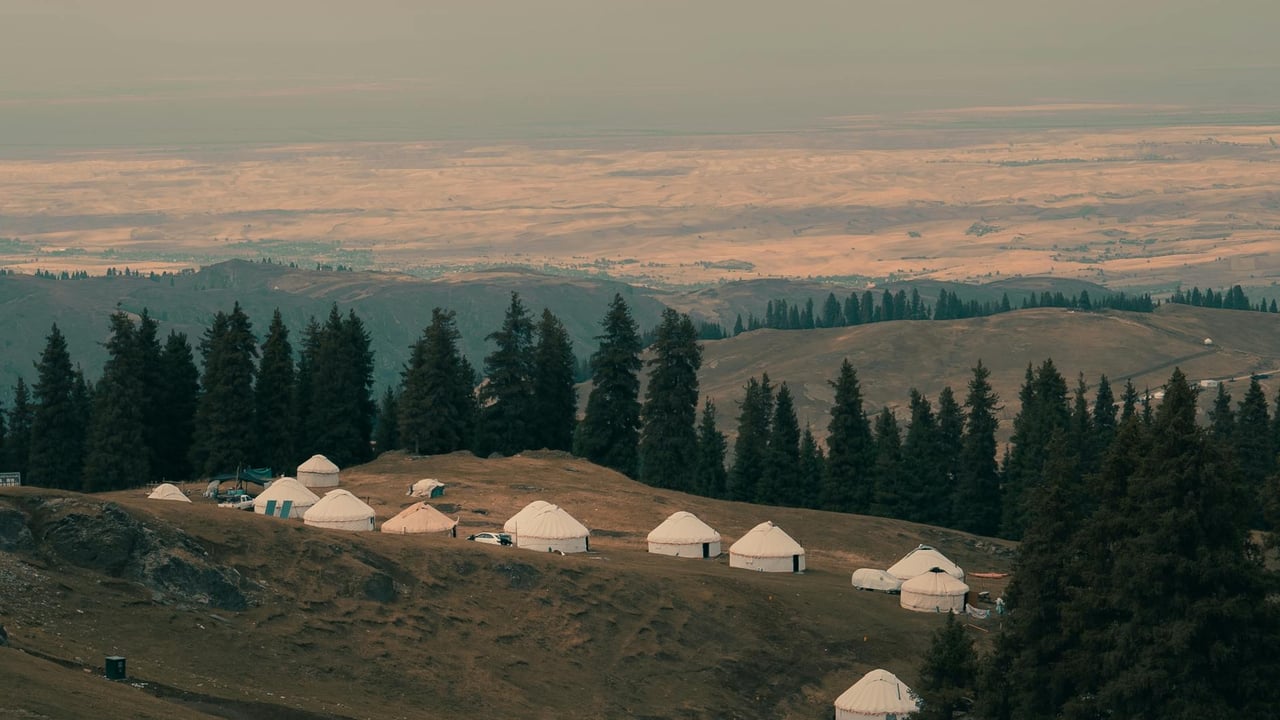

Deep within the Aheyazi Valley of the Tianshan Mountains, the memory of Jeynes Alibek remains a fixture of the landscape. For fifteen years, this Kazakh physician served as the primary medical lifeline for over 10,000 nomadic herders in one of Xinjiang’s most unforgiving environments. Known locally as the 'Huerhaoshe' or Guardian, Alibek’s career provides a window into the grueling realities of rural healthcare in China’s furthest borderlands.
Alibek’s journey began in 1968 in Zhaosu County, following a path paved by his father, a veteran and health official. After a stint in the People’s Armed Police and medical school, Alibek took the helm of the Aheyazi Grazing Hospital in 2006. He arrived to find a facility that lacked electricity and basic diagnostic equipment, where daily life involved hauling water from frozen rivers and navigating mountain passes on horseback.
The logistical challenges of the Aheyazi—the 'White Valley'—were compounded by the migratory patterns of the local population. Herders scatter across three valleys, each requiring eighty-kilometer circuits that Alibek and his colleagues traversed twice monthly, often sleeping in yurts. In this vacuum of infrastructure, Alibek’s role evolved beyond medicine; he became a mediator, a logistics coordinator, and a financial benefactor for a community living on the margins of the cash economy.
Institutional challenges plagued the remote hospital, which struggled to retain staff due to the isolation. Despite being diagnosed with a serious heart condition in 2015 and advised by specialists in Urumqi to relocate to a lower altitude, Alibek chose to stay. His decision was rooted in a sense of duty toward elderly herders who claimed they would have no one else to turn to, illustrating the often-overlooked personal sacrifices that sustain China’s grassroots social safety net.
Alibek’s impact was uniquely personal, as he frequently turned his own home in Zhaosu into a 'midway station' for patients requiring advanced care in the city. He was known to pay medical bills for impoverished herders out of his own pocket, a practice discovered only after his death when his family found receipts for over 30,000 yuan in personal loans. This blend of professional duty and communal kinship solidified his status as the de facto representative of the state in the high-altitude wilderness.
In December 2021, Alibek passed away at the age of 53 following a heart attack suffered while on a house call. His death triggered a wave of mourning across the valley, with herders traveling dozens of kilometers to pay their respects. Today, while the valley sees new infrastructure like solar streetlights and paved roads, his former student, Shatibalede Musha, continues the work, symbolizing a generational transition in Xinjiang’s rural medical service.