
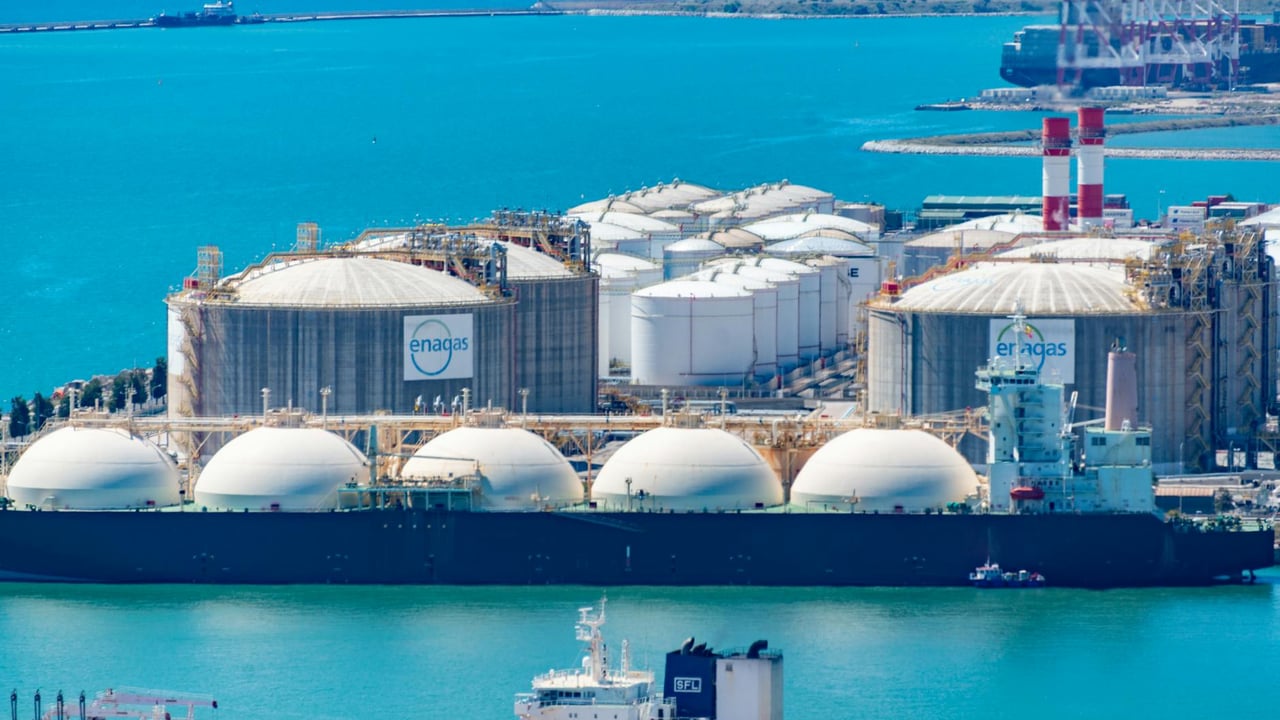

The global energy landscape is facing a structural fracture as the 10-day countdown begins for Asian economies to feel the full weight of a total Qatari gas cutoff. Following the recent escalations in the Middle East, the Strait of Hormuz has effectively become a maritime dead zone, preventing the passage of Liquefied Natural Gas (LNG) tankers. Only a handful of vessels that cleared the passage prior to the blockade remain en route to Asia, representing the final trickles of supply from a nation that accounts for 20% of global exports.
This crisis was triggered by a devastating kinetic exchange between regional powers: an Israeli strike on Iran’s South Pars field followed by an Iranian retaliatory missile barrage on Qatar’s Ras Laffan. The North Field-South Pars complex, the world's largest gas reservoir, is now partially incapacitated. Qatar Energy has been forced to declare force majeure on long-term contracts with South Korea, Italy, Belgium, and China, signaling that the repairs could take three to five years. This effectively voids the reliable long-term pricing structures that have anchored Asian industrial growth for decades.
The human and economic toll is manifesting differently across the continent. Pakistan finds itself on the brink of a total energy collapse, with domestic reserves set to vanish by the month’s end and no financial capacity to compete for spot-market alternatives. Meanwhile, advanced economies like Japan and Taiwan are scrambling to secure high-priced alternatives to avoid blackouts during the peak summer months. In a sharp reversal of previous environmental policies, several regional governments are now pivoting back to coal and nuclear power to maintain basic grid stability.
Geopolitically, the United States is emerging as the primary beneficiary of this disruption. While the Trump administration once struggled to find buyers for expensive American gas, the current security vacuum has turned U.S. LNG into a strategic necessity. Japan recently signed $57 billion in energy contracts with Washington, and both South Korea and Taiwan are preparing to shift their long-term reliance to gas sourced from Texas and Alaska starting in June. This shift represents a massive wealth transfer and a permanent realignment of East Asian dependency away from the Gulf and toward the Atlantic.
The shockwaves extend far beyond the electrical grid, directly threatening the global semiconductor supply chain. Taiwan, home to over 70% of the world’s chip manufacturing, relies on natural gas for nearly half of its power generation. TSMC, which consumes roughly 10% of the island’s total electricity, now faces a dual threat: power instability and a critical shortage of helium. As Qatar is the world's leading exporter of helium—a gas essential for cooling in chip fabrication—the damage to Ras Laffan could trigger a massive inflationary spike in consumer electronics and automotive sectors.