
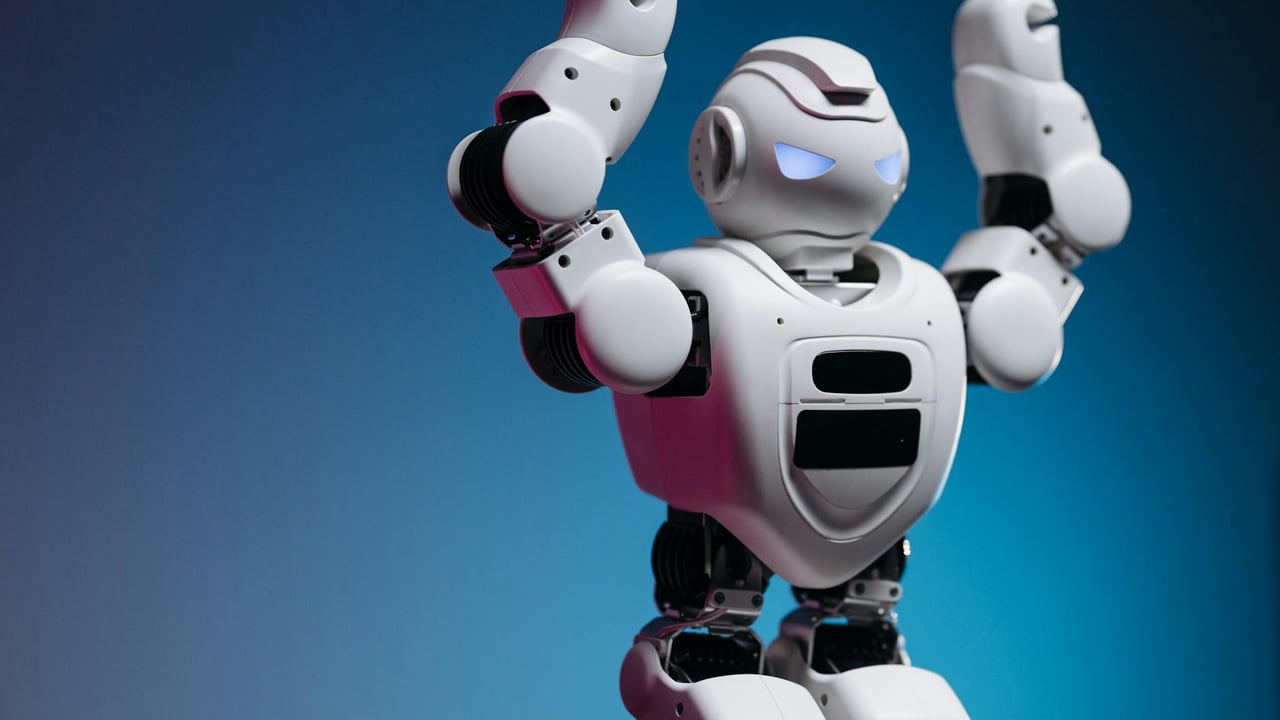

The East Room of the White House recently served as the stage for a landmark moment in the robotics age, as the 'Figure 3' humanoid robot made its public debut alongside the First Lady. In an event ostensibly focused on education, the robot demonstrated its ability to communicate in 11 languages, marking what the administration described as the first American-made humanoid to be officially received at the executive mansion. Beyond the spectacle of a machine walking the halls of power, the appearance signals a broader shift in the AI narrative from digital assistants confined to screens to physical entities capable of navigating the human world.
While the First Lady painted a vision of 'Plato-like' robotic educators providing instant access to the humanities and sciences, the underlying reality of Figure AI is far more complex and strategically significant. The company’s founder, Brett Adcock, sits at the center of a burgeoning ecosystem of 'dual-use' technology. His other venture, Archer Aviation, holds substantial contracts with the U.S. Air Force, and his brother, Colby Adcock, leads Scout AI—a defense-focused firm developing 'Fury,' a Vision-Language-Action (VLA) model designed for tactical environments like tanks and drones.
This family connection highlights a growing convergence between consumer robotics and national security. Although Figure AI officially maintains that its technology will not be used for military purposes, its shift away from OpenAI’s GPT models to its proprietary 'Helix' architecture suggests a move toward sovereign, end-to-end control. Helix is designed to allow robots to 'think and act' simultaneously, a prerequisite for both domestic chores and the high-stakes logistics required by the Pentagon. This technological pivot is likely what fueled the company’s recent $39 billion valuation, backed by titans like Nvidia, Microsoft, and Jeff Bezos.
However, Figure AI faces a challenging path to commercial viability despite its political and financial clout. While it aims to deploy 100,000 units within four years, recent industrial setbacks—such as BMW opting for Swedish rival Hexagon for its German plants—underscore the friction of moving from pilot programs to mass-scale deployment. With competitors like Boston Dynamics and China’s UBTECH accelerating their own factory integrations, and Foundation robots already seeing deployment in active conflict zones like Ukraine, the 'White House debut' may be as much about securing domestic political support as it is about showcasing technical prowess.