Unbound Power: Sugon’s Cable-Less ‘Supernode’ Seeks to Break the AI Interconnect Bottleneck

Chinese computing leader Sugon has launched the scaleX40, a cable-less supernode designed to eliminate communication bottlenecks in AI clusters. This architectural breakthrough aims to provide high bandwidth and unified memory, offering a domestic alternative to restricted Western interconnect technologies.

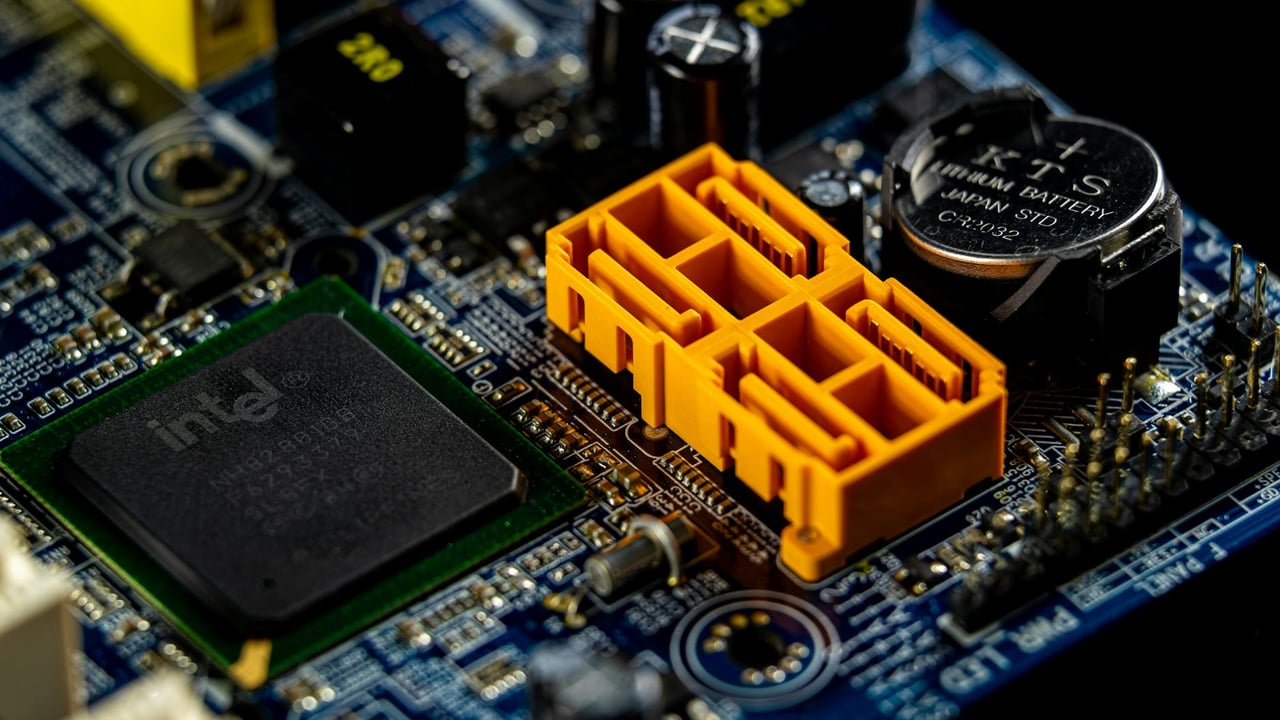
Detailed view of a computer motherboard showcasing an Intel microprocessor and electronic components.

Key Takeaways

  • 1Sugon's scaleX40 is the first 'cable-less box supernode' designed to optimize AI and high-performance computing.
  • 2The architecture focuses on breaking the 'communication wall' through unified memory addressing and low-latency interconnects.
  • 3The removal of internal cabling reduces signal loss and improves the reliability of high-density computing environments.
  • 4This launch is a strategic response to global supply chain constraints, prioritizing domestic architectural innovation over-reliance on foreign networking standards.
  • 5The supernode is targeted at large-scale AI model training and China's national 'East-to-West' computing infrastructure projects.

Editor's
Desk

Strategic Analysis

The scaleX40 is more than just a hardware iteration; it is a tactical maneuver in the ongoing 'interconnect war.' In the AI era, compute power is no longer just about the raw teraflops of a single chip, but how efficiently thousands of chips can talk to one another. By developing a 'cable-less' supernode, Sugon is attempting to bypass the limitations of traditional Ethernet and InfiniBand configurations that China currently struggles to source at the highest tiers. If Sugon can prove that its integrated architecture matches the performance of Western-designed clusters, it will provide a blueprint for Chinese strategic autonomy in AI infrastructure. However, the ultimate success of the scaleX40 will depend on its software ecosystem and whether it can achieve the same plug-and-play simplicity that has made international standards so dominant.

China Daily Brief Editorial
Strategic Insight
China Daily Brief

Dawning Information Industry, the state-backed Chinese high-performance computing giant better known as Sugon, has unveiled the scaleX40, which it claims is the world’s first 'cable-less box supernode.' This hardware innovation represents a departure from traditional server architecture, aiming to solve the systemic inefficiencies that plague large-scale AI clusters. By eliminating external cabling within the node, Sugon aims to reduce signal degradation and physical complexity in the next generation of data centers.

Technically, the scaleX40 is designed to dismantle the 'communication wall'—the performance ceiling reached when data transfer speeds between processors cannot keep pace with the processors themselves. The system emphasizes three core pillars: massive bandwidth, ultra-low latency, and unified memory addressing. Unlike traditional server stacking, which treats individual units as discrete entities linked by cables, the supernode architecture treats the entire box as a single, fluid computing fabric.

This development comes at a critical juncture for China’s domestic semiconductor and AI industries. As international export controls restrict access to high-end networking components and proprietary interconnects like NVIDIA’s NVLink, Chinese firms are forced to innovate at the architectural level. The scaleX40 suggests a strategic shift toward integrated, proprietary designs that maximize the efficiency of available domestic silicon by optimizing how data moves within the rack.

The implications for AI model training are significant. Modern large language models require seamless data synchronization across thousands of GPUs; any lag in communication results in 'dead cycles' where expensive hardware sits idle. By streamlining the physical and logical connections within the node, Sugon is positioning itself as a vital architect for China’s 'East-to-West' computing initiative, which seeks to build a unified national computing network.

Share Article

Related Articles

📰
No related articles found