China’s Unmanned Leap: The ‘Sichuan’ Carrier and the Era of High-Frequency Drone Warfare

China’s newest carrier, the Sichuan, demonstrates a revolutionary capability to launch stealth drones in rapid succession using advanced catapult technology. This shift toward unmanned swarm tactics signals a major evolution in Beijing’s maritime strategy, aiming to overwhelm regional adversaries through volume and low-observable technology.

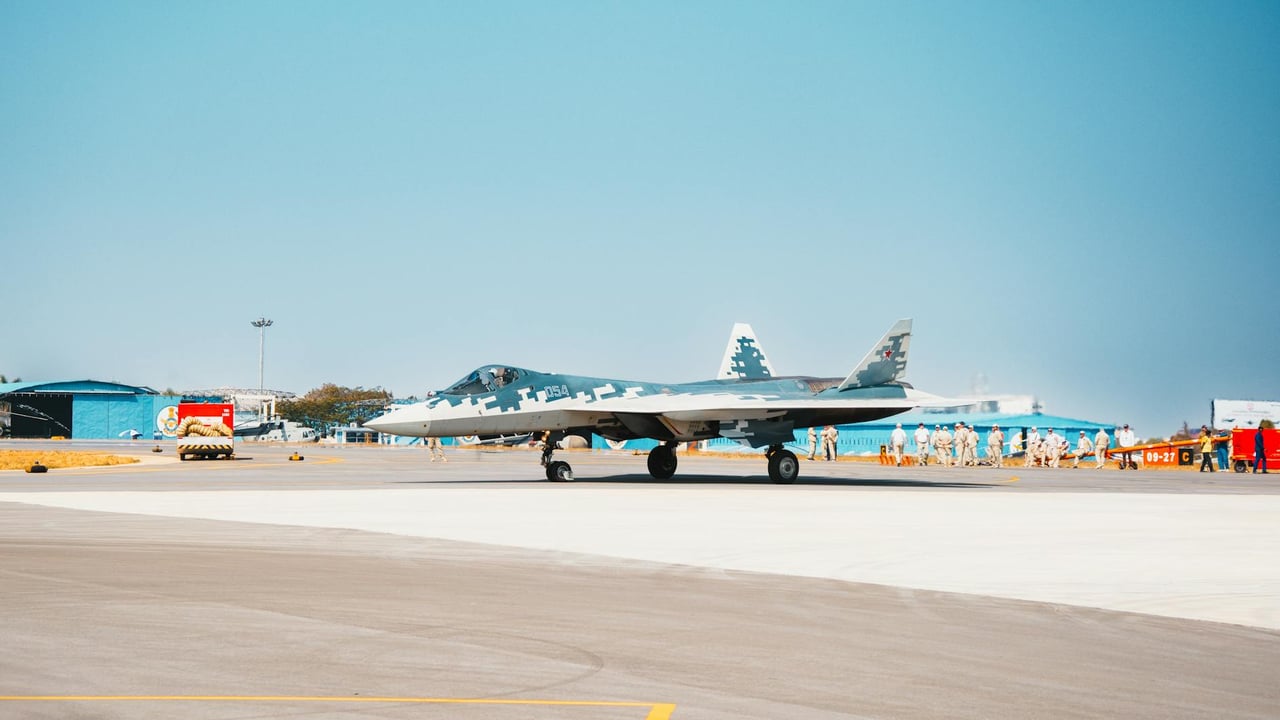
A Sukhoi Su-57 fighter jet stationed on a military airfield runway.

Key Takeaways

  • 1The Sichuan carrier introduces a high-frequency launch capability specifically for stealth UAVs.
  • 2Electromagnetic catapult (EMALS) technology has been optimized to support swarm-style drone deployments.
  • 3This capability shifts the carrier’s role from a traditional manned aircraft platform to a central hub for unmanned swarms.
  • 4The development is intended to create a tactical advantage by saturating sophisticated naval defense systems.

Editor's
Desk

Strategic Analysis

The Sichuan carrier represents the maturation of the next phase in China's naval strategy. By prioritizing rapid drone deployment, the PLAN is transitioning from a platform-centric navy to a network-centric one. This allows China to better manage the high costs of maritime attrition—where losing a drone is far more acceptable than losing a pilot—potentially neutralizing the qualitative edge of American carrier wings in high-intensity environments. This 'dumpling-style' launch capability is a clear signal that the PLAN intends to exploit the quantitative and unmanned advantages it can produce at scale.

China Daily Brief Editorial
Strategic Insight
China Daily Brief

The commissioning of the Sichuan aircraft carrier marks a pivotal evolution in the People’s Liberation Army Navy (PLAN). While previous vessels like the Fujian demonstrated China’s grasp of electromagnetic catapult technology, the Sichuan is designed to capitalize on the next frontier of maritime combat: the mass deployment of low-observable unmanned systems.

Observers have noted the vessel's unique capacity for "continuous catapulting," a capability colloquially referred to as "dropping dumplings" for its rapid-fire execution. This operational tempo suggests that the PLAN has solved the intricate synchronization problems between electromagnetic launch systems and the specialized flight decks required for stealth UAVs.

This shift toward drone-centric carrier operations represents more than just a technological upgrade; it is a fundamental rethinking of power projection in contested waters. By flooding the airspace with stealth drones, a carrier group can saturate enemy defenses, provide persistent over-the-horizon targeting, and preserve expensive manned aircraft for high-value strikes.

The integration of these "killer mace" systems signals Beijing’s intent to offset the traditional carrier-to-carrier advantages held by the United States. In a potential conflict over the Western Pacific, the ability to launch dozens of stealth drones in quick succession could overwhelm Aegis-equipped destroyers and challenge the air superiority long enjoyed by the U.S. Navy.

Share Article

Related Articles

📰
No related articles found