A Fractured Consensus: Tel Aviv Protesters Confront the Reality of a 'Forever War'

Hundreds of protesters gathered in Tel Aviv to demand an end to the month-long military escalation against Iran and Lebanon, facing a swift police crackdown. The event highlights growing domestic fatigue and a consolidation of peace movements against the government's multi-front war strategy.

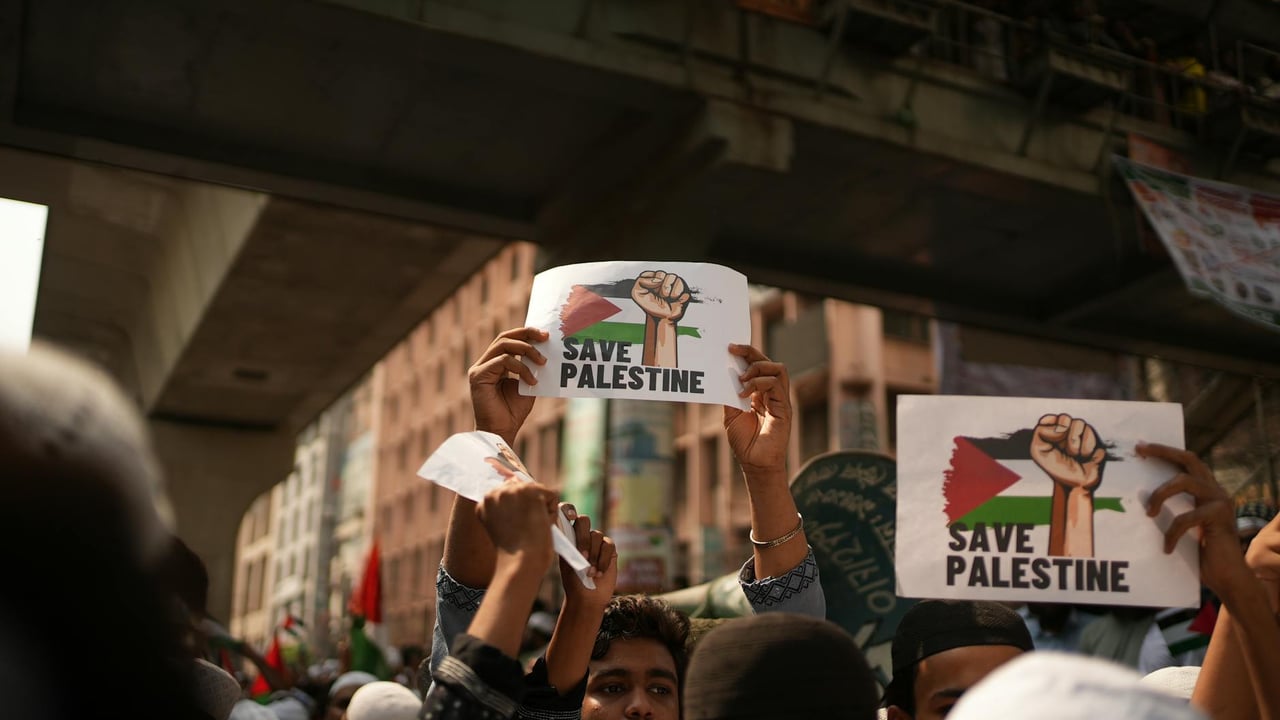
Crowd holding 'Save Palestine' signs at a protest in Dhaka, Bangladesh.

Key Takeaways

  • 1A coalition of dozens of peace organizations staged a unified protest in Tel Aviv against the expanding regional conflict.
  • 2Protesters highlighted the humanitarian toll, displaying images of deceased children from Israel, Palestine, Lebanon, and Iran.
  • 3Israeli police forcibly dispersed the assembly, citing emergency security regulations that prohibit large gatherings.
  • 4The protest occurred simultaneously with fresh Israeli airstrikes against Iranian and Lebanese targets.
  • 5Participants expressed deep 'war fatigue,' citing the psychological impact on families living in bomb shelters.

Editor's
Desk

Strategic Analysis

The emergence of the 'Partners for Peace' coalition suggests that the initial national unity seen at the start of recent hostilities is fraying as the conflict expands into a broader regional war involving Iran. By highlighting the human cost across all sides, the protesters are attempting to shift the narrative from national security to regional humanitarianism. However, the state's use of 'emergency guidelines' to suppress dissent indicates that the Israeli government remains committed to its military objectives, viewing domestic anti-war sentiment as a secondary concern or a security risk. For global observers, this internal friction is a critical indicator of how long the Israeli public can sustain a multi-front war, especially as the economic and psychological toll mounts. The prominent mention of U.S. involvement in the source material also underscores how international actors are perceived as integral to the conflict's duration and intensity.

China Daily Brief Editorial
Strategic Insight
China Daily Brief

As night fell over Tel Aviv’s Habima Square on March 28, the atmosphere was thick with a tension that has become the new normal in Israel. Approximately one thousand citizens gathered to voice their opposition to what many now characterize as a 'war without end.' This demonstration represents a pivotal moment for the country’s anti-war movement, signaling a rare unification of dozens of peace organizations under the 'Partners for Peace' banner.

For a month, military operations involving Israel and the United States have targeted Iranian assets, an escalation that has pushed the region into uncharted territory. Protesters carried placards mourning the deaths of children across the conflict zones, including Israeli, Palestinian, Lebanese, and Iranian victims. The imagery served as a stark reminder of the human cost that transcends national borders and political allegiances.

Domestic fatigue is palpable among the protesters, who describe a life punctuated by the constant threat of bombardment and the disruption of basic routines. Activists noted that many families have effectively moved into bomb shelters, depriving a generation of children of a normal childhood. The sentiment on the street suggests that the promise of 'security through force' is failing to deliver the peace of mind many Israelis crave.

The crackdown by Israeli security forces was immediate, with police citing emergency state guidelines to justify the forcible dispersal of the crowd. Witnesses reported seeing peaceful demonstrators pushed to the ground and detained as the authorities moved to shut down the assembly. This clash highlights the growing friction between the government’s security-first mandate and the democratic right to dissent during wartime.

Even as the square was being cleared, the roar of military engines provided a grim soundtrack to the evening. U.S. refueling tankers were observed flying overhead, coinciding with alerts on mobile phones announcing a fresh wave of strikes in Lebanon and Iran. These simultaneous events illustrate the widening gap between the military machine’s momentum and the burgeoning domestic movement demanding a diplomatic exit strategy.

Share Article

Related Articles

📰
No related articles found