
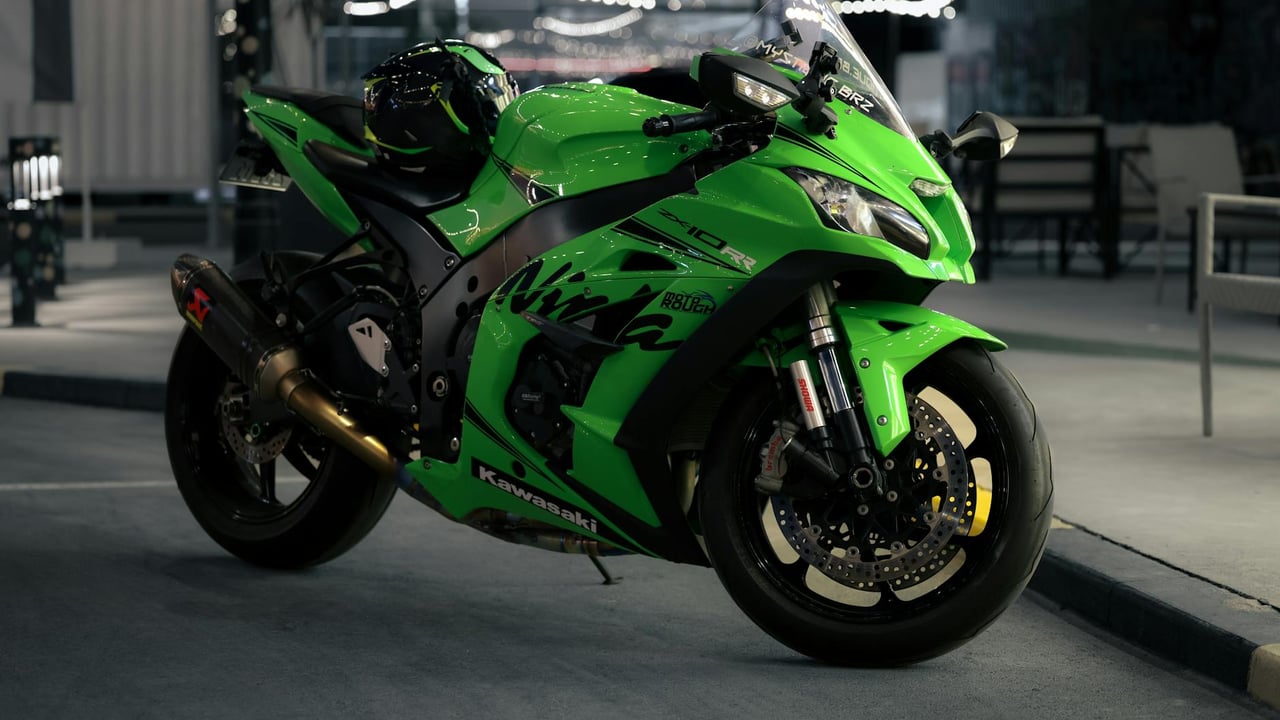

At the World Superbike Championship (WSBK), victory is typically measured in fractions of a second. This made the recent performance of Valentin Debise, riding for the fledgling ZX Motor team, nothing short of a shock to the global racing establishment. Debise did not just win; he finished nearly four seconds ahead of giants like Honda, Yamaha, and Ducati, achieving a margin described in racing circles as 'dominance' rarely seen in the production-based series.
The team behind this feat, known in China as 'Zhang Xue Motor,' was founded less than two years ago by Zhang Xue, a middle-school dropout and former motorcycle apprentice. While established European and Japanese high-performance bikes retail between 100,000 and 200,000 RMB, Zhang’s 820RR model aims for a price point of just 43,800 RMB. This victory serves as a validation for a brand that was mocked only months ago for its ambition to challenge the global elite.
This success marks a pivot point for China’s motorcycle industry, which for decades has been synonymous with low-quality, high-volume exports. A classic case study in industrial failure, Chinese manufacturers once dominated the Vietnamese market in the early 2000s through price wars, only to be expelled by consumers due to poor reliability and a lack of R&D. Zhang Xue’s approach represents a new era of 'hard-core innovation,' prioritizing proprietary engine development over the traditional 'white-label' assembly model.
The technical edge of the ZX 820RR is not an isolated miracle but a result of industrial spillover from China’s massive electric vehicle (EV) ecosystem. Technologies in power electronics, lightweight materials like magnesium alloys, and smart connectivity are trickling down from automotive leaders like Seres and AITO into the two-wheeled sector. This 'dimensionality reduction strike' allows Chinese startups to utilize advanced supply chains to bypass decades of traditional internal combustion engine legacy held by Japanese firms.
Geographic clusters play a critical role in this resurgence. Based in Chongqing, the 'Motorcycle Capital' of China, Zhang Xue’s operations are supported by an ecosystem of 51 vehicle plants and over 400 parts manufacturers. This density allows for a unique low-cost, high-efficiency R&D environment where a founder can source every necessary component within a single city, providing a degree of entrepreneurial 'certainty' that is difficult to replicate elsewhere.
Capital from the neighboring industrial powerhouse of Zhejiang has also fueled the rise. Government-backed funds like Zhechuangtou have moved away from chasing quick profits to supporting 'long-termist' manufacturing ventures. This synergy between Hunanese grit, Chongqing’s supply chain, and Zhejiang’s capital highlights a sophisticated new map of Chinese industrial development that seeks to move up the value chain through extreme performance and price disruption.