
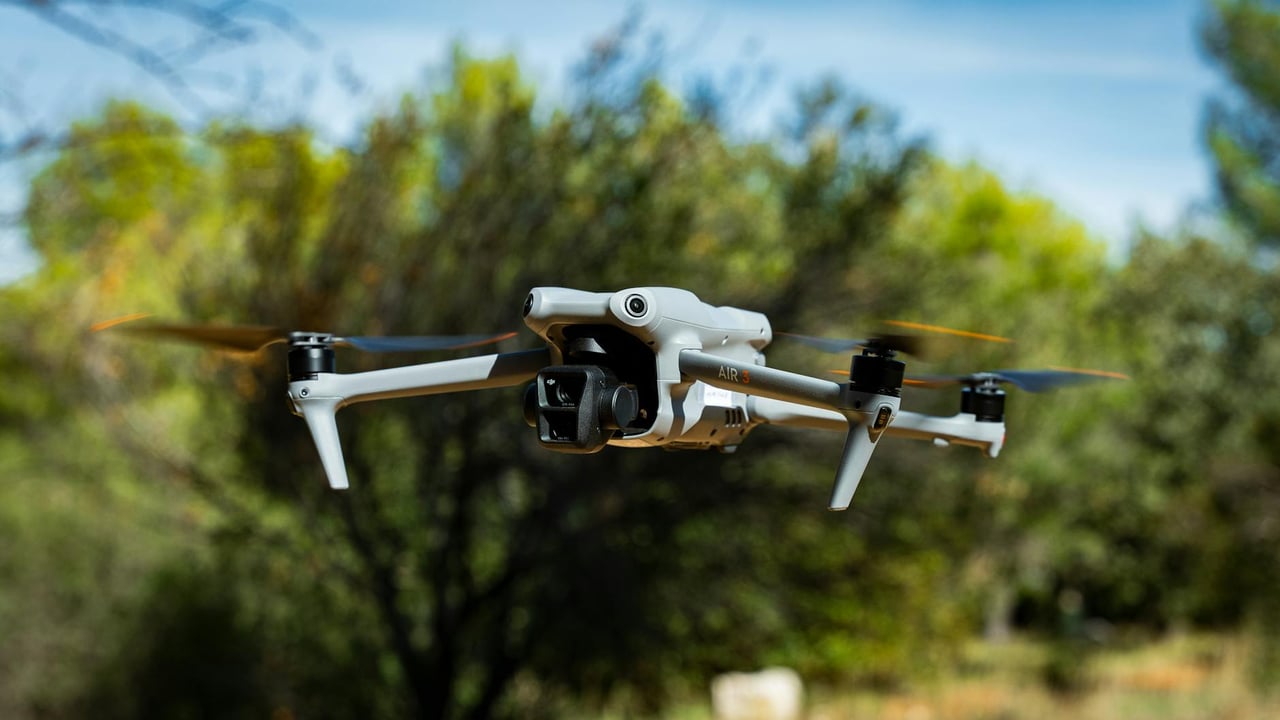

For two decades, DJI has stood as the undisputed titan of the skies, a rare Chinese brand that didn’t just participate in a global market but defined it. From its humble beginnings in a 20-square-meter Shenzhen warehouse to its peak as the world’s leading drone manufacturer, the company has long been the gold standard for hardware innovation. However, a recent legal offensive against its domestic rival, Insta360, suggests that the drone king is trading its innovator’s mantle for the armor of a defensive monopolist.
In March, DJI filed a landmark lawsuit in the Shenzhen Intermediate People's Court against Insta360, alleging disputes over six patents and involving several former DJI core researchers. This marks the first time in its 20-year history that DJI has initiated a patent ownership dispute domestically. Industry observers view this not as a simple legal spat, but as a calculated strike aimed at the technological foundations of its fastest-growing competitor.
DJI’s market dominance is staggering, holding upwards of 70% of the global consumer drone market and a commanding 66% of the action camera sector. Yet, this power is increasingly being wielded through controversial means. Reports have emerged of 'choose one of two' exclusivity demands placed on critical suppliers of optical modules and chips, forcing them to abandon partnerships with rivals like Insta360 or face a total cutoff from DJI’s massive order book.
The pressure extends to the retail level, where DJI has reportedly used its leverage to block competitors from opening flagship stores in major shopping malls. When smartphone giants like Xiaomi and OPPO hinted at entering the vlog camera market, DJI responded with preemptive, aggressive price cuts on its flagship products. While beneficial for consumers in the short term, analysts worry these tactics aim to suffocate competition before it can reach critical mass.
This defensive posture stems from a growing sense of vulnerability. Insta360 is no longer a niche player; its revenues are nearing the 10 billion RMB mark, and its recent entry into the drone market with the 'Ling A1' represents a direct challenge to DJI’s core business. Furthermore, increasing geopolitical pressure, including sales bans by the US Federal Communications Commission, has limited DJI’s room for maneuver abroad, making its domestic market dominance even more vital to its survival.
Ultimately, DJI’s current trajectory mirrors that of many tech giants that transition from hyper-growth to market protectionism. By focusing heavily on litigation and supply chain blockades, the company risks alienating the very talent that fueled its rise. If the drone king prioritizes crushing rivals over inventing the next breakthrough, it may find that its most dangerous enemy isn't a competitor, but its own stagnation.