
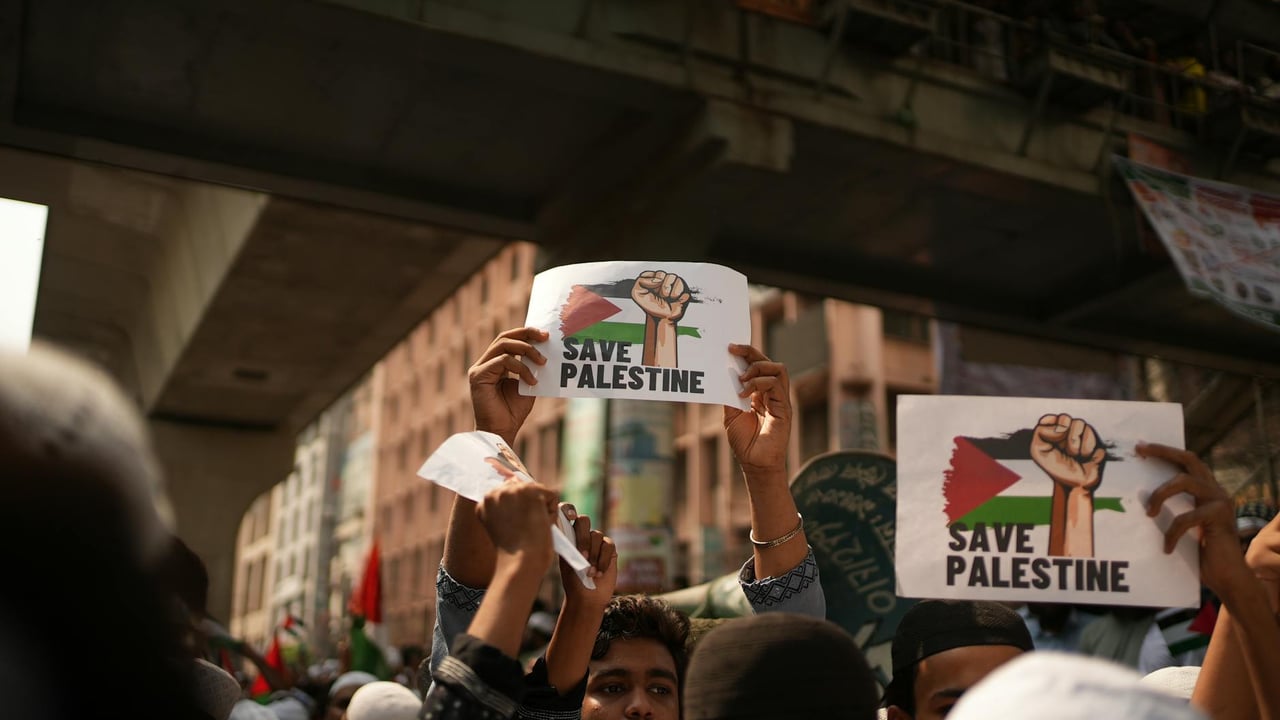

From the commercial arteries of Nablus to the administrative heart of Ramallah, the West Bank ground to a halt on April 1. A general strike shuttered storefronts and emptied streets, as Palestinians voiced collective outrage against a provocative new legal instrument passed by the Israeli Knesset. In the center of Ramallah, protesters brandished flags and chanted slogans, signaling a deepening of the rift between the occupied population and the Israeli state.
The catalyst for this widespread civil disobedience is a bill ratified on March 30 that authorizes judges to impose the death penalty on Palestinians convicted of "lethal attacks." Crucially, the law’s jurisdiction extends beyond Israel's internationally recognized borders into the West Bank and parts of the Gaza Strip. This extension of domestic law into occupied territories has long been a red line for international legal observers and Palestinian leaders alike.
Mustafa Barghouti, a prominent leader of the Palestinian National Initiative, characterized the move not as a security measure, but as a mechanism of systemic discrimination. He argued that the legislation represents a fundamental breach of international norms, asserting that an occupying power has no legal standing to impose such punishments on a protected population. According to Barghouti, the law is a tool of reinforcement for the ongoing occupation.
The timing of the bill’s passage suggests a deliberate signaling of intent by the current Israeli government. By institutionalizing capital punishment for nationalist-motivated crimes, the state is effectively messaging its abandonment of a two-state framework in favor of permanent, iron-fisted control. This move is widely interpreted as a rejection of any future territorial compromise or peace negotiations.
For those on the streets of Hebron and Ramallah, the legislative move is seen as a definitive end to the era of diplomacy. The result is a predictable but dangerous cycle of escalation where legal hardening in Jerusalem is met with grassroots resistance in the territories. This friction threatens to destabilize an already volatile region, as the Palestinian response shifts from political maneuvering to a struggle for basic rights and survival.