
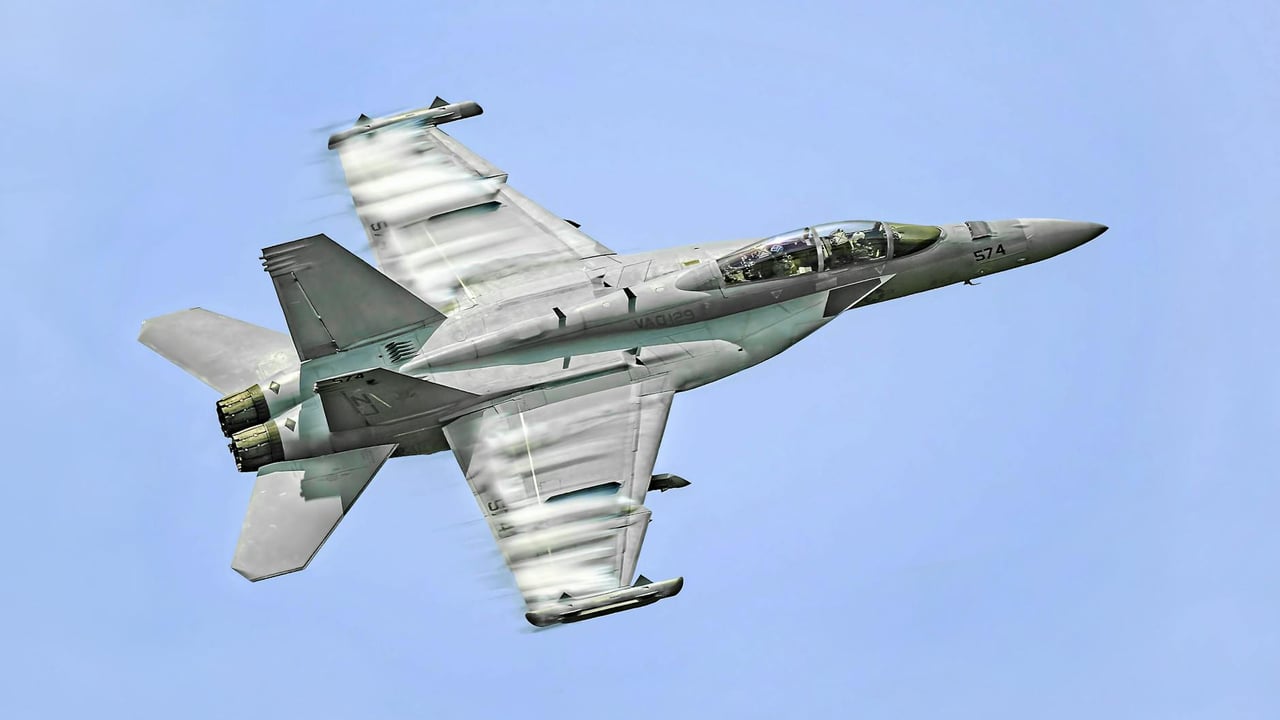

The arrival of two U.S. Air Force EA-37B Compass Call electronic warfare aircraft at Greece’s Souda Bay Naval Base on April 2nd signals a critical reinforcement of American signal-intelligence capabilities in the Eastern Mediterranean. Flying in from RAF Mildenhall in the United Kingdom, these highly specialized platforms represent the cutting edge of the Pentagon’s efforts to dominate the electromagnetic spectrum in an increasingly volatile region.
The EA-37B, built upon a heavily modified Gulfstream G550 airframe, is designed to disrupt enemy communications, radar, and navigation systems. By replacing the aging, propeller-driven EC-130H, the U.S. military has transitioned to a platform that can fly higher and faster, allowing it to provide standoff jamming support across a significantly wider theater of operations while remaining out of reach of most tactical air defenses.
This deployment follows the aircraft’s recent combat debut in 'Operation Epic Fury,' a mission directed against Iranian assets that served as the first real-world validation of the platform's electronic attack suite. Positioning these assets at Souda Bay—a strategic hub on Crete—provides U.S. Central and European Commands with a flexible tool to counter sophisticated integrated air defense networks and persistent drone threats.
As tensions persist across the Levant and the Persian Gulf, the presence of the EA-37B serves as both a strategic deterrent and a logistical preparation for potential high-intensity escalation. The ability to effectively 'blind' an adversary’s digital infrastructure has become the essential prerequisite for modern air superiority, making these two aircraft some of the most influential assets currently stationed in the European theater.