
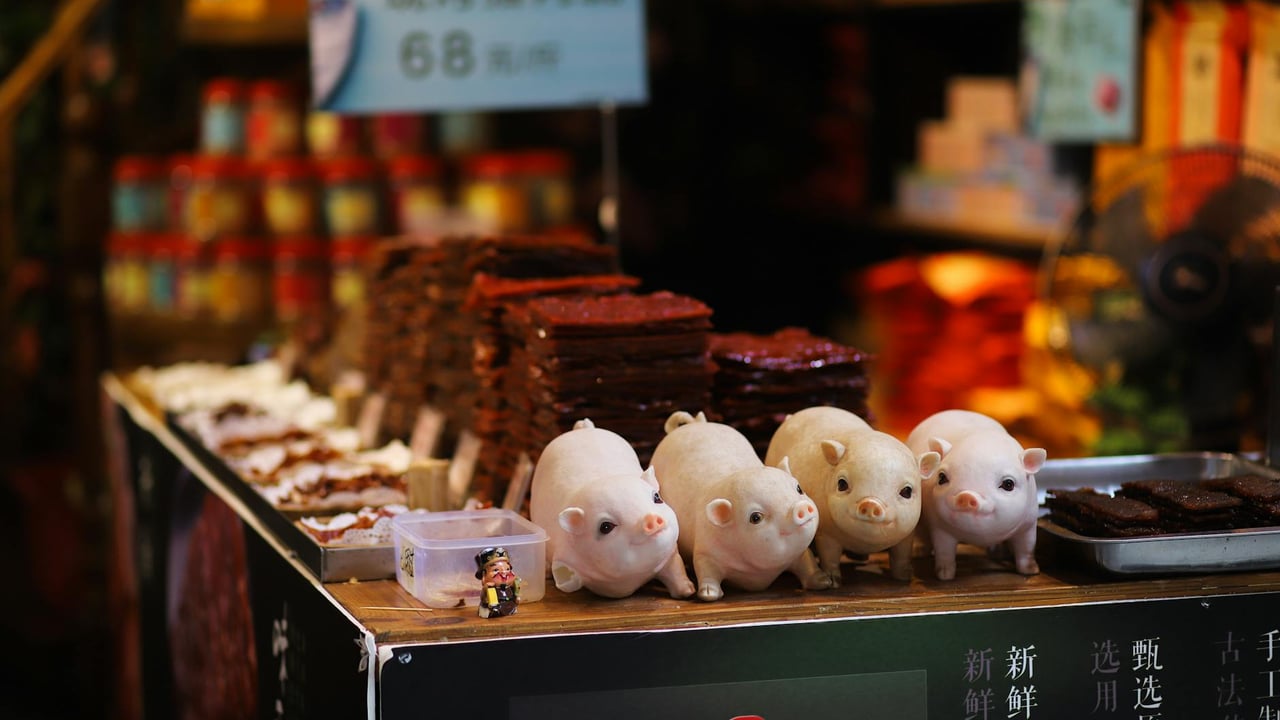

In the volatile theater of Chinese commodities, few sectors are as politically or economically sensitive as the pork market. As the primary protein for the world’s most populous nation, pork prices dictate the rhythm of the Consumer Price Index (CPI) and the stability of household budgets. Muyuan Foods, the nation’s undisputed 'Pig King,' recently released its 2025 fiscal report, revealing a company that has mastered internal efficiency even as it struggles to tame the unruly macro-cycle of agrarian industrialism.
The 2025 figures tell a story of resilient scale. Muyuan reported a revenue of 144.15 billion RMB, a 4.49% year-on-year increase, though net profit dipped by 13.39% to 15.49 billion RMB. Despite the profit contraction, the company’s earnings per share (EPS) of 2.88 RMB significantly outperformed institutional forecasts. This gap between rising production and falling prices highlights a new reality: the traditional 'pig cycle'—the boom-bust loop of hog supply—has been fundamentally broken by technological progress.
Historically, Chinese hog cycles lasted roughly 22 months in their downward phase. However, the current downturn has persisted for over 40 months. The culprit is a massive leap in productivity; breeding technologies have pushed the 'Piglets per Sow per Year' (PSY) metric from 16 in 2018 to nearly 28 today. This surge in biological efficiency means that even as the number of breeding sows declines, the total output of pork remains stubbornly high, keeping prices depressed and traditional market signals muted.
To combat this 'cycle of fate,' Muyuan has pivoted toward vertical integration. Its slaughtering business turned profitable for the first time in 2025, acting as a critical buffer. By controlling the downstream processing, Muyuan can regulate its own supply flow, avoiding the desperate 'panic selling' or 'secondary fattening' that plagues smaller farmers. This integration allows the firm to sacrifice upstream margins to guarantee a minimum level of group-wide profitability and market share.
Financially, the company is shifting from a period of frantic capital expenditure to a 'harvest phase.' After years of aggressive expansion that didn't always align with market timing, Muyuan has successfully slashed its debt ratio to 54.2%, now below the industry average. For investors, the most tangible sign of this maturity is a generous dividend policy. The company distributed nearly half of its annual profits back to shareholders, signaling that its days of high-risk capacity building are giving way to a focus on cash flow and stability.