The 'Not My King' Revolt: A Global Anti-War Movement Challenges the Status Quo

A massive global anti-war movement branded 'Not My King' saw coordinated protests across 3,000 U.S. cities and major international capitals. The demonstrations target the military policies of the U.S. and Israel, notably bridging partisan gaps in American politics and demanding an end to escalations in the Middle East.

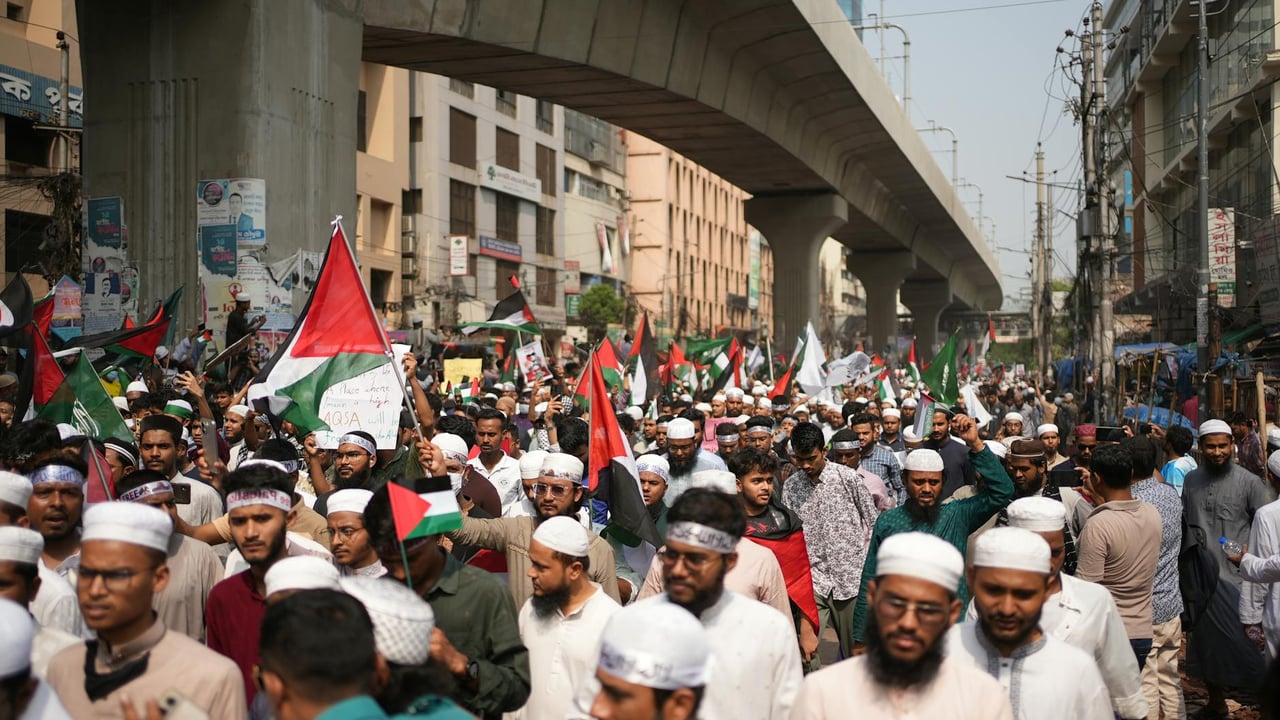
A large Pro-Palestinian protest with flag waving and banners, demonstrating solidarity in Dhaka, Bangladesh.

Key Takeaways

  • 1The 'Not My King' movement mobilized protests in over 3,000 cities across all 50 U.S. states.
  • 2Significant participation was recorded in traditionally conservative U.S. states, indicating a shift in the anti-war demographic.
  • 3Protests in Tel Aviv and European capitals specifically targeted the leadership of Benjamin Netanyahu and Donald Trump regarding Middle East military actions.
  • 4Demonstrations focus on the humanitarian impact of conflicts in Gaza, Lebanon, and Iran.
  • 5Police interventions and arrests in major cities have highlighted the rising tension between protesters and state authorities.

Editor's
Desk

Strategic Analysis

The framing of these protests in Chinese media outlets like China Youth Daily underscores a strategic narrative of Western internal instability and the perceived erosion of democratic legitimacy. By highlighting the 'Not My King' slogan and the participation of traditionally conservative American regions, the report emphasizes a nation at odds with its own leadership. This narrative serves to contrast Western 'chaos' with a projected image of global desire for a peace-centric order, while simultaneously painting U.S. and Israeli foreign policy as isolated from both domestic and international public opinion. For global observers, the critical takeaway is the increasing efficacy of decentralized organizing tools in mobilizing cross-border political pressure, which may significantly constrain the future military options of democratic leaders.

China Daily Brief Editorial
Strategic Insight
China Daily Brief

On March 28, a coordinated wave of anti-war protests rippled across the globe, signaling a profound shift in public tolerance for military escalation. From the bustling avenues of New York and Los Angeles to the historic squares of London and Berlin, tens of thousands of citizens gathered to demand an immediate cessation of hostilities in the Middle East. The scale of the movement suggests a growing disconnect between state foreign policy and the humanitarian expectations of the global populace.

In the United States, the 'Not My King' movement orchestrated demonstrations across all 50 states, reaching more than 3,000 cities. This mobilization was particularly notable for its penetration into traditional Republican strongholds, such as Idaho, Wyoming, and Utah. The surge in participation within these 'red states' indicates that the anti-war sentiment is beginning to transcend traditional partisan divides, uniting diverse demographics under a singular call for humanitarian ceasefires.

The protests were not merely general pleas for peace but targeted critiques of specific political leadership and foreign interventions. Demonstrators in Tel Aviv’s Habima Square voiced sharp opposition to Israeli Prime Minister Benjamin Netanyahu and U.S. leadership, specifically condemning military operations in Gaza and strikes against Lebanon and Iran. The heavy-handed police response in several cities, including multiple arrests, has only served to further galvanize the movement’s narrative of government overreach.

Beyond the immediate geopolitical implications, this global outcry reflects a broader rejection of the human cost associated with modern warfare. By focusing on the shared vulnerability of civilians across borders, the movement seeks to prioritize diplomacy and regional stability over military dominance. As these protests continue to gain momentum, they present a significant challenge to the domestic and international agendas of the administrations involved.

Share Article

Related Articles

📰
No related articles found