
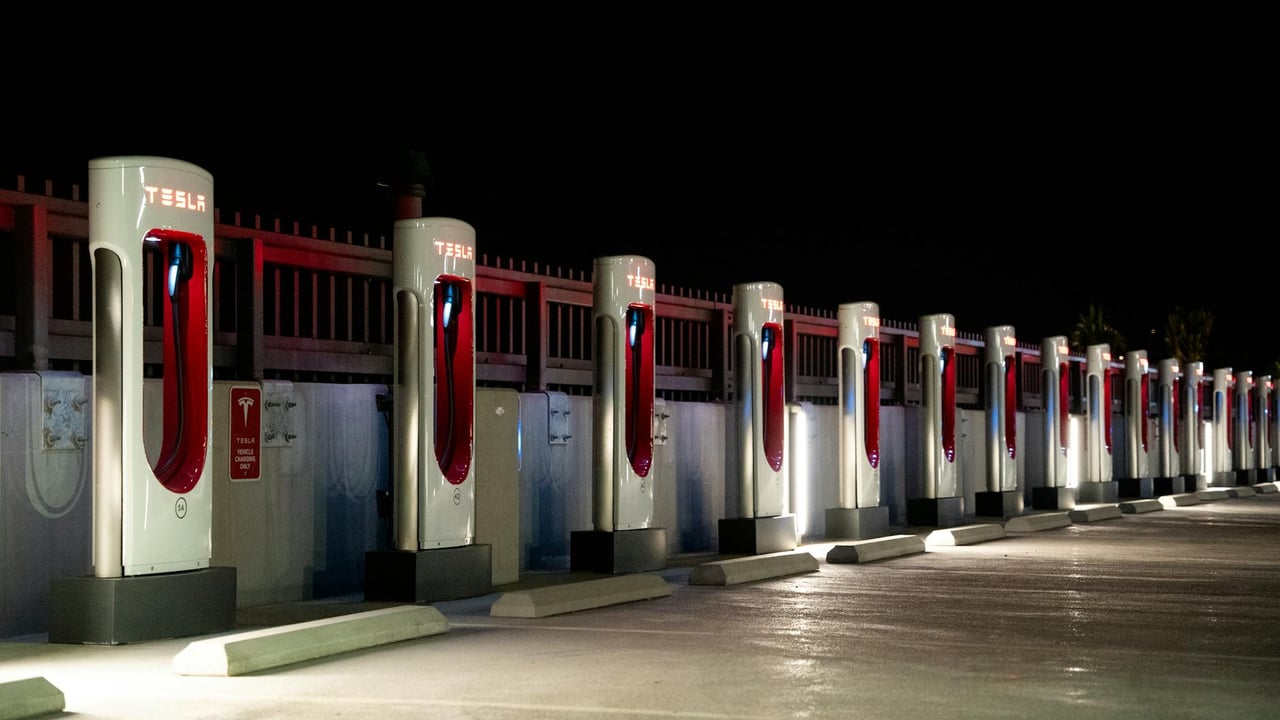

Tesla’s charging empire has crossed a significant threshold, reaching 80,000 Superchargers globally as of April 2026. This milestone, announced via the company’s official channels in China, underscores the aggressive expansion of the world's most recognizable electric vehicle (EV) infrastructure. While vehicle delivery numbers often capture the headlines, it is this physical, high-voltage network that remains Tesla’s most formidable competitive advantage in an increasingly crowded market.
The rapid build-out of the Supercharger network reflects a strategic shift from a proprietary "walled garden" to a universal utility. Since opening its North American Charging Standard (NACS) to other manufacturers, Tesla has effectively positioned its infrastructure as the backbone of the global transition to electric mobility. This dominance forces competitors to either build their own capital-intensive networks or negotiate for access to Tesla’s superior uptime and reliability.
In the crucial Chinese market, the landscape is particularly competitive as domestic giants like BYD and Nio race to deploy high-speed "flash" charging stations and battery-swapping hubs. Despite the proliferation of local alternatives, Tesla’s 80,000-strong global footprint provides a level of cross-border standardization that local players have yet to replicate. This network density remains a primary driver for consumer confidence, mitigating the "range anxiety" that still plagues many rival brands.
However, the 80,000-unit mark is more than just a logistical achievement; it is a signal of maturity for the entire EV ecosystem. As governments in both the West and Asia push for stricter emissions standards, the availability of reliable fast-charging is the primary barrier to mass adoption. Tesla’s ability to maintain this pace of expansion suggests that the company still views hardware dominance as the key to long-term profitability and market stability.