
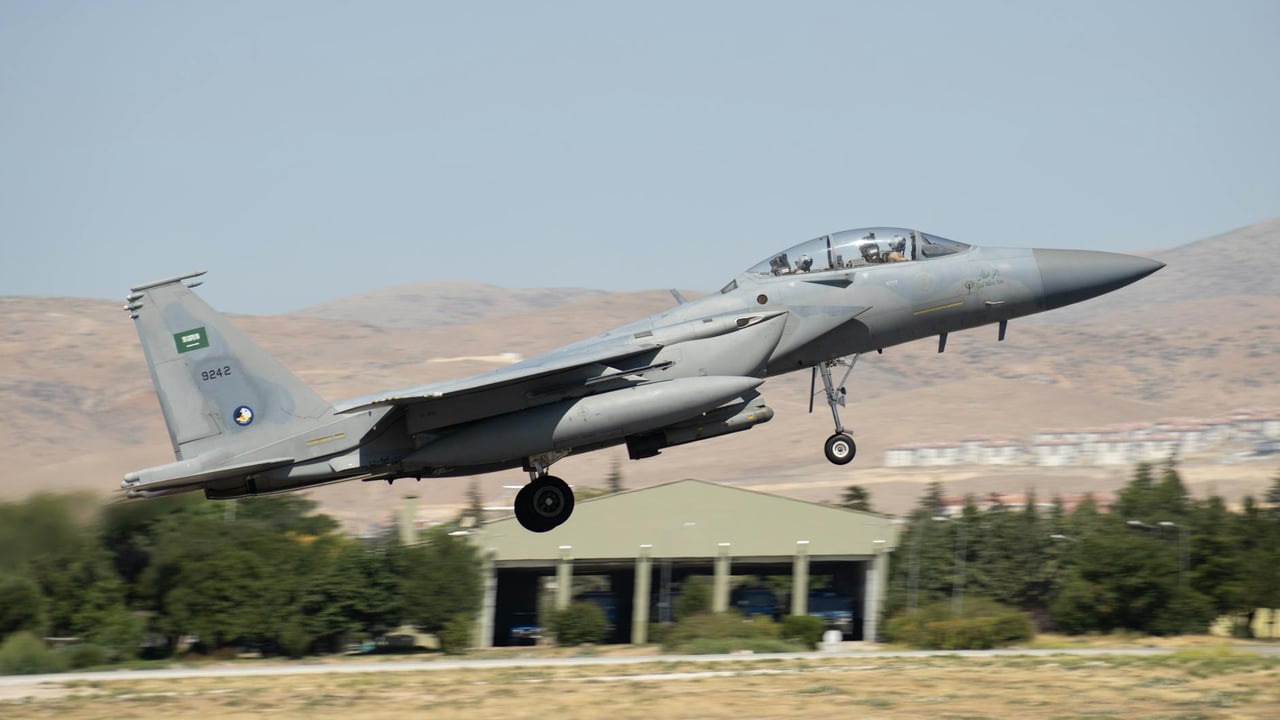

The downing of a U.S. Air Force F-15E Strike Eagle over Iranian airspace on April 3 has ignited a high-stakes search and rescue operation that underscores the perilous reality of modern aerial warfare. While one pilot has been successfully recovered, the fate of the weapons systems officer remains unknown. This incident has transitioned from a tactical loss into a strategic crisis, as Tehran has reportedly placed a bounty on the missing American airman.
For a pilot ejected into hostile territory, the seconds between the canopy blowing and hitting the ground are the most critical for survival. Retired Air Force Brigadier General Houston Cantwell notes that the descent under a parachute offers a unique, high-altitude vantage point that disappears once the airman reaches the terrain. During these fleeting moments, the airman must identify landing hazards, potential hiding spots, and the presence of enemy forces.
Physical survival is the immediate priority upon landing, as the force of ejection and the impact of touchdown frequently result in fractures or lower-limb injuries. Once on the ground, the airman transitions into a 'silent' mode of evasion, where the primary objective is to remain undetected by local forces while establishing communication with recovery teams. The psychological pressure is immense, especially when facing a state-sponsored manhunt in unfamiliar geography.
Effective rescue operations rely on a pre-determined dance between the evader and the Search and Rescue (SAR) task force. Airmen are trained to seek out specific 'pickup points'—rooftops in urban settings or clearings for helicopters in rural areas—often moving only under the cover of darkness. The goal is to provide the rescue team with a window of opportunity that does not compromise the safety of the incoming aircraft or personnel.
Washington has mobilized a significant suite of assets to retrieve the missing officer, demonstrating the complexity of deep-penetration rescue missions. Reports indicate that HH-60 'Pave Hawk' helicopters, supported by HC-130J 'Combat King II' tankers and MQ-9 'Reaper' drones, have already entered Iranian territory. This mission profile suggests a high tolerance for risk and a commitment to the 'no man left behind' ethos, even at the cost of further military escalation.
This incident marks a dangerous inflection point in the simmering tensions between Washington and Tehran. The loss of a sophisticated multi-role fighter like the F-15E suggests an increasingly lethal air defense environment in the region. Whether this leads to a broader confrontation likely depends on the outcome of the search for the second crew member and the conditions of their eventual discovery.