Mastering the 'Tail': China’s Naval Drills Signal a Leap in Blue-Water Sustainability

The Chinese Navy's Eastern Theater Command recently completed high-intensity replenishment drills in the East China Sea, testing advanced multi-ship simultaneous resupply tactics. These exercises signify a strategic shift toward long-term fleet endurance and enhanced blue-water operational capabilities.

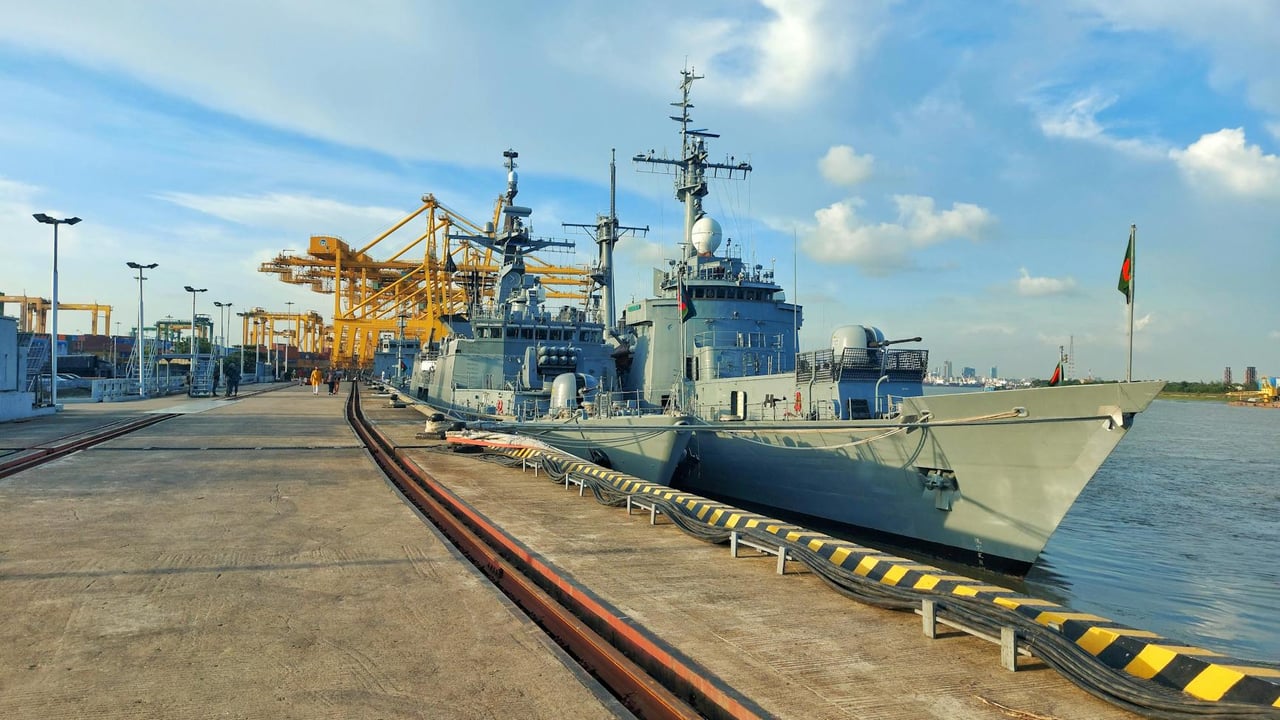
Navy vessels docked at a bustling city port with cranes and clear blue skies.

Key Takeaways

  • 1The PLAN Eastern Theater Command conducted 'two horizontal, one vertical' replenishment drills, allowing three ships to be supplied simultaneously.
  • 2The exercise featured high-end combatants including the Type 052D destroyer Lishui and the Type 054A frigate Binzhou.
  • 3The drills were designed to test tactical efficiency and minimize the time combat ships spend in vulnerable logistics states.
  • 4Training took place in the East China Sea, a high-priority maritime zone for Chinese territorial and strategic interests.
  • 5The focus on logistics marks a transition from fleet expansion to fleet sustainability and operational readiness.

Editor's
Desk

Strategic Analysis

Logistics remain the ultimate arbiter of naval power. While China has rapidly built the world's largest navy by ship count, its ability to sustain those ships during a prolonged conflict has long been questioned. These drills in the East China Sea demonstrate that the PLAN is no longer content with being a 'green-water' force that returns to port for every refill. By mastering simultaneous multi-ship replenishment, Beijing is effectively multiplying the utility of its existing supply fleet. This capability is a prerequisite for any naval blockade or sustained combat operation, suggesting that China is maturing its command-and-control structures to match its hardware output. The 'so what' for regional security is clear: the Chinese fleet is becoming more resilient, harder to starve of resources, and better equipped for the endurance required in a modern maritime standoff.

China Daily Brief Editorial
Strategic Insight
China Daily Brief

Logistics are rarely the headline of modern naval warfare, yet they remain the definitive bottleneck for any aspiring global power. In the choppy waters of the East China Sea, the People's Liberation Army Navy (PLAN) recently signaled a significant upgrade in its ability to sustain high-intensity operations. By conducting complex, multi-vessel replenishment drills, Beijing is addressing the 'Achilles’ heel' of its maritime strategy: the capacity to keep its combatants fueled and armed far from the safety of its coastline.

During the recent exercise, the Eastern Theater Command’s destroyer flotilla—headlined by the Type 052D destroyer Lishui and the Type 054A frigate Binzhou—demonstrated a 'two horizontal, one vertical' replenishment-at-sea (RAS) maneuver. This advanced technique allows a single supply ship to transfer fuel, water, and dry stores to three separate combat vessels simultaneously. Such a capability is not merely a technical feat; it is a critical necessity for reducing the window of vulnerability that ships face when tethered to a slow-moving logistics vessel.

The shift from standard one-on-one replenishment to multi-ship synergy suggests that the PLAN is refining the tactical choreography required for carrier-strike-group-style endurance. By practicing these maneuvers under 'real combat conditions' over several days, the Eastern Theater Command is preparing for a future where its fleet must remain on station for weeks or months at a time. This level of logistical maturity is essential for maintaining a persistent presence in flashpoints ranging from the Senkaku Islands to the Taiwan Strait.

Furthermore, the inclusion of the Anqing, a vessel typically tasked with littoral or escort duties, alongside flagship destroyers, indicates a push for fleet-wide interoperability. As the PLAN continues to expand its blue-water reach, the focus has clearly shifted from simply building more hulls to optimizing the 'teeth-to-tail' ratio. Mastering the intricate dance of mid-ocean resupply is the final prerequisite for China to challenge the traditional maritime dominance of the United States in the Western Pacific.

Share Article

Related Articles

📰
No related articles found