
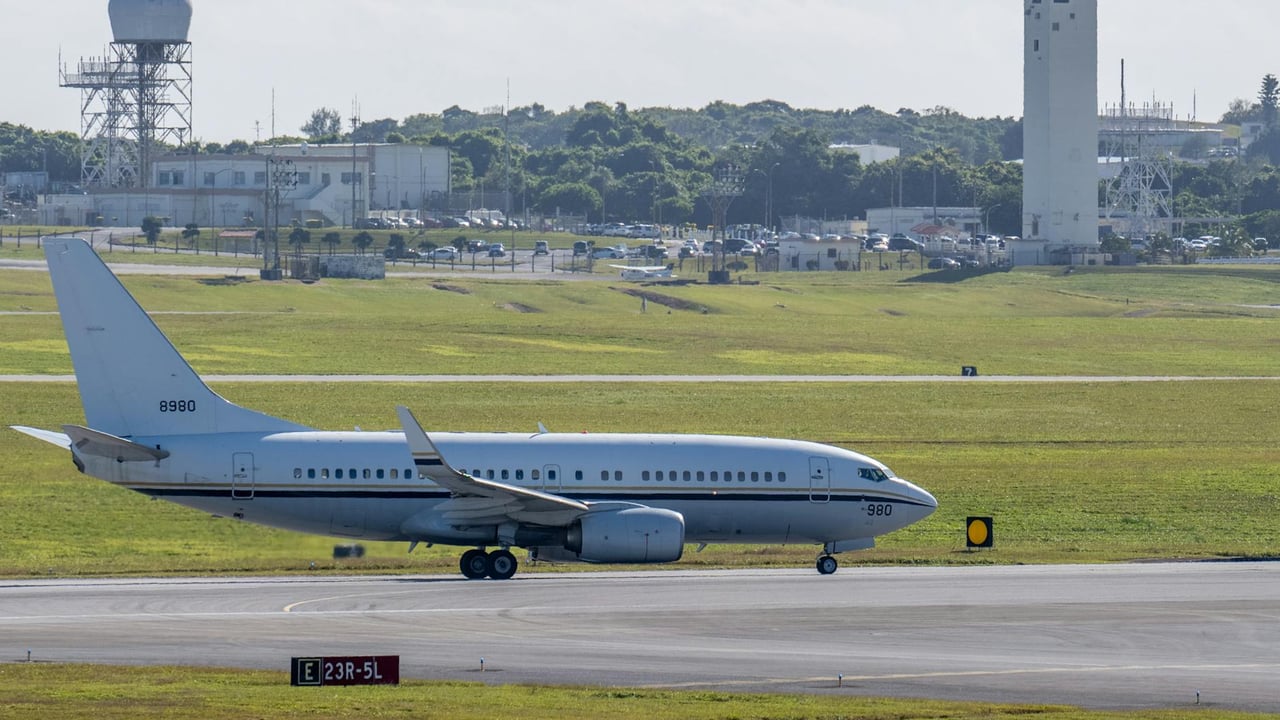

The strategic sanctity of the U.S.-Japan alliance is facing a profound stress test as American forces based in Okinawa are increasingly diverted to support military operations in the Middle East. Brigadier General John Gallemore, commander of the 18th Wing at Kadena Air Base, recently confirmed that Air Force personnel from Japan have been deployed into 'harm’s way' within the U.S. Central Command’s (CENTCOM) area of responsibility. This deployment, aimed specifically at countering Iranian influence, marks the second major contingent from Japan to join the fray, following a Marine Expeditionary Unit that departed earlier this year.
This shift in mission profile—from regional deterrence in the Indo-Pacific to active combat support in the Middle East—has reignited a fierce debate over the 'prior consultation' clause of the U.S.-Japan Security Treaty. Historically, this legal mechanism was designed to ensure that major changes in the deployment or use of U.S. forces based in Japan would require Tokyo’s explicit consent. Critics, including the influential Okinawa Times, now argue that this mechanism has become a 'dead letter,' as Washington unilaterally utilizes Japanese soil as a springboard for global power projection without meaningful dialogue with its host.
The geopolitical ramifications for Tokyo are severe. For decades, Japan has maintained a delicate diplomatic balance in the Middle East to secure its energy lifelines. However, the direct involvement of Japan-based U.S. assets in operations against Iran threatens this neutrality. Former Iranian officials have already issued stark warnings, suggesting that if Japanese bases are utilized for strikes against Tehran, Japan itself could become a target, potentially leading to a blockade of Japanese shipping through the critical Strait of Hormuz.
Domestically, the backlash is palpable and politically damaging. In Okinawa and Sasebo, local residents and regional assemblies have voiced sharp opposition, viewing the deployments as an unnecessary invitation for retaliatory strikes. The Okinawa Prefectural Assembly recently passed a resolution demanding an immediate halt to Middle Eastern hostilities and urged the central government to refuse any logistical or rear-area support. Public sentiment mirrors this local anxiety, with domestic polling indicating that over 80% of the Japanese public opposes U.S. military action against Iran.
As the U.S. continues to treat its Pacific bases as interchangeable hubs for global contingencies, the Japanese government finds itself in a precarious position. By remaining silent on these 'unannounced' deployments, Tokyo risks appearing as a subordinate partner that has abdicated its duty to protect national sovereignty. This friction highlights the growing divide between Washington’s global strategic requirements and the local political realities of its most important Asian ally, suggesting a future where the costs of the alliance may eventually outweigh its perceived security benefits.