
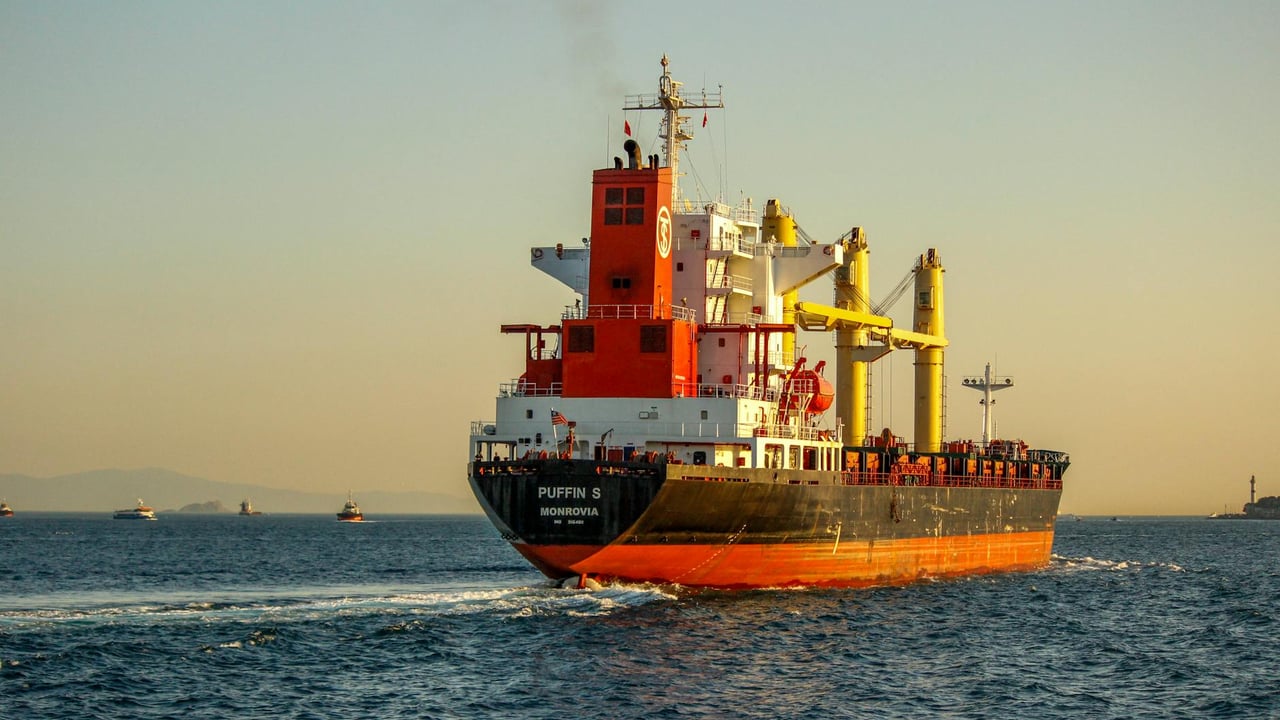

The global energy market faced a sharp jolt on April 8 as Tehran once again shuttered the Strait of Hormuz, the world’s most vital oil chokepoint. This escalatory move followed what Iran described as a betrayal of a nascent ceasefire agreement, punctuated by a massive Israeli aerial campaign against Hezbollah in Lebanon. The closure immediately impacted global finance, sending WTI crude futures up over 2.6% to nearly $97 per barrel, while U.S. equity futures retreated in anticipation of renewed inflationary pressure.
Maritime tracking data corroborated the shutdown, showing tankers like the 'AUROURA' performing sudden 180-degree turns to flee the Musandam Peninsula. The Iranian Port and Maritime Organization exacerbated maritime anxiety by releasing a 'safe route map,' warning that the primary shipping lanes might be contaminated with anti-ship mines. This suggests that even a brief closure could have long-lasting effects on shipping insurance and regional logistics, as the threat of 'naval warfare' returns to the Gulf.
At the heart of the diplomatic breakdown is a fundamental disagreement over the scope of a 'ten-point plan' recently discussed between the Trump administration and Tehran. Mohammad Baqer Qalibaf, Speaker of the Iranian Parliament, asserted that the foundation for negotiation was destroyed after three key terms—including the cessation of hostilities in Lebanon and the recognition of enrichment rights—were violated. Iran views the Israeli strike in Lebanon and a reported U.S. drone incursion as direct breaches of the experimental truce.
In Washington, the White House remains defiant yet committed to a high-stakes meeting scheduled for April 11 in Pakistan. Press Secretary Karoline Leavitt announced that Vice President J.D. Vance, alongside Middle East envoy Steve Witkoff and Jared Kushner, will lead the delegation. However, the U.S. has explicitly rejected Iran’s enrichment demands and clarified that Lebanon was never part of the original ceasefire agreement, with President Trump dismissing the Lebanon front as a 'separate conflict.'
This disconnect highlights the volatile nature of the new administration’s transactional diplomacy. While the U.S. expects the Strait of Hormuz to remain open as a prerequisite for 'closed-door' talks, Iran is using its control over the waterway as its primary leverage. As the IRGC threatens 'regret-inducing' responses to Israeli aggression, the upcoming Islamabad summit faces the daunting task of reconciling two completely different interpretations of the same peace framework.