
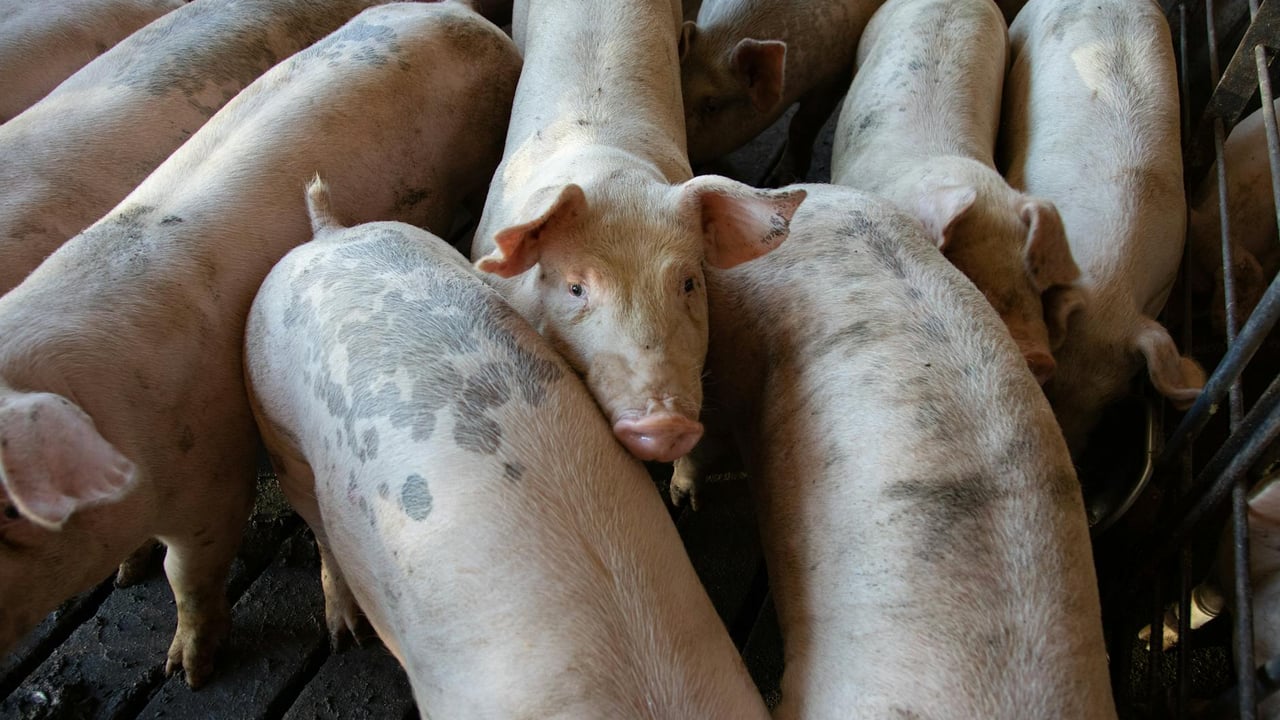

The era of easy profits for China’s pig farmers has curdled into a brutal winter. In 2026, pork prices have plummeted below the critical threshold of 5 yuan per catty, a level that fails to cover even the basic feed and labor costs for most producers. While urban consumers celebrate their ability to purchase pork without a second thought, the backbone of rural economies—the small-scale farmer—is facing an existential crisis.
The current downturn is a textbook illustration of China’s 'pig cycle' gone into overdrive. Following the historic highs of 2020, when African Swine Fever wiped out herds and sent prices soaring to 34 yuan per kilogram, a massive wave of capital flooded the sector. Industrial giants like Muyuan Foods and Wens Foodstuff Group expanded aggressively, leveraging technology and scale to dominate a market that was once the domain of the rural household.
This industrialization has left smallholders with little room to maneuver. For individual farmers, the lack of bargaining power and higher per-head costs make the current market volatility unbearable. Many rural producers have abandoned newly built pens to seek wage labor in cities, finding it safer than the gambling-like nature of modern pig husbandry where prices can drop nearly 10 percent in a single year.
However, the crisis is not merely one of oversupply; it is also a symptom of a shifting Chinese palate. Data indicates a steady decline in per capita pork consumption, dropping from over 30 kilograms in 2023 to just 26.6 kilograms by 2025. Chinese diners, particularly in affluent Tier 1 and Tier 2 cities, are increasingly diversifying their protein intake, favoring beef, poultry, and fish over traditional pork dishes.
Amidst this decline, a 'premiumization' trend is emerging as the only viable lifeboat for the remaining small players. While the commodity pork market is a race to the bottom on price, demand for native or ecological pork remains resilient. Consumers are showing a willingness to pay a significant premium for meat that is antibiotic-free and slow-raised, providing a niche for those who can pivot away from mass-market breeds.
For the small-scale farmer, survival now requires a strategic retreat from the volume-driven models of the past. By focusing on local supply chains and specialty breeds, some are managing to stay afloat even as the industrial giants report shrinking margins. The future of Chinese pig farming appears to be bifurcating between high-tech mega-farms and high-end boutique producers.