
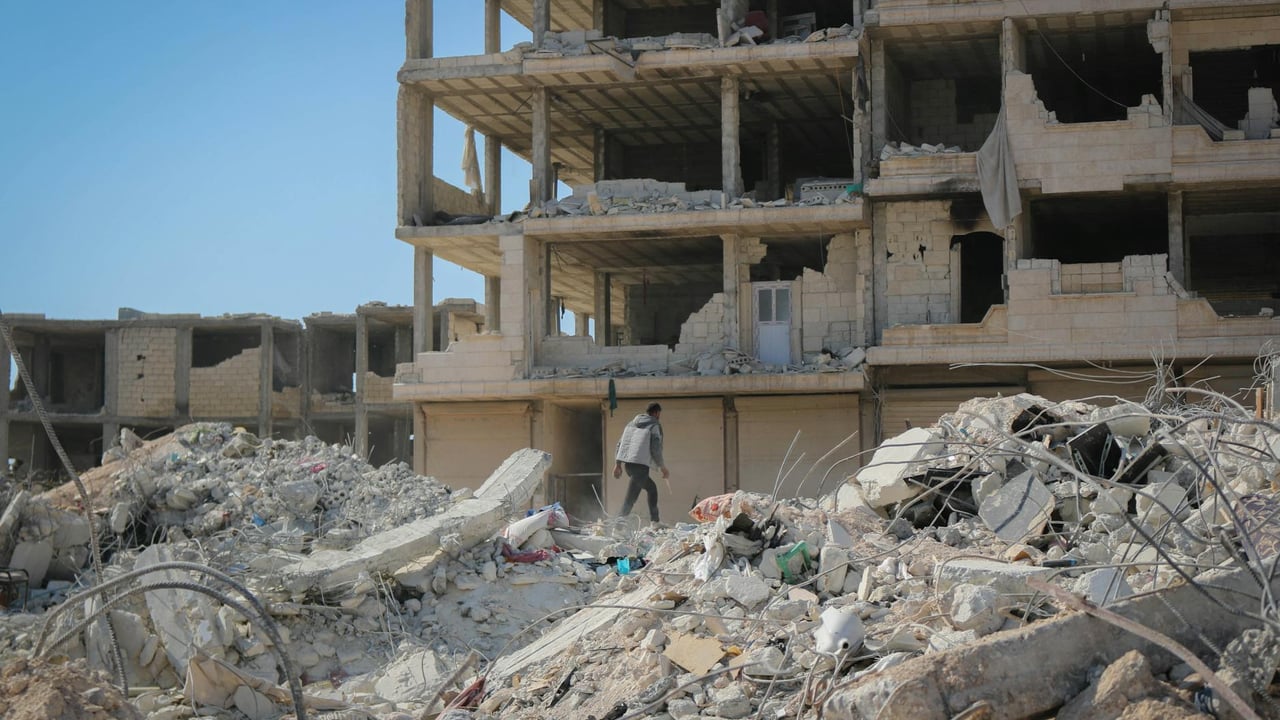

The opening salvos of the military engagement between the United States and Iran have been marred by disturbing reports of high-tech ordnance impacting civilian centers. Forensic analysis emerging from Fars province suggests that the Pentagon’s latest long-range weapon, the Precision Strike Missile (PrSM), may have been the instrument behind several lethal strikes in the conflict's first 24 hours. While the U.S. military maintains that its targets were strictly limited to military infrastructure, the physical evidence on the ground paints a more complex and harrowing picture.
In the city of Lamerd, technical investigators and weapons experts have focused on the wreckage of a sports stadium where dozens of young civilians reportedly lost their lives. Initial claims by U.S. Central Command (CENTCOM) suggested that the damage was caused by a malfunctioning Iranian 'Hoveyzeh' cruise missile. However, independent imagery analysis reveals a distinct airburst pattern and the presence of over 180,000 tungsten pre-formed fragments—a signature characteristic of the PrSM’s lethal mechanism—which few Iranian systems possess.
The proximity of these sites to Islamic Revolutionary Guard Corps (IRGC) facilities appears to be the root of the tragedy. In several instances, the targeted sports stadium, a school, and residential blocks were located within 300 meters of revolutionary guard installations. This suggests that even with the 'surgical' precision touted by Western defense contractors, the margin for error in dense urban environments remains perilously thin, often with catastrophic results for non-combatants.
Beyond Lamerd, reports from the southern city of Minab are even more dire, alleging that a primary school was hit during the initial wave of aerial operations. The human cost of these strikes, including the documented deaths of children as young as two, poses a significant strategic challenge for Washington. In a conflict where the battle for international legitimacy is as vital as the battle for the skies, the optics of advanced munitions being used in civilian zones provide Tehran with a potent propaganda tool.
The PrSM was designed to supersede the aging ATACMS, offering double the range and enhanced survivability against modern air defenses. Yet, its combat debut may be remembered not for its technical superiority, but for the ethical and political firestorm it has ignited. As forensic evidence continues to mount, the U.S. military faces increasing pressure to reconcile its narrative of precision with the grisly reality of the shrapnel-scarred walls in Fars province.