
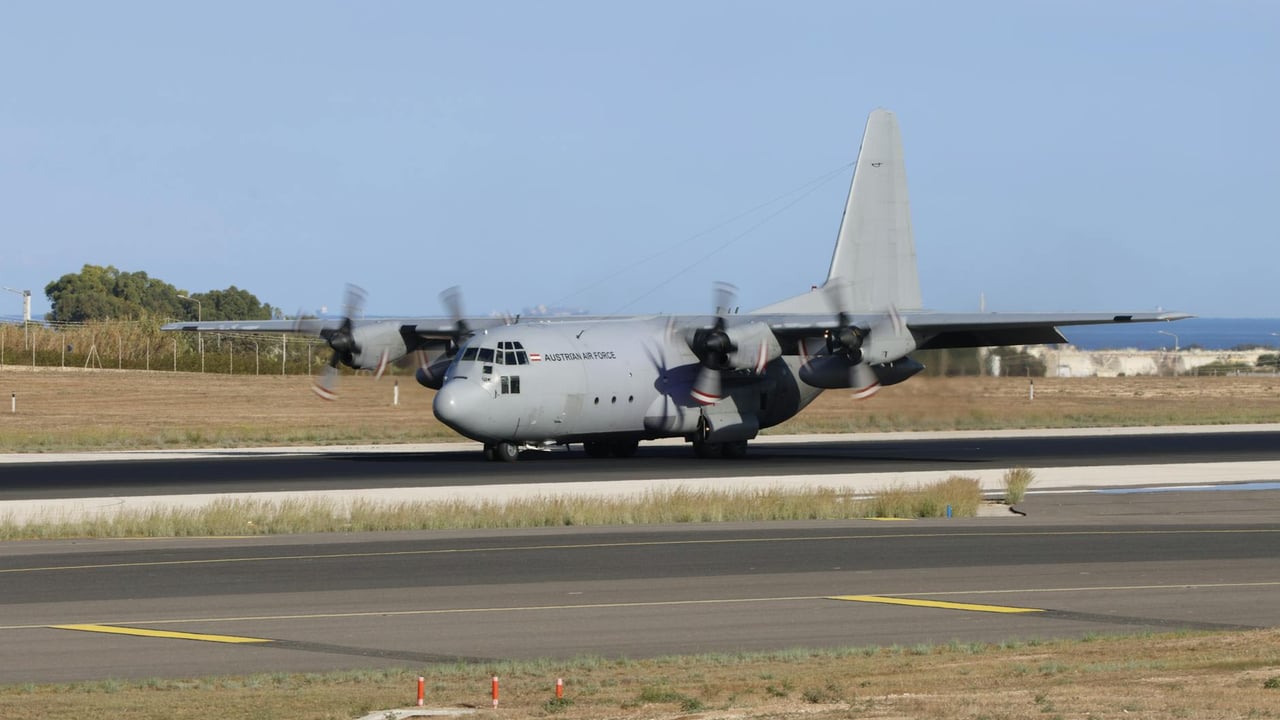

A startling security breach at an Irish airport has seen a man armed with an axe successfully infiltrate the tarmac and inflict damage on a United States military C-130 transport aircraft. The intruder reportedly scaled perimeter fencing before reaching the parked Hercules transport plane, where he proceeded to strike the fuselage and cockpit area with the weapon. Local authorities were eventually able to subdue the individual, but the ease with which a civilian reached a high-value foreign military asset has raised immediate alarms.
This incident is more than a simple act of vandalism; it strikes at the heart of Ireland’s complex geopolitical positioning. For decades, the use of Irish civilian airports by the U.S. military has been a contentious domestic issue, often cited by activists as a violation of the nation’s long-standing policy of military neutrality. The proximity of civilian infrastructure to sensitive foreign defense logistics creates a unique set of security challenges that this latest breach has exposed.
Security protocols at regional hubs, which often lack the heavy militarized protection found at dedicated airbases, are now under intense scrutiny. While Ireland maintains a professional security presence, the assumption of safety in a non-combatant country may have led to a degree of complacency regarding perimeter integrity. This breach demonstrates that even low-tech threats can disrupt international military supply chains and damage diplomatic relations.
As investigators probe the motivations of the attacker, the broader implications for US-Irish cooperation remain at the forefront. Such events provide significant rhetorical ammunition for local political factions who argue that hosting foreign military assets invites unnecessary risk and compromises national sovereignty. Moving forward, both Dublin and Washington will likely need to renegotiate the terms of transit to ensure that logistical convenience does not come at the cost of basic physical security.