The Great Promotion: How Artificial Intelligence Graduated from Digital Assistant to Corporate Architect

The corporate world has entered a transformative phase where AI has evolved from a simple task assistant into a strategic 'brain' capable of autonomous decision-making and physical-world interaction. This shift is driven by the rise of edge computing, world models, and autonomous agents that are redefining the structural foundations of global business and labor.

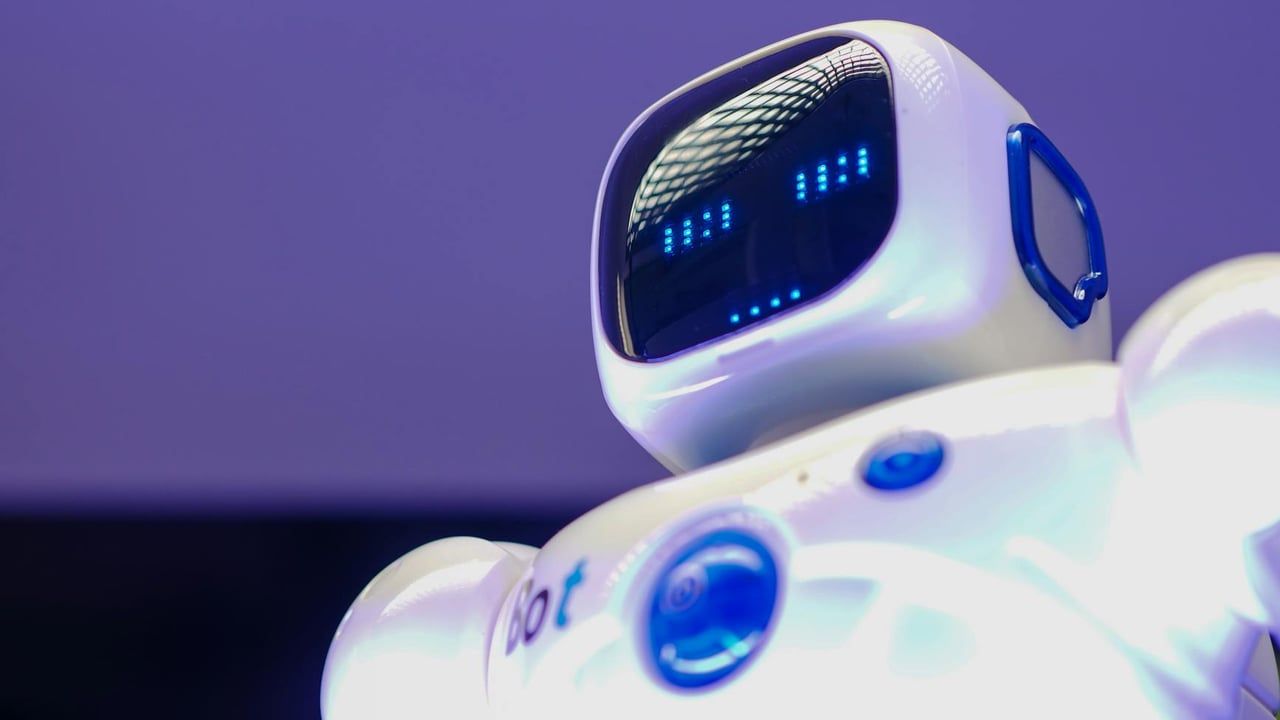
A modern humanoid robot with digital face and luminescent screen, symbolizing innovation in technology.

Key Takeaways

  • 1AI is transitioning from generative tools (copilots) to autonomous agentic systems that manage entire business processes.
  • 2The focus of innovation has shifted toward 'World Models'—AI that understands physical reality—enabling advancements in robotics and manufacturing.
  • 3On-device AI is replacing cloud-centric models to provide lower latency, better security, and deeper hardware integration.
  • 4Massive capital is flowing into companies that bridge the gap between digital intelligence and physical execution, exemplified by high-profile unicorn valuations.
  • 5The integration of AI as a 'corporate brain' is leading to radical changes in workforce structures and executive management strategies.

Editor's
Desk

Strategic Analysis

The transition from 'Narrow AI' to 'Agentic AI' represents the most significant shift in corporate management since the digital revolution. By 2026, the competitive advantage is no longer determined by who has the best data, but by who has the most integrated 'agentic' architecture. The emergence of 'World Models' signifies that AI is breaking out of the digital box and entering the physical economy, which will likely exacerbate the divide between tech-heavy economies and those slower to automate. Strategically, this marks the end of AI as a 'tool' and its birth as a 'manager,' a change that will force a total re-evaluation of corporate governance, liability, and the very definition of professional expertise.

China Daily Brief Editorial
Strategic Insight
China Daily Brief

By early 2026, the global business landscape has undergone a profound structural shift. The initial novelty of large language models, which once served as mere productivity boosters or 'copilots,' has been replaced by a more formidable reality. We have moved beyond the era of AI that 'helps with small tasks' to an era where AI agents function as the central nervous system of the enterprise, driving strategic decisions and executing complex workflows without human intervention.

This evolution is most visible in the transition from cloud-dependent chatbots to autonomous agents integrated directly into hardware. Modern personal computers and industrial terminals no longer require manual deployment for specialized tasks; instead, AI agents now inhabit the 'edge,' managing everything from supply chain logistics to localized data processing. This shift toward on-device intelligence marks a critical departure from the latency-prone cloud models of the early 2020s, offering businesses a faster, more secure, and highly personalized 'brain' that operates within their own firewalls.

The race for 'World Models' has become the new frontline for technological supremacy. As evidenced by the astronomical $5 billion valuation of pioneers like Li Feifei’s World Labs, the industry is no longer satisfied with AI that merely predicts the next word in a sentence. Today’s leading systems are being trained to understand the physical laws of the world, enabling humanoid robots to achieve human-like speeds and permitting AI to manage physical manufacturing environments with the same fluidity as digital spreadsheets.

However, this rapid ascent to the 'brain' of the company brings a disruptive labor reality. The trend of replacing entire administrative and operational departments with specialized agents—a move popularized by tech titans who have slashed traditional staff counts in favor of proprietary models—is accelerating. For the modern executive, the challenge has shifted from 'how do I use AI to help my staff?' to 'how do I architect my entire business around AI capabilities?' as the technology moves from the periphery of the office to the center of the boardroom.

Share Article

Related Articles

📰
No related articles found