
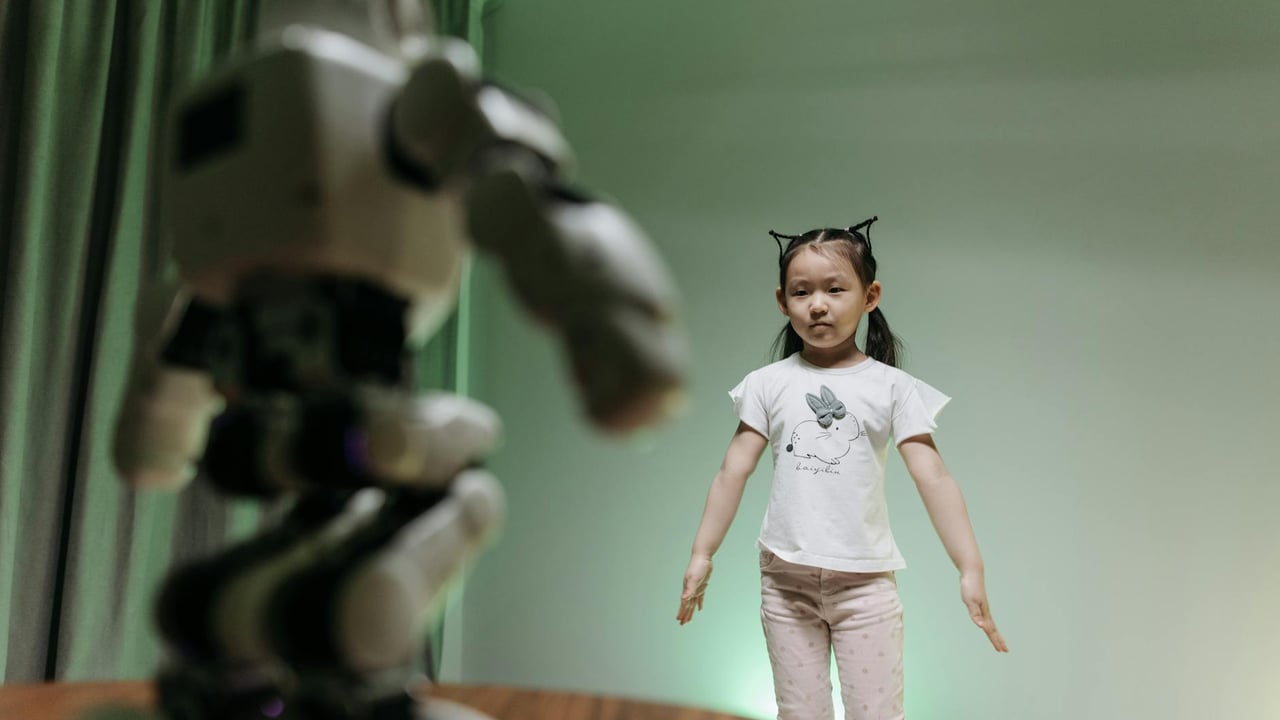

As the global electric vehicle market reaches a saturation point, China’s automotive titans are shifting their gaze from the road to the factory floor. By early 2026, the race to 'build humans' has entered a white-hot phase, with industry leaders like Xpeng, BYD, and Chery pivoting toward humanoid robots—not as a hobby, but as a survival strategy. This transition from 'smart cars on wheels' to 'walking intelligent agents' represents a profound shift in industrial philosophy, yet a fundamental question remains: can these machines ever move past the laboratory and into a sustainable commercial reality?
Evidence suggests the industry is currently caught in a 'laboratory trap.' Data from Unitree, a leading Chinese robotics unicorn, reveals that nearly 74% of revenue in the first three quarters of 2025 came from research and education sectors, with industrial applications languishing at less than 10%. While robots can perform backflips for cameras, the rigorous demands of a 24-hour assembly line—zero-error precision and millimeter-level synchronization—remain elusive. Furthermore, the return on investment (ROI) remains a formidable barrier, as a single humanoid robot costing nearly a million yuan competes against human labor that costs a fraction of that annually.
Despite these hurdles, the logic for automakers is grounded in supply chain synergy. Industry experts note that smart cars and humanoid robots share over 60% of their supply chain components, including sensors, high-performance chips, and actuators. Xpeng’s 'Iron' robot, for instance, utilizes the same Turing AI chips found in its vehicles, allowing the company to amortize massive R&D costs across two distinct product categories. For these firms, robotics is not just a secondary growth curve to appease investors; it is a way to claim the gateway to 'Physical AI'—the next frontier where language, vision, and action converge into a single model.
Strategies among the 'Big Three' paths are now diverging. Xpeng is betting on high-volume production and internal deployment within its own retail stores to prove the concept. Meanwhile, giants like BYD and Chery are focused on pragmatic ROI, using robots for mundane tasks like sorting and painting to solve the rising cost of human labor. Lastly, state-backed SAIC is playing an ecosystem game, spreading capital across multiple startups to hedge against technical uncertainty. While the ambition is clear, the industry has yet to prove that these mechanical agents can be anything more than expensive marketing tools in a 4S showroom.