
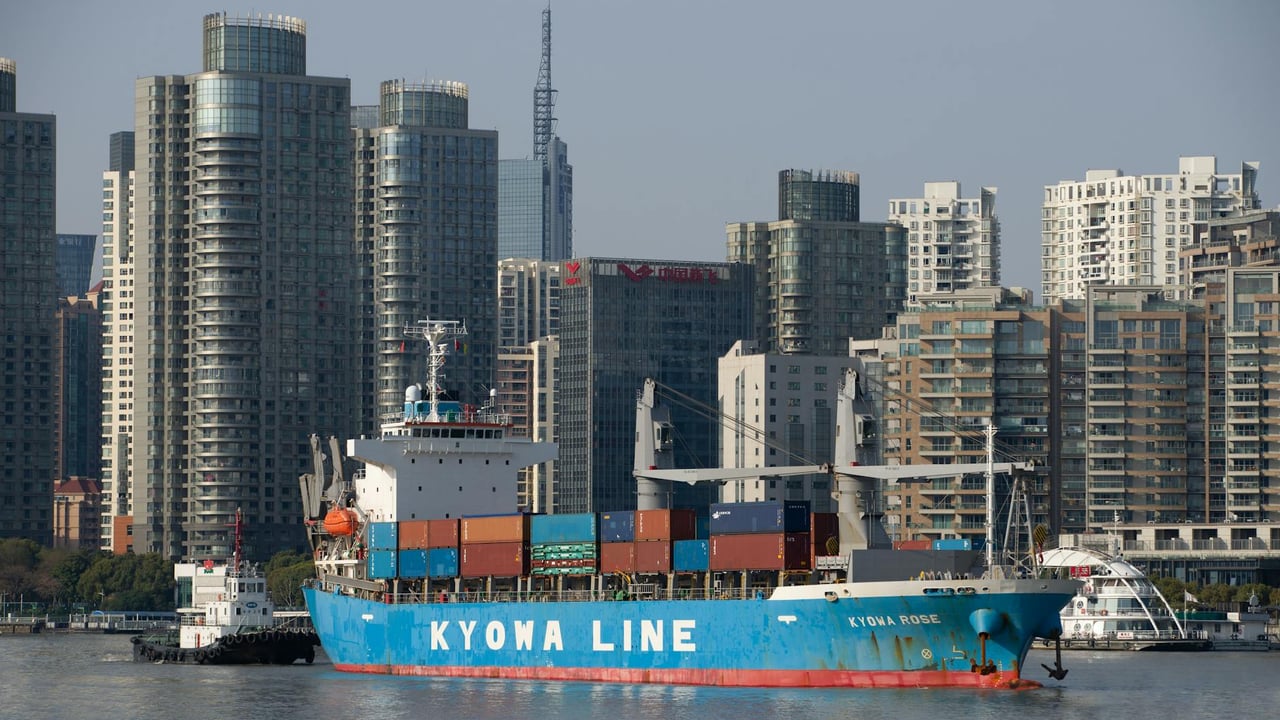

China’s international trade sector began 2026 with a significant expansion, defying broader global economic uncertainty. Data released by the General Administration of Customs (GAC) shows that total goods trade reached 11.84 trillion yuan in the first quarter, a 15% increase year-on-year. This performance marks the first time first-quarter trade has surpassed the 11 trillion yuan threshold, signaling a resilient recovery in both industrial output and domestic consumption.
The structural evolution of Chinese exports is a defining feature of this growth. High-tech and green energy products, often referred to as the 'New Three'—electric vehicles, lithium batteries, and wind power equipment—saw export surges of 77.5%, 50.4%, and 45.2% respectively. This shift toward high-value manufacturing is further evidenced by a 39.1% jump in the export of sophisticated computer components, such as storage and central processing units.
On the import side, a 19.6% increase suggests a hardening of China's internal industrial demand. Imports of energy products and metallic ores rose steadily, while high-tech manufacturing inputs saw a 25.1% boost. These figures indicate that Chinese factories are ramping up production, likely in anticipation of sustained demand for advanced electronics and renewable energy infrastructure throughout the year.
Geopolitical realignments are also reshaping trade routes, with the Global South and ASEAN playing an increasingly dominant role. Trade with Belt and Road Initiative (BRI) partners now accounts for over 51% of China's total trade volume. Notably, trade with African nations grew by 23.7%, a trend Beijing seeks to cement through its new zero-tariff policy for 53 African countries, which is set to take effect in May 2026.
However, officials were quick to temper this optimism with warnings about external volatility. Geopolitical friction in the Middle East and disruptions along the Hormuz Strait have begun to impact logistics and shipping costs. Customs spokesperson Lyu Daliang noted that trade with the Middle East shifted from growth to a decline in March, highlighting how sensitive global supply chains remain to regional conflicts.