
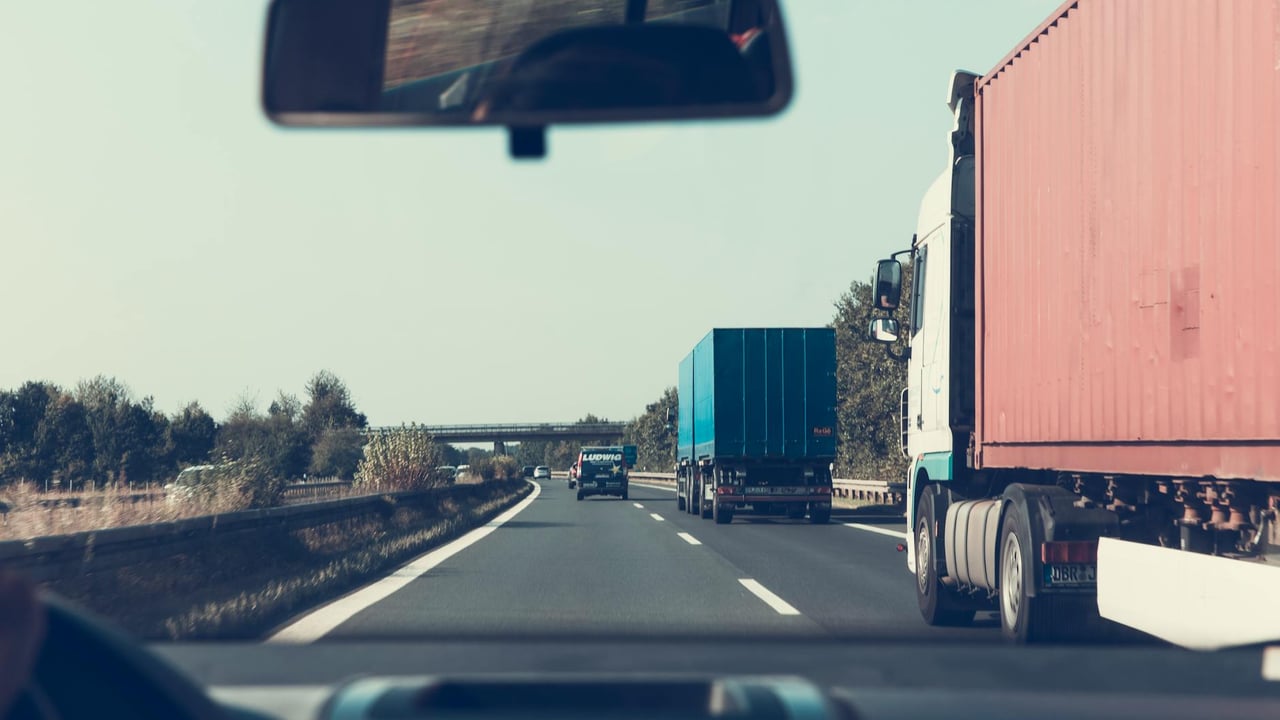

China is preparing to deploy an unprecedented array of high-tech tools to combat one of the deadliest threats on its highways: driver fatigue. Starting June 2026, a new standard issued by the Ministry of Public Safety will introduce a multidimensional approach to identifying exhaustion, utilizing driving behavior, physiological data, and even brainwave monitoring. By quantifying fatigue on a scale of 0 to 100, the regulation aims to turn the 'invisible killer' of the road into a measurable, punishable offense.
While the standard is officially categorized as a 'recommended' guideline rather than a mandatory law, its real-world impact is expected to be devastating for the nation’s millions of commercial drivers. The primary sting lies in accident liability and insurance. If a crash occurs and a driver is found to be in a state of fatigue according to these new metrics, insurance companies will have a powerful legal pretext to deny claims. For a driver operating on razor-thin margins, a single uncompensated accident could lead to immediate financial ruin.
The timing of this regulatory push highlights a growing tension within China's logistics-heavy economy. For years, the country’s efficient, low-cost delivery system has been built on the 'sweatshop on wheels' model. Freight rates have plummeted to levels where profit is only possible if drivers compress their rest periods to the absolute limit. In this ecosystem, drivers have effectively become 'consumables,' forced to choose between the certainty of losing money and the possibility of a fatal crash.
Furthermore, the emergence of platform-based algorithms has created a form of 'institutional fatigue' that technology alone cannot fix. Delivery and trucking platforms use big data to calculate the fastest possible routes, setting those 'limit values' as the baseline for all workers. While the government is now introducing 'brainwave shackles' to monitor the individual, it has yet to fully address the algorithmic whips that drive these individuals to exhaustion in the first place.
Yet, some analysts see a silver lining in this draconian measure. By making the cost of fatigue-related accidents too high for any individual to bear, the regulation may inadvertently force a market correction. If drivers can no longer afford to take the risk of driving tired, they may finally have the leverage to demand higher freight rates. For the industry to truly stabilize, the cost of safety must be integrated into the price of the goods being moved, rather than being extracted from the health of the driver.