
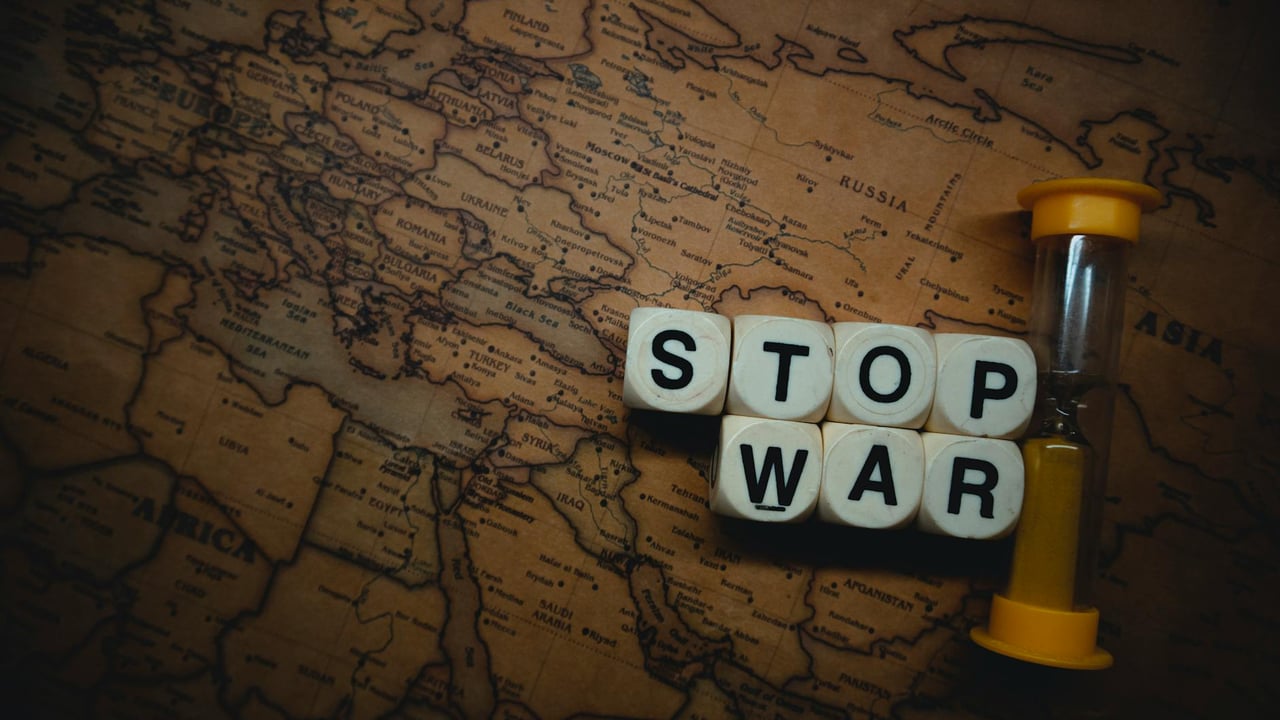

Ray Dalio, the billionaire founder of Bridgewater Associates and a long-time student of historical cycles, has issued a sobering warning that the world is currently in the early stages of a new global conflict. Drawing from his 'Big Cycle' framework—a study of the last 500 years of geopolitical transitions—Dalio argues that the current international climate mirrors the volatile years of 1913 and 1938. He suggests that the global community has moved past the 'pre-war' phase and is now navigating the opening chapters of a prolonged, multi-front struggle that will reshape the world order.
At the heart of Dalio’s thesis is a 13-step progression of conflict, which begins with the relative decline of a dominant power and leads toward direct military engagement and the eventual birth of a new order. He identifies several key indicators that suggest the world is currently at Step 9: the escalation of economic sanctions, the weaponization of trade routes, and the emergence of solidified alliances. In Dalio’s view, the current tensions in the Middle East, particularly involving Iran and the Strait of Hormuz, are not isolated incidents but integrated components of a larger systemic collapse.
Dalio points to a stark divergence in global alignments, noting the resilience of the China-Russia-Iran-North Korea axis against the Western coalition led by the United States. He highlights that while China is often perceived as vulnerable to energy disruptions in the Middle East, its deep strategic partnerships with Iran and Russia ensure a steady flow of resources. This network of mutual support, Dalio argues, creates a geopolitical resilience that the West may be underestimating, even as global trade becomes increasingly fractured into competing blocs.
Regarding the United States, Dalio offers a critique of 'imperial overextension.' With military bases in nearly 80 countries and significant financial commitments to multiple theaters of war, the U.S. faces a daunting challenge in maintaining its global primacy. Dalio warns that no great power can successfully manage a three-front war in Asia, Europe, and the Middle East simultaneously, especially when internal fiscal health is deteriorating. He posits that the ultimate victor in such long-term conflicts is rarely the strongest at the outset, but rather the one capable of enduring the most prolonged period of hardship.
Looking ahead, Dalio estimates the probability of a major multi-regional conflict erupting within the next five years at over 50 percent. He notes that as the 'rules-based' order gives way to a 'might-is-right' paradigm, nations are increasingly turning toward nuclear expansion and financial repression to secure their interests. For investors and policymakers alike, Dalio’s message is clear: the period of 1945-style stability has ended, and the transition to whatever comes next will likely be characterized by heightened volatility and systemic transformation.