
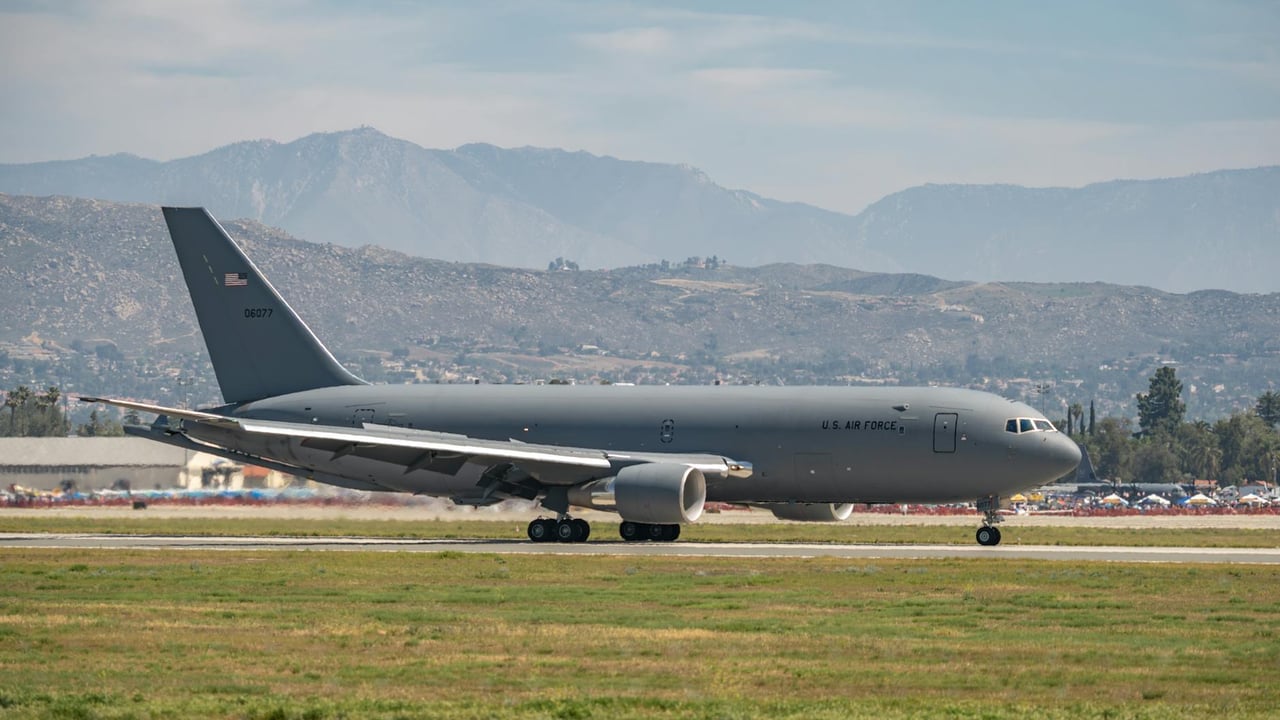

A battle-scarred KC-135R Stratotanker touched down at RAF Mildenhall in Suffolk on April 12, offering a rare, tactile glimpse into the high-intensity military operations currently unfolding in the Middle East. The aircraft, a venerable workhorse of the U.S. Air Force, bore visible 'patches' across its fuselage, which aviation experts identify as characteristic of temporary repairs for shrapnel damage. This visual evidence suggests that the tanker—ordinarily a non-combat support vessel—was operating in a high-threat environment where it was exposed to kinetic fire.
Flight tracking data adds a layer of tactical intrigue to the physical damage. The tanker’s transponder was reportedly switched off from March 2 to April 10, a prolonged period of operational silence that typically indicates involvement in sensitive or clandestine combat missions. Such 'dark' periods are a staple of U.S. operations when navigating contested airspace or supporting strikes where tactical opacity is paramount for mission success and crew safety.
The aircraft's journey back to Europe was a staged retreat from the front lines. Its transponder re-emerged over Saudi Arabian airspace on April 10, followed by a brief layover at a naval base in Crete, Greece, before its final leg to the United Kingdom. This trajectory suggests a strategic exit from the Persian Gulf theater, potentially following a significant engagement that required the aircraft to be withdrawn for more permanent structural repairs.
The presence of shrapnel damage on a refueling tanker is particularly telling of the changing nature of the conflict with Iran. Tankers usually operate in 'safe' orbits far behind the front lines, acting as the lifeblood for fighter jets. If support aircraft of this size are being targeted or caught in the crossfire, it signals a breakdown of traditional safety buffers and suggests that Iranian anti-access/area-denial (A2/AD) capabilities are being deployed with increasing lethality and range.