
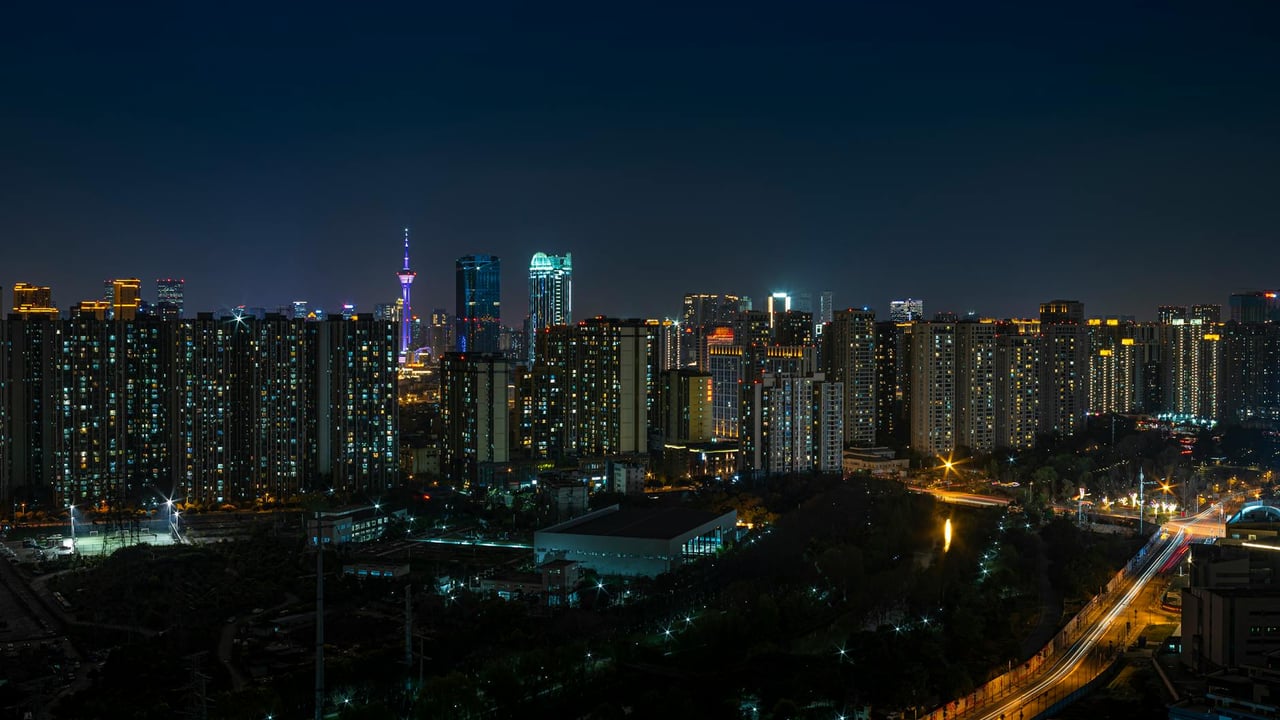

For decades, Beijing has stood as an unassailable titan of China’s urban hierarchy, but a new demographic shift is redrawing the map. According to the latest 2025 statistical communiqué from the Chengdu Municipal Bureau of Statistics, the capital of Sichuan province has seen its permanent population climb to 21.53 million. This surge places Chengdu within striking distance of Beijing, which currently holds 21.8 million residents, narrowing a gap that exceeded 950,000 just five years ago to a mere 265,000 today.
The divergence between these two megacities highlights a tale of two distinct policy paths. While Chengdu has added nearly 600,000 residents since the 2020 census, Beijing has seen its population contract in four out of the last five years. This is not a failure of the capital’s magnetism but a deliberate byproduct of the central government’s 'de-crowding' strategy. Beijing is actively shedding non-capital functions, relocating industries, and capping population density to alleviate the 'urban diseases' of congestion and environmental strain.
Chengdu’s ascent is particularly striking against the backdrop of China’s national population decline. As the country grapples with record-low birth rates and a shrinking workforce, the 'Go West' strategy has finally borne fruit. Chengdu has transformed into a high-tech and logistics hub, offering a more affordable and livable alternative to the hyper-competitive lifestyles of the coastal Tier 1 cities. Its urbanization rate now stands at over 81%, signaling its maturity as a modern global metropolis.
The 2025 data confirms that China’s 'Big Four' 20-million-plus cities—Chongqing, Shanghai, Beijing, and Chengdu—are moving in different directions. While Chongqing and Beijing saw their populations dip slightly in the past year, Chengdu continued its steady climb, adding 61,000 residents. This resilience suggests that the city is successfully attracting the talent and labor pools being shed by both rural hinterlands and more restrictive coastal hubs.
Looking ahead, the momentum suggests that Chengdu could surpass Beijing in total population before the end of the decade. As Beijing focuses on its 'Fifteenth Five-Year Plan' to strictly control core-area density and transfer residents to the neighboring Xiongan New Area, Chengdu is cementing its role as the undisputed anchor of the Chengdu-Chongqing economic circle. This shift marks a permanent pivot in China’s economic center of gravity toward the inland southwest.