Bamboo Diplomacy in Beijing: To Lam’s First State Visit Signals Strategic Continuity

Vietnamese President To Lam has chosen China for his first overseas state visit, signaling the high priority Hanoi places on its relationship with Beijing. The visit aims to strengthen economic ties and infrastructure connectivity while reaffirming the ideological bond between the two ruling Communist parties.

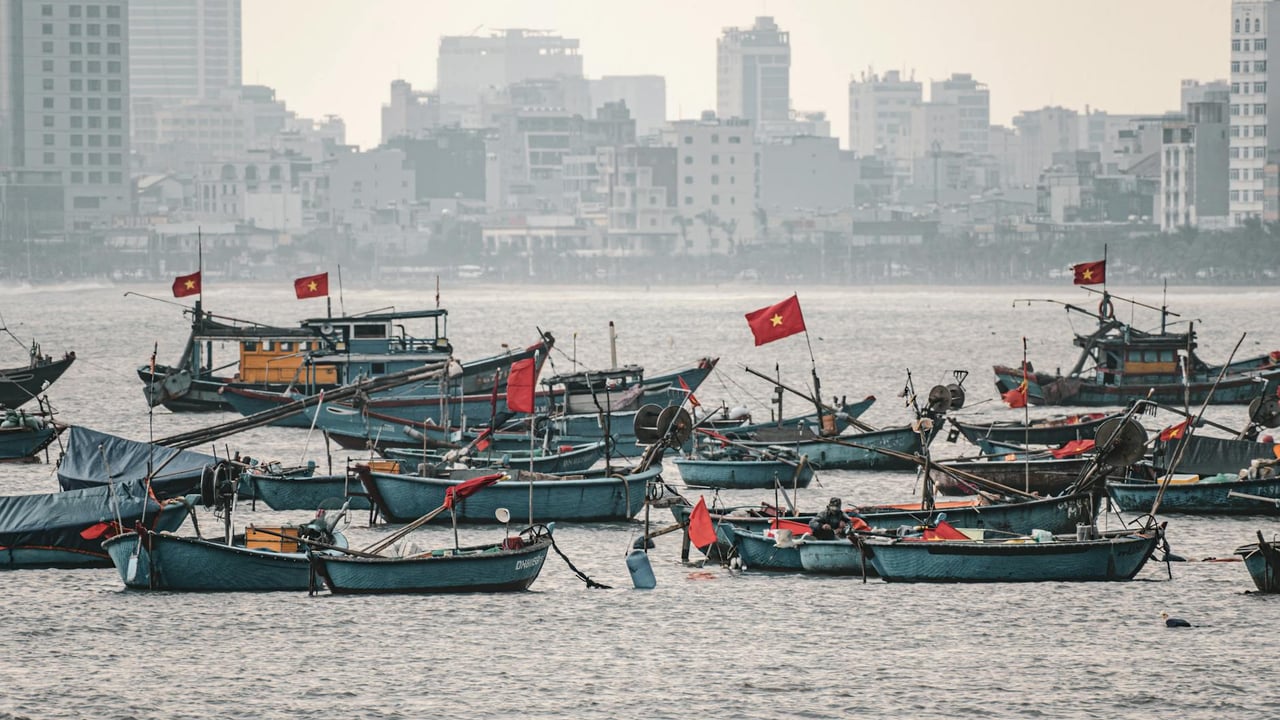
A serene scene of traditional fishing boats with Vietnamese flags in Da Nang harbor.

Key Takeaways

  • 1President To Lam’s visit to China is his first international trip since taking office, emphasizing Beijing's primary status in Vietnam's foreign policy.
  • 2The large delegation indicates a focus on comprehensive cooperation, particularly in areas like high-speed rail, trade, and cross-border infrastructure.
  • 3The visit reinforces the 'Community with a Shared Future' framework, aiming to stabilize relations despite ongoing South China Sea tensions.
  • 4Hanoi is utilizing this high-level engagement to maintain its 'bamboo diplomacy,' balancing its strategic interests between China and the United States.

Editor's
Desk

Strategic Analysis

To Lam’s visit is a calculated move to ensure institutional stability during a period of leadership transition within the Communist Party of Vietnam. While Western observers often focus on Vietnam’s warming ties with the U.S., this trip serves as a reminder that Hanoi’s proximity to China—both geographically and ideologically—is a structural reality that cannot be ignored. The emphasis on a 'huge lineup' of officials suggests that the two countries are moving toward more concrete economic integration, possibly to hedge against global trade volatility. For the global audience, the 'so what' is clear: Vietnam is not 'flipping' to the American side, but is instead perfecting a middle-path strategy that leverages its unique position to maximize national development while avoiding entanglement in great-power conflict.

China Daily Brief Editorial
Strategic Insight
China Daily Brief

President To Lam’s arrival in Beijing marks a significant chapter in the evolving saga of Sino-Vietnamese relations. By selecting China as his first international destination since assuming the presidency, Lam is sending a clear signal of continuity to both domestic audiences and the global diplomatic community. This choice reinforces the traditional hierarchy of Vietnam’s foreign policy, where the relationship with China remains the paramount priority despite growing ties with the West.

The scale of the visiting delegation—described as massive by state media—suggests an agenda that moves far beyond mere ceremony. High-level officials from various sectors indicate that Hanoi is seeking deep cooperation on infrastructure, particularly in rail connectivity and digital technology. These discussions are intended to further integrate Vietnam into regional supply chains while leveraging Chinese investment to modernize its domestic logistics network.

This visit also serves to operationalize the 'Community with a Shared Future' concept, a framework established during previous high-level summits between Xi Jinping and the late Nguyen Phu Trong. While the two nations often navigate complex maritime disputes in the South China Sea, the shared ideological foundation of their respective Communist Parties provides a unique stabilizing force. Lam’s presence in Beijing suggests that regime security and economic stability currently outweigh territorial frictions in the bilateral calculus.

Furthermore, the trip underscores Vietnam’s mastery of 'bamboo diplomacy,' a strategy of remaining firm on core interests while being flexible in geopolitical alignment. By engaging Beijing so early in his tenure, Lam manages the risks of being seen as leaning too far toward Washington. This delicate balancing act ensures that Vietnam remains a pivotal player in the Indo-Pacific, capable of extracting benefits from both superpowers without fully committing to either's orbit.

Share Article

Related Articles

📰
No related articles found