
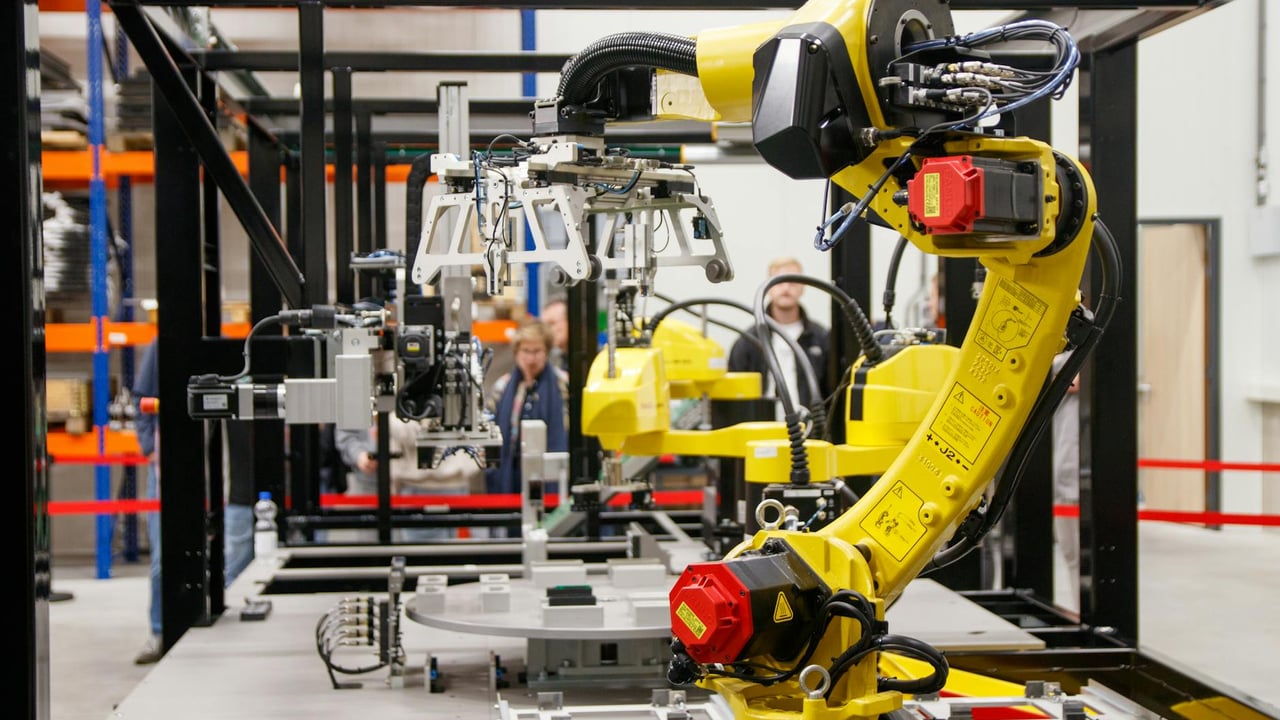

Eft Intelligent Equipment, once hailed as a cornerstone of China’s high-tech manufacturing push, is finding that being at the center of a national industrial strategy does not guarantee a healthy bottom line. The company’s 2025 annual report paints a sobering picture of an industry leader struggling to find its footing, reporting a staggering net loss of nearly 500 million RMB. With revenues plummeting by over 32% to 932 million RMB, the firm is now caught between a bruising domestic price war and a cooling European automotive market.
The decline is largely attributed to a collapse in the company's system integration business, which saw revenues shrink by more than half. Eft’s heavy reliance on European automotive giants backfired as those manufacturers scaled back investments and canceled orders amid a rocky transition to electric vehicles and shifting subsidy policies. This external pressure was exacerbated by 'neijuan'—the hyper-competitive 'involution' within China—where Eft secured contracts with domestic industry leaders only by offering rock-bottom prices that eroded its margins.
Despite six consecutive years of losses since its 2020 debut on the STAR Market, Eft is doubling down on a high-stakes expansion strategy. The company has announced plans to acquire Shengpu Fluid Equipment, a specialist in precision fluid control, in an attempt to plug technical gaps in its robotics assembly line. While management frames this as an essential move to create a new 'growth curve,' the decision to deploy massive capital while hemorrhaging cash has raised eyebrows among market observers.
The market’s lack of confidence is increasingly visible in the behavior of Eft’s own leadership and institutional backers. Throughout late 2024 and early 2025, core technical personnel and major investment funds, including CDH Investments, have offloaded tens of millions of shares. This exodus suggests that while the 'robotics' concept remains a favorite for speculative retail trading, the professionals who understand Eft’s internal mechanics are less optimistic about its path to profitability.