Jilin’s Green Gambit: Transforming Wind and Solar into the ‘New Oil’ of Northeast China

Jilin Province is leveraging its wind and solar resources to become China's premier hub for green hydrogen and its derivatives, aiming to revitalize its industrial base. Through massive infrastructure projects and integration with local automotive and rail giants, the province is positioning itself to lead the nation's transition toward a hydrogen-based economy by 2030.

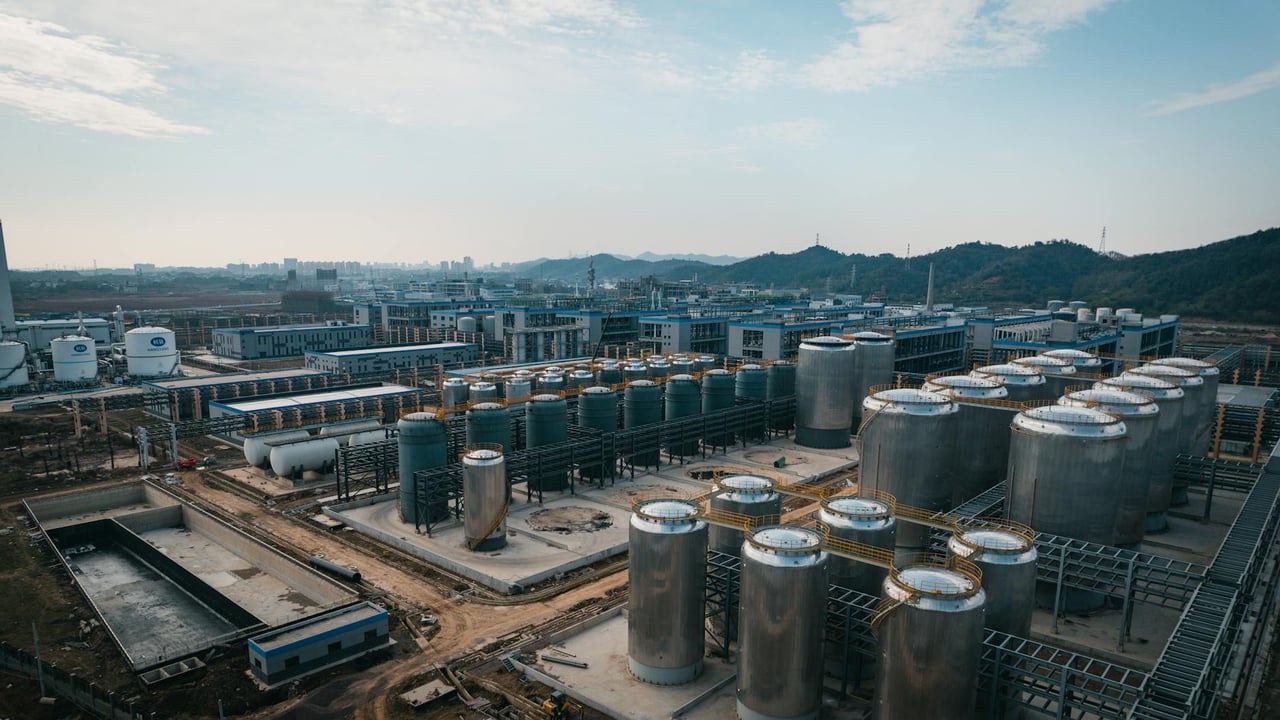
Expansive aerial view of an industrial complex with storage tanks, located in China.

Key Takeaways

  • 1Jilin now accounts for nearly half of China’s planned green ammonia and methanol capacity, signaling a shift from power generation to high-value chemical production.
  • 2The 15th Five-Year Plan elevates hydrogen to a primary economic growth point, targeting a national market size exceeding 1 trillion yuan.
  • 3Jilin is implementing a 'Hydrogen-Plus' strategy, integrating fuel production with local manufacturing champions like FAW Group and CRRC.
  • 4The province's green hydrogen production target is set to reach 800,000 tons annually by 2030, supported by over 100 billion yuan in renewable energy investment.
  • 5New national guidelines aim to drive the price of hydrogen down to 15-25 yuan per kilogram by 2030 to achieve commercial viability across shipping and heavy industry.

Editor's
Desk

Strategic Analysis

Jilin’s strategic transformation represents a sophisticated evolution of China’s 'Rust Belt' revitalization. While earlier efforts focused on propping up legacy industries, the current 'Green Hydrogen-Plus' initiative seeks to leapfrog traditional energy paradigms by utilizing geographical disadvantages—like the remote wind corridors of Baicheng—as competitive assets. The real significance lies in Jilin's attempt at full-chain integration; it is not just producing the fuel, but also the storage tanks (via local carbon fiber production) and the end-use vehicles. If Jilin can successfully lower the cost of green hydrogen to the targeted 15 yuan per kilogram, it will provide a globally significant blueprint for how traditional industrial regions can maintain relevance in a net-zero world. This is not just an energy play; it is an industrial survival strategy.

China Daily Brief Editorial
Strategic Insight
China Daily Brief

Jilin Province, once a symbol of China’s aging industrial heartland, is orchestrating a high-stakes pivot toward the future of energy. By leveraging its vast, once-underutilized wind and solar resources, the province is positioning itself as the national leader in the 'green hydrogen-ammonia-methanol' value chain. This strategy aims to do more than just produce energy; it seeks to revitalize a 'Rust Belt' economy by integrating green molecules into the region’s traditional strengths in automotive and rail manufacturing.

The shift comes as Beijing elevates hydrogen from a fringe 'future industry' to a central pillar of its 15th Five-Year Plan, which spans 2026 to 2030. National policy now identifies hydrogen and nuclear fusion as the next dual engines of economic growth. For Jilin, this transition is personified by the city of Baicheng. Once penalized by regulators for failing to find buyers for its excess wind power, Baicheng has rebranded itself as the 'Northern Hydrogen Valley,' turning wasted electricity into a storable, transportable commodity.

Investment figures underscore the scale of this ambition. In the first quarter of 2025 alone, over 64 billion yuan was earmarked for hydrogen projects across China, with Jilin emerging as a primary destination. The flagship Songyuan Hydrogen Industrial Park, a massive integrated facility, has already begun production. This project alone is designed to produce 45,000 tons of green hydrogen annually, serving as the foundational 'green blood' for a new industrial ecosystem that includes heavy-duty trucks and locomotives.

Jilin’s competitive edge lies in its 'market positioning' rather than mere resource extraction. Unlike other resource-rich provinces that simply export raw energy, Jilin is building a closed-loop economy. The province is deploying hydrogen-powered heavy trucks from local giant FAW Group and hydrogen-powered commuter trains from CRRC Changchun. By 2030, the province aims for a green hydrogen capacity of 800,000 tons per year, effectively turning the region into a laboratory for the deep decarbonization of heavy industry.

Share Article

Related Articles

📰
No related articles found