
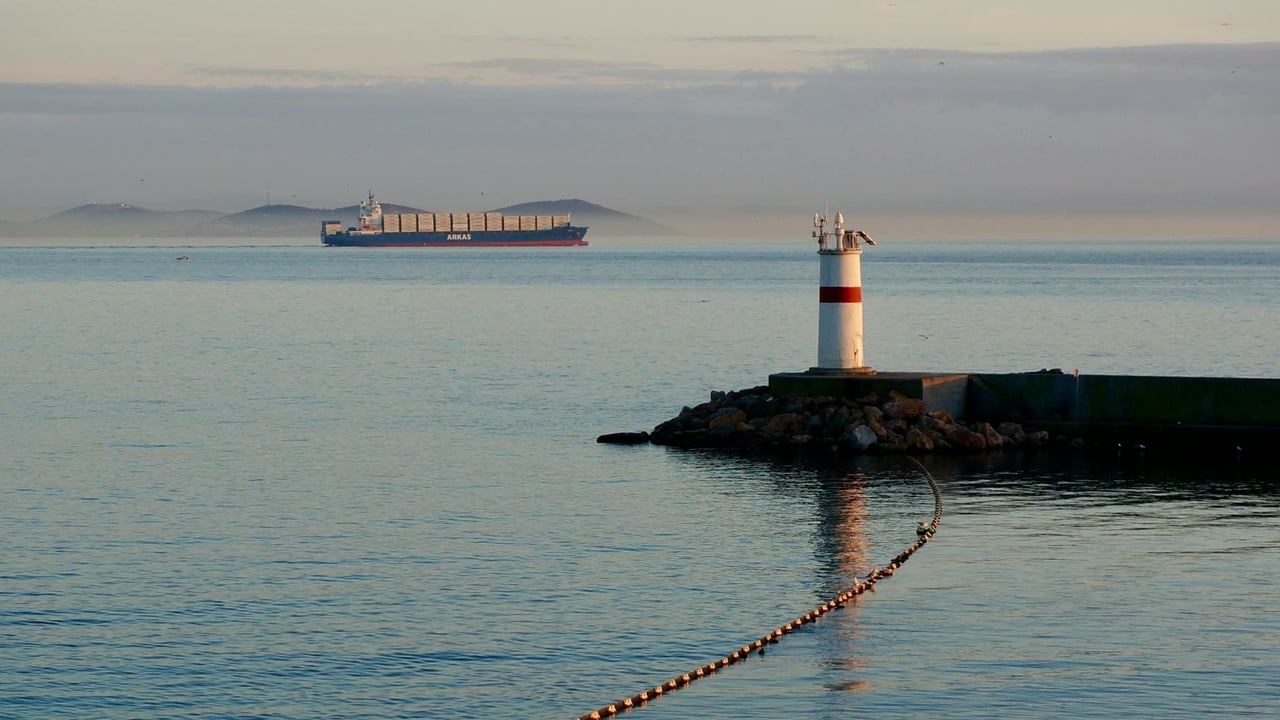

The morning of April 13 marked a grim turning point for global logistics as the brief flicker of hope for a de-escalation in the Strait of Hormuz vanished. Following a failed attempt at a lasting ceasefire between Washington and Tehran, the maritime corridor has transformed into a high-stakes arena of blockades and extortion. For freight forwarders and international traders, the geopolitical chess match is no longer an abstract concern; it has become a direct, exorbitant tax on the movement of goods.
While President Donald Trump signaled a total naval blockade aimed at stopping all Iranian oil exports and ship traffic paying Iranian "tolls," the U.S. Central Command offered a slightly more nuanced stance, targeting traffic to and from Iranian ports. This strategy mirrors the embargoes previously levied against Venezuela, but at a far higher cost to the global economy. By targeting the financial mechanisms of the passage, Washington seeks to starve Tehran of its remaining oil revenue, which Bloomberg estimates at 1.7 million barrels per day as of March.
Tehran, meanwhile, has been refining its own set of rules for the "new order" in the Persian Gulf. By mapping out mine-danger zones, the Islamic Revolutionary Guard Corps (IRGC) has successfully forced commercial vessels into a narrow "safe corridor" hugging the Iranian coastline near Larak and Qeshm islands. This tactical redirection serves a dual purpose: it allows Iran to inspect all transiting cargo and, as reports from maritime analysts suggest, extract massive informal tolls. Some VLCC (Very Large Crude Carrier) owners have reportedly paid upwards of $2 million just to secure safe passage.
This predatory environment has driven commercial shipping to a standstill. Transit volumes, which averaged 135 ships per day before the conflict, plummeted to just four vessels on April 13. Even as some Greek and Chinese tankers successfully navigated the strait under the new Iranian protocol, the risk remains untenable for most Western-aligned fleets. Shipping giants like Hapag-Lloyd and Maersk are now warning that the disruption is no longer a localized bottleneck but a systemic failure of the global supply chain.
In response to the chaos, the logistics industry is aggressively decoupling from the Strait. Carriers such as COSCO have shifted to a "Sea-to-Land" model, offloading containers at ports outside the chokepoint—such as Fujairah in the UAE or Sohar in Oman—and transporting them via land bridges. However, this pivot is far from seamless. Cargo originally destined for the Persian Gulf is being "randomly" offloaded in South Asia or Southeast Asia, leaving freight forwarders to scramble for transshipment solutions that often cost more than the value of the goods themselves.
For the end consumer, the implications are stark. Surcharges for rerouting a single 40-foot container have reached as high as $6,500, costs that are inevitably being passed down the value chain. Even if a diplomatic solution were reached tomorrow, industry leaders estimate it would take at least six to eight weeks for shipping networks to rebalance. The Strait of Hormuz, once a reliable artery of global trade, has become a volatile toll road where the price of entry is dictated by geopolitical survival rather than maritime law.