
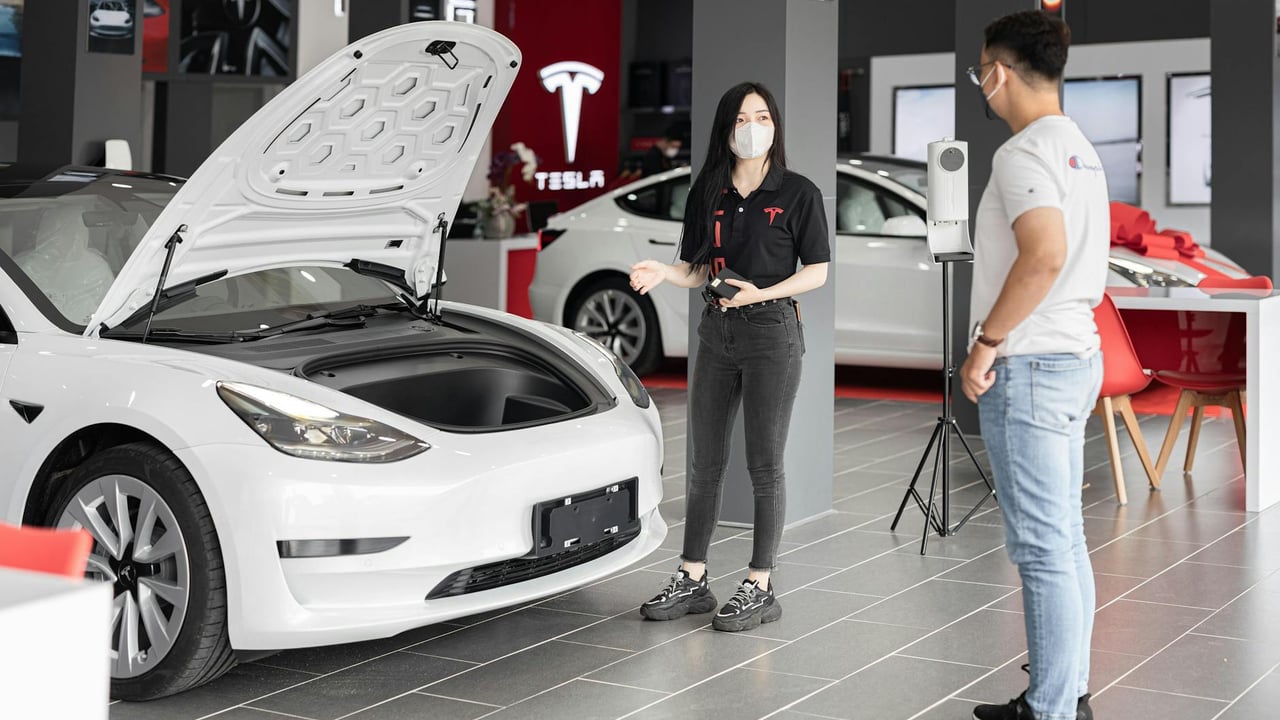

The global race for artificial intelligence supremacy has entered a more localized and hardware-intensive phase. Elon Musk’s recent announcement that Tesla’s AI5 chip has officially reached the tape-out stage marks a pivotal moment in the transition from cloud-based training to edge-side inference. While previous generations of silicon were designed to learn, the AI5 and its successor, AI6, are being built to act, providing the raw power necessary for real-time autonomous driving and sophisticated robotics without the latency of a remote server.
This hardware breakthrough is mirrored by shifting economic realities within China’s digital infrastructure. Tencent Cloud recently announced a 5% price increase for its AI computing and container services, effective May 2026. This move serves as a fever signal for the industry, suggesting that the soaring costs of core hardware and the scarcity of high-end chips are finally being passed down to the consumer. It indicates that the supply-demand tension previously seen in Western markets is now firmly entrenched in China’s domestic cloud ecosystem.
The underlying driver of this friction is the explosive growth of 'Token' consumption. We are moving past the era of the simple chatbot and into the era of the AI Agent—autonomous programs capable of multi-step reasoning, tool calling, and long-context management. Industry data suggests that a single automated booking task performed by an AI Agent can consume up to 15,000 tokens, a ten-fold increase over traditional text generation. This shift is reorienting the entire supply chain from 'training clusters' toward 'inference clusters.'
As the industry matures, the business model for compute is undergoing a fundamental transformation. Rather than simply renting out 'bare metal' or raw server space, cloud providers and specialized lessors are moving toward a 'Model-as-a-Service' or 'Token-sharing' framework. This transition allows providers to capture more value from the high-margin inference market while mitigating the astronomical capital expenditures required to stay at the cutting edge of semiconductor technology.
In China, the regulatory and policy framework is also evolving to meet this demand. Concepts such as 'Compute Banks' and 'Compute Supermarkets' are being explored to solve the issues of resource underutilization and regional mismatch. By pooling heterogeneous resources into a smarter, market-driven grid, Beijing hopes to ensure that the next generation of AI applications—from embodied intelligence to large-scale multi-modal interactions—is not throttled by the physical limits of current infrastructure.