
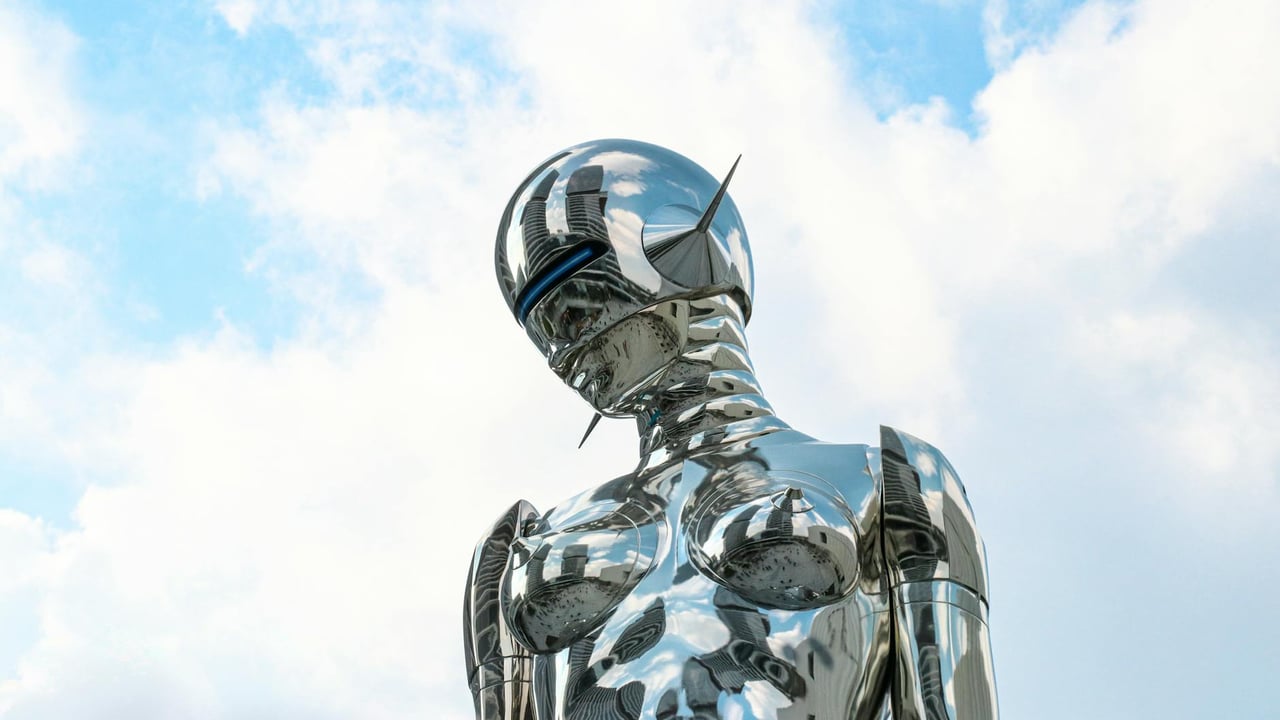

In a culture that relentlessly encourages individuals to 'be themselves' and prioritize self-care, a profound sense of hollowness is taking root. Chinese intellectuals are warning that while we chase authenticity, the tools of modern life—specifically artificial intelligence and data-driven logic—are turning the unique human experience into a standardized, dry commodity. This paradox was the focal point of a recent discourse in Shanghai, where scholars gathered to discuss the resurgence of 'Wilderness Philosophy' as an antidote to the mechanical drift of modern existence.
Liu Qing, a prominent professor at East China Normal University, argues that we are witnessing a 'sub-human' state where both rational thought and sensory perception are in decline. As machines become more humanoid, humans are conversely becoming more machine-like, a 'dual convergence' that threatens the very essence of what it feels like to be alive. In this age, the 'living human feel' has become a luxury, as people increasingly view their own lives through the same quantifiable lenses used by the algorithms that govern their digital interactions.
To combat this, Associate Professor Sun Ning of Fudan University proposes the 'Wilderness' not merely as a geographic location, but as a mental methodology. Drawing on the 1964 American Wilderness Act, Sun defines these spaces as areas where the earth and its community of life are untrammeled by man. Entering the wilderness requires a deliberate training of the senses—slowing down to the pace of a snail to reclaim the 'embodied' alertness that short-form videos and data tags have eroded.
The digital age has transformed life into what philosopher Henri Bergson called the 'spatialization of time,' where continuous experience is chopped into discrete snapshots and data tokens. In this environment, even intimacy is under threat; 'virtual lovers' and algorithmic matchmaking replace the messy, frictional, and unpredictable encounters that define true human connection. By removing the pain and friction of reality, these smooth interactions leave the human spirit flat and devoid of depth.
Ultimately, the solution proposed by these thinkers is a radical shift away from anthropocentrism. Rather than trying to make the world more human-like through technology, humans should strive to 'become the wilderness' by surrendering their arrogant egos to the natural world. This 'subject-nature intersubjectivity' offers a path to rebuild the self by interacting with a force that is indifferent to human utility, allowing for a life that exists between the binary of zero and one.