
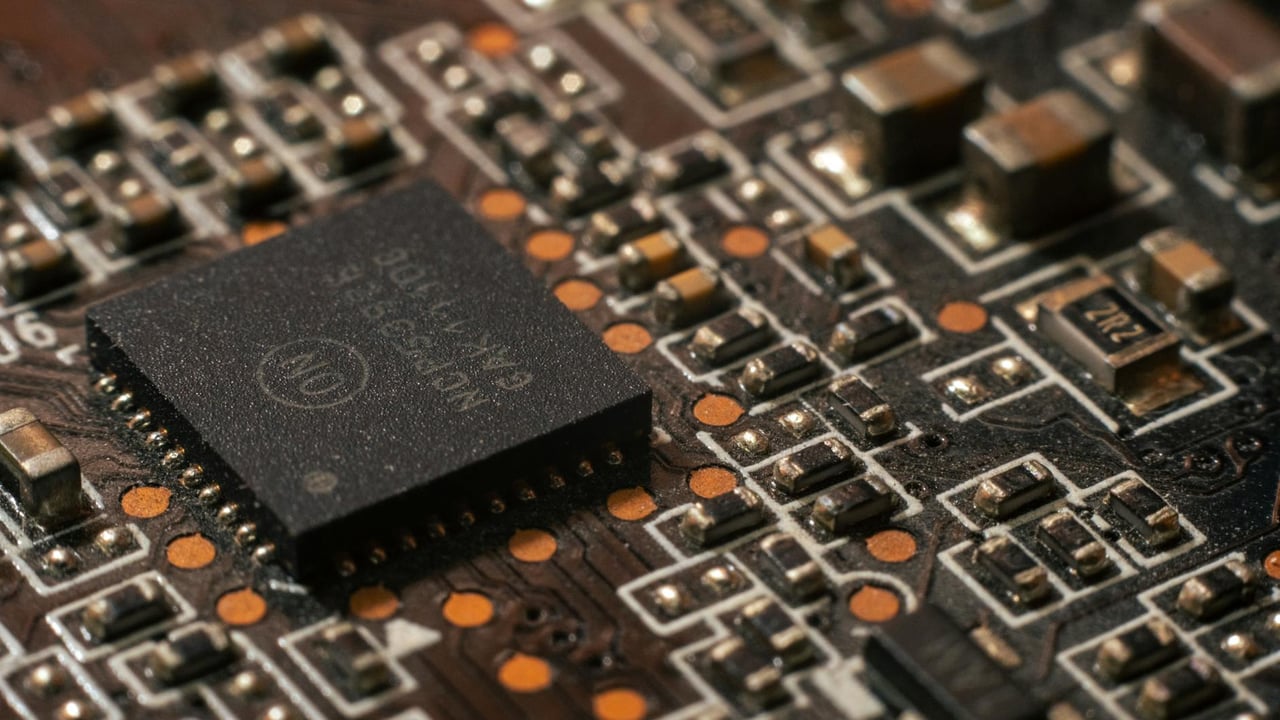

China’s automotive sector is undergoing a strategic pivot as state-owned enterprises (SOEs) aggressively enter the semiconductor design arena, transitioning from a desperate search for ‘available’ parts to the development of ‘optimized’ proprietary silicon. On April 16, FAW Group announced the successful development of the 'Hongqi 1,' a sophisticated multi-domain fusion chip that integrates cockpit, driving assistance, and vehicle control functions into a single processor. This move signifies a major escalation in Beijing’s pursuit of a vertically integrated, self-sufficient automotive supply chain.
The technical significance of the 'Hongqi 1' lies in its ability to consolidate five previously separate functional domains—driving assistance, smart cockpit, body control, communication, and security—into one centralized unit. According to internal benchmarks, the chip boasts a 21.7% increase in logical computing power and a 15.4% boost in image processing over industry-standard fusion chips, such as Qualcomm’s SA8775. This ‘all-in-one’ approach is designed to provide the massive computational overhead required for the next generation of Level 3 and Level 4 autonomous driving systems.
This trend is not limited to FAW; the entire ‘National Team’ of Chinese automakers is mobilizing. GAC Group recently unveiled the Hyper GT, which it claims features 100% domestic chip design, while Dongfeng Motor is moving toward mass production of its DF30 microcontroller. By partnering with over 100 ecosystem allies, these state giants are attempting to insulate themselves from geopolitical volatility and the risk of 'chokepoints' that have previously paralyzed Chinese high-tech industries.
The push for self-reliance is also a pragmatic response to the punishing costs of Western high-end silicon. William Li, CEO of Nio, recently revealed that his company previously spent up to $300 million annually on Nvidia’s OrinX chips. By developing the 5nm 'Shenji NX9031,' Nio aims to drastically reduce its dependency on foreign vendors while simultaneously cutting operational costs. Industry analysts suggest that by 2027, the localization rate of semiconductors in Chinese vehicles could reach 40%, fundamentally altering the global balance of power in the automotive technology market.