
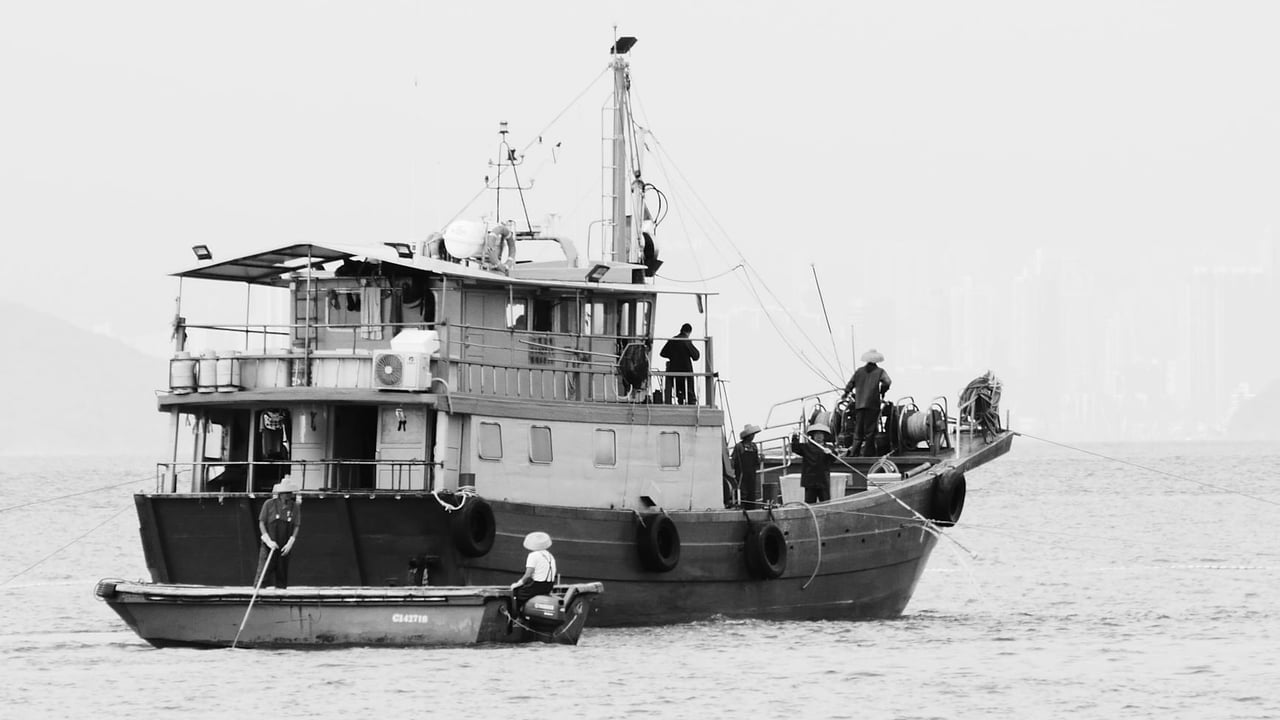

A sharp divide has emerged between Western satellite surveillance and the realities of the East China Sea as Beijing pushes back against allegations of a 'military-style' mobilization of its fishing fleet. Reports from international outlets, citing data from firm ingeniSPACE, recently highlighted the convergence of over 1,000 Chinese vessels, interpreting their dense formations as a strategic demonstration of maritime power rather than a commercial endeavor. To the veteran fishermen of Zhoushan, however, these geopolitical interpretations are viewed as a fundamental misunderstanding of seasonal labor cycles.
The controversy centers on a massive flotilla observed between late December and March, which Western analysts described as a 300-kilometer 'floating barrier' intended to signal resolve amidst rising tensions with Japan. These reports suggest that the precision and density of the ships—sometimes spaced just 500 meters apart—indicate a level of coordination typical of state-directed paramilitary activity. For Beijing, this narrative is a calculated attempt to delegitimize its sovereign fishing rights by blurring the line between civilian industry and gray-zone warfare.
Chinese experts and industry insiders argue that the phenomenon is driven by biology and technology, not military orders. The East China Sea’s fishing season begins in earnest after a months-long summer moratorium, leading to a massive rush toward the Yangtze River estuary where nutrient-rich currents attract schools of hairtail and yellow croaker. During peak seasons, thousands of ships naturally congregate in high-yield zones, following migratory patterns that have dictated local life for generations.
Furthermore, the perceived 'tactical' coordination of these vessels is attributed to the modernization of China’s fishing fleet. The integration of the Beidou satellite navigation system and advanced sonar allows captains to pinpoint fish schools with unprecedented accuracy, leading to spontaneous clusters of vessels in the most productive waters. Experts at Shanghai Ocean University suggest that AIS data visualization can be easily manipulated or misinterpreted, creating an illusion of 'arrays' when ships are simply following the same digital breadcrumbs to their catch.
The pushback from Chinese state media underscores a growing concern over 'cognitive warfare.' Beijing views these accusations as a 'black labeling' strategy designed to justify aggressive maritime enforcement by regional rivals. By characterizing ordinary fishermen as maritime militia, critics argue that Western powers are setting the stage for potential escalations in disputed waters, effectively turning a seasonal harvest into a theater of international conflict.