
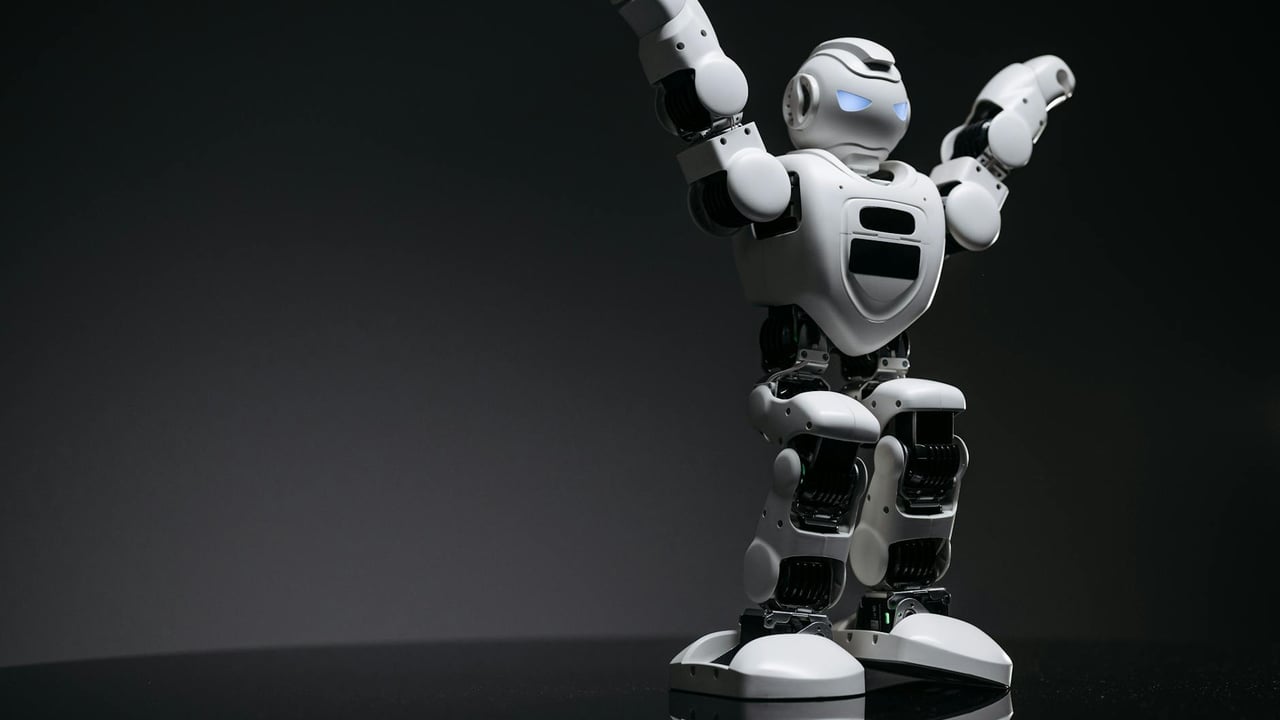

For the past two years, few sectors in the Chinese A-share market have captured investor imagination quite like humanoid robotics. Zhongdalide, a premier manufacturer of precision reducers, became the poster child for this speculative fervor, seeing its stock price quintuple as it was rebranded from an industrial components maker to a critical supplier for the future of automation. However, the company’s latest financial disclosure has served as a bracing cold shower, suggesting that the distance between high-tech prototypes and profitable mass production remains a yawning chasm.
The company’s 2025 fiscal report revealed a startling disconnect between market valuation and operational reality. While annual revenue saw a modest uptick of 6.61% to 1.04 billion RMB, net profit plummeted by over 13%, and non-recurring profit dropped by a staggering 20%. The most alarming figure was tucked away in the fourth quarter, where net profits cratered by nearly 65% year-on-year. This performance missed even the most conservative institutional forecasts by a wide margin, signaling that the 'robotics bull run' was built on expectations that the current industrial cycle could not yet support.
Beyond the headline earnings miss, the company’s balance sheet reveals deeper structural anxieties. Operating cash flow has evaporated, falling by over 85%, while inventory levels have surged, leading to a 60% increase in write-down provisions. Critically, as the company spent aggressively on sales and administration to maintain its market profile, its investment in research and development—the very engine of its supposed technological edge—actually saw a slight contraction. For an enterprise positioned at the heart of the global robotics race, a stagnant R&D budget is a precarious signal to send to the market.
This financial 'bomb' highlights a broader trend in China's specialized manufacturing sector: the 'humanoid' label has often acted as a multiplier for stock prices without providing a corresponding boost to the bottom line. Most humanoid robotics projects remain in the pilot phase or small-batch testing, meaning the demand for high-end components like harmonic and planetary reducers has not yet reached the scale required to offset the rising costs of industrial competition. As the market shifts its focus from narrative to fundamentals, companies that cannot translate 'tech buzz' into 'cash flow' are facing a harsh reappraisal.
Further complicating the narrative is Zhongdalide’s recent strategic pivot toward overseas expansion. The company recently announced the acquisition of a South Korean entity for a modest 1.8 million RMB, alongside new subsidiaries in Germany and Vietnam. While these moves are framed as global positioning, analysts have noted that the Korean target appears to be a newly established shell company with zero revenue. In the context of a domestic profit slump, these small-scale international ventures may be viewed more as attempts to sustain a 'growth narrative' than as immediate drivers of shareholder value.