
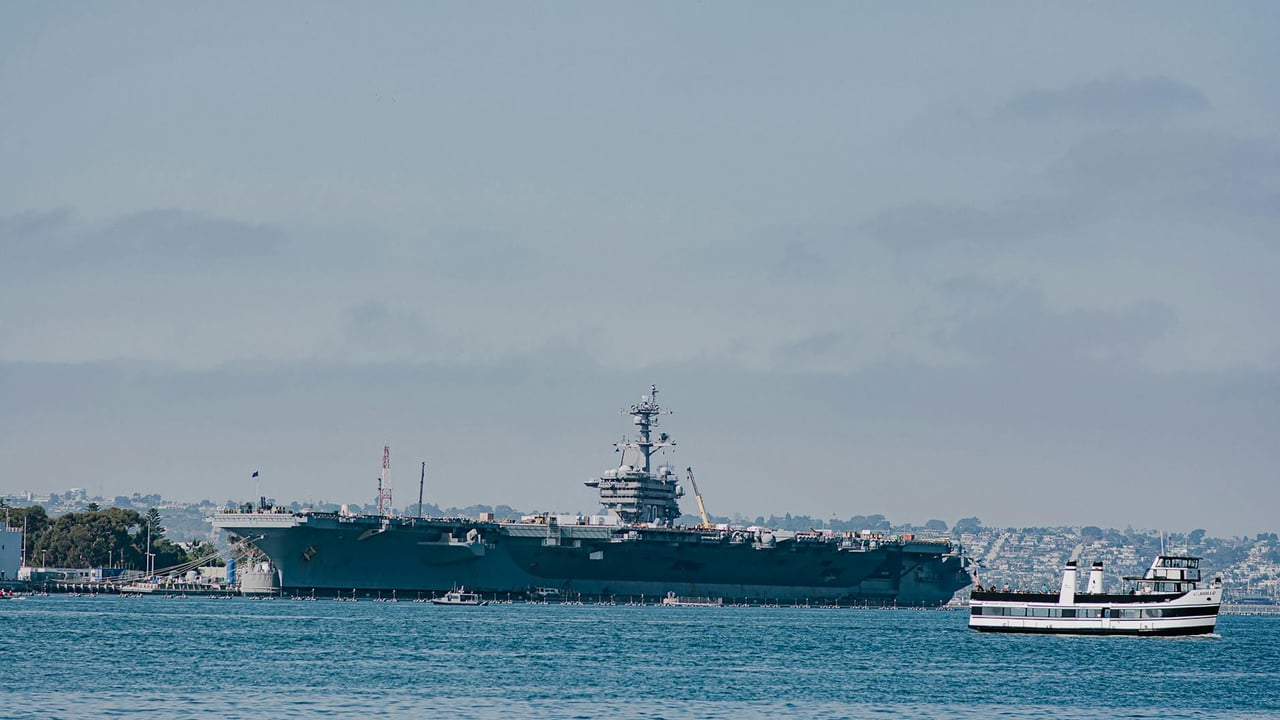

The U.S. Navy is facing a mounting series of operational setbacks as two major aircraft carriers and a high-altitude surveillance drone suffered significant casualties and equipment losses in recent weeks. On April 14, the USS Dwight D. Eisenhower (CVN-69) experienced a fire while undergoing maintenance at the Norfolk Naval Shipyard in Virginia. The blaze, which broke out in a restricted area of the Nimitz-class nuclear carrier, resulted in eight sailors being treated for injuries before they were cleared to return to duty.
While the Navy reports that the fire was quickly extinguished, the incident follows a much more severe fire aboard the USS Gerald R. Ford (CVN-78) just a month prior. In that instance, a laundry room fire led to nearly 200 sailors requiring treatment for smoke inhalation. This pattern of shipboard fires raises urgent questions about safety protocols and the intense pressure placed on shipyard facilities as they struggle to keep pace with the maintenance requirements of an aging fleet.
Beyond the shipyards, the Navy’s high-tech surveillance capabilities took a staggering financial hit on April 9 when an MQ-4C Triton drone crashed under mysterious circumstances. Valued at approximately $240 million—exceeding the price tag of two F-35 stealth fighters—the Triton represents the pinnacle of American unmanned aerial reconnaissance. Flight data suggests the drone issued an emergency '7700' code over the Persian Gulf before making a sharp turn toward Iranian airspace and plunging into the sea.
The loss of the Triton is a significant blow to U.S. intelligence gathering in the Middle East. Capable of flying at altitudes of 50,000 feet for over 24 hours, the platform is designed to provide persistent wide-area maritime surveillance. The Navy’s refusal to disclose the crash coordinates or the specific cause of the failure has fueled speculation regarding electronic warfare or mechanical issues at the extreme edge of the drone's flight envelope.
These combined losses highlight a precarious moment for U.S. power projection. As the Pentagon attempts to modernize for future peer-state conflicts, it is simultaneously battling a logistical crisis characterized by maintenance backlogs and the high cost of maintaining a global presence. The loss of a $240 million asset, coupled with recurring industrial accidents on capital ships, suggests that the logistical tail of the American military is increasingly struggling to support its operational teeth.