
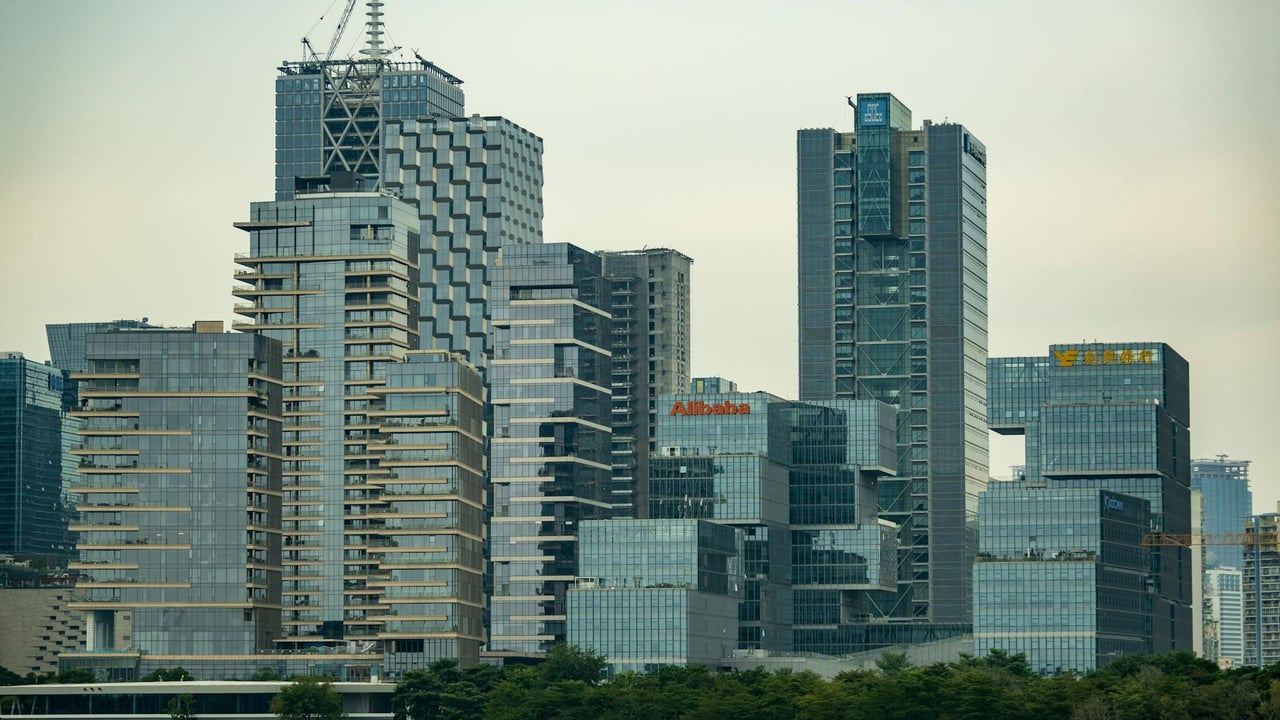

China’s regulatory landscape and industrial priorities are reaching a new point of divergence. On one hand, the state is intensifying its policing of the consumer internet economy, as evidenced by a massive 3.6 billion RMB ($500 million) fine levied against seven of the country’s largest e-commerce platforms. Giants including Meituan, Pinduoduo, and Alibaba’s Tmall were penalized for the 'ghost takeout' phenomenon—a practice involving fraudulent storefronts and unlicensed kitchens that bypass food safety standards. This move signals that while the 'rectification' era of Big Tech may be technically over, the State Administration for Market Regulation (SAMR) remains hyper-vigilant regarding consumer protection and data-driven platform accountability.
While the consumer sector faces scrutiny, the infrastructure that powers the future is witnessing an unprecedented windfall. Zhongji Innolight, a leading manufacturer of optical modules, reported a staggering 262% surge in net profit for the first quarter. This explosive growth is a direct result of the global generative AI arms race, which has created a bottomless appetite for high-speed data transmission components in data centers. The contrast is stark: as food delivery platforms are disciplined for failing to manage their digital ecosystems, hardware providers are reaping the rewards of a strategic pivot toward 'New Quality Productive Forces.'
This shift toward hardware and vertical integration is further exemplified by Tesla’s latest moves in the region. Elon Musk is reportedly accelerating a 'Terafab' semiconductor project in Taiwan, aimed at creating a closed-loop manufacturing system that integrates chip design, lithography, and packaging within a single facility. By attempting to bypass the traditional semiconductor supply chain, Tesla is signaling a desire for self-reliance that mirrors Beijing’s own industrial goals. Meanwhile, Foxconn Industrial Internet (FII) defended a significant jump in inventory levels, characterizing it as a 'strategic capital occupation' necessary to secure the raw materials needed for the booming AI server market.
Even as the AI boom continues, the cost of participation is rising. Alibaba Cloud recently announced price adjustments for its domestic SMS services, citing increased regulatory compliance costs and rising operational expenses. This reflects a broader trend where the 'free-for-all' era of digital growth is being replaced by a more expensive, regulated, and capital-intensive landscape. From the discount-led fundraising of SenseTime to the strategic retirement of long-time Apple marketing executive Stan Ng, the industry is transitioning from a period of charismatic leadership and rapid expansion to one of consolidation and high-stakes industrial manufacturing.