
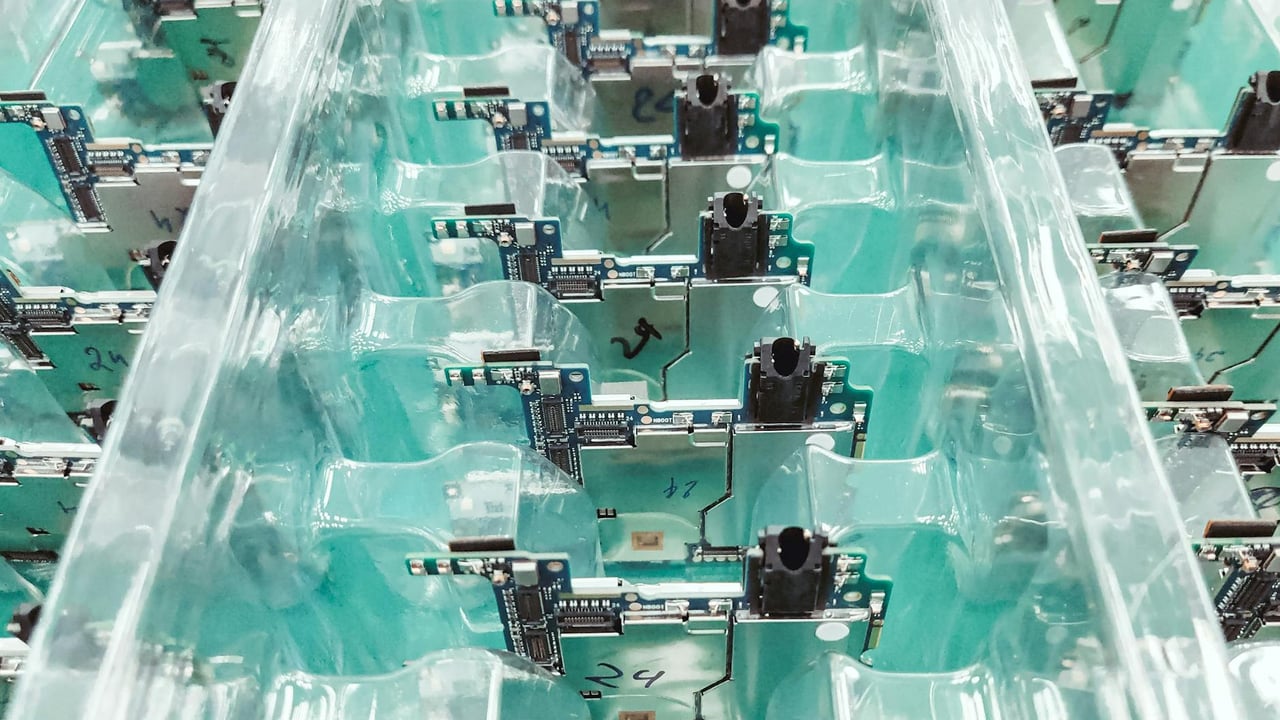

On April 17, a tectonic shift occurred on the Shanghai Stock Exchange as Yuanjie Semiconductor (Yuanjie Technology) saw its share price surge to 1,445 RMB. This rally allowed the niche chipmaker to surpass the perennial market heavyweight, Kweichow Moutai, becoming the highest-priced stock in the A-share market. While Moutai represents China's traditional consumption power, Yuanjie’s ascent highlights the speculative fervor and strategic importance currently surrounding the global AI infrastructure race.
Despite its new crown, Yuanjie remains a David among Goliaths. The company’s 2025 revenue stood at just 601 million RMB, a fraction of the earnings reported by global semiconductor titans. However, in the eyes of investors, Yuanjie is not being valued on its current scale, but on its critical position as a 'heart supplier' for AI data centers. As the industry moves toward 800G and 1.6T high-speed optical modules to feed GPU clusters, the bottleneck has shifted from raw compute to the speed of data transmission.
Traditional copper-based data transmission is hitting physical limits in terms of heat and speed, making optical interconnects the essential infrastructure for the next generation of LLMs. Yuanjie has carved out a strategic niche by breaking the long-standing monopoly held by American and Japanese firms like Lumentum and Broadcom in high-speed EML (Electro-absorption Modulated Laser) chips. By utilizing an Integrated Device Manufacturer (IDM) model, the company controls everything from design to packaging, allowing it to respond rapidly to the supply-demand imbalances currently plaguing the global market.
Yet, the view from the top of the A-share market is often precarious. Historical precedent suggests that companies that overtake Moutai—ranging from ed-tech firms to AI hardware startups—frequently fall victim to the 'Moutai Curse,' experiencing dramatic corrections once the hype cycle cools. With a price-to-earnings ratio exceeding 600, Yuanjie’s valuation arguably prices in several years of flawless execution and uninterrupted growth, leaving little room for error or technical shifts.
Structural risks further complicate the narrative. Yuanjie suffers from acute customer concentration, with its top five clients accounting for over 70% of total revenue. Any pivot in the procurement strategies of major data center operators could lead to immediate financial distress. Furthermore, the rapid evolution of alternative technologies, such as thin-film lithium niobate, poses a constant threat of obsolescence to current laser-based solutions. While Yuanjie has reached the summit of China's stock market, the challenge now lies in proving that its value is as enduring as the premium spirits it has temporarily displaced.