
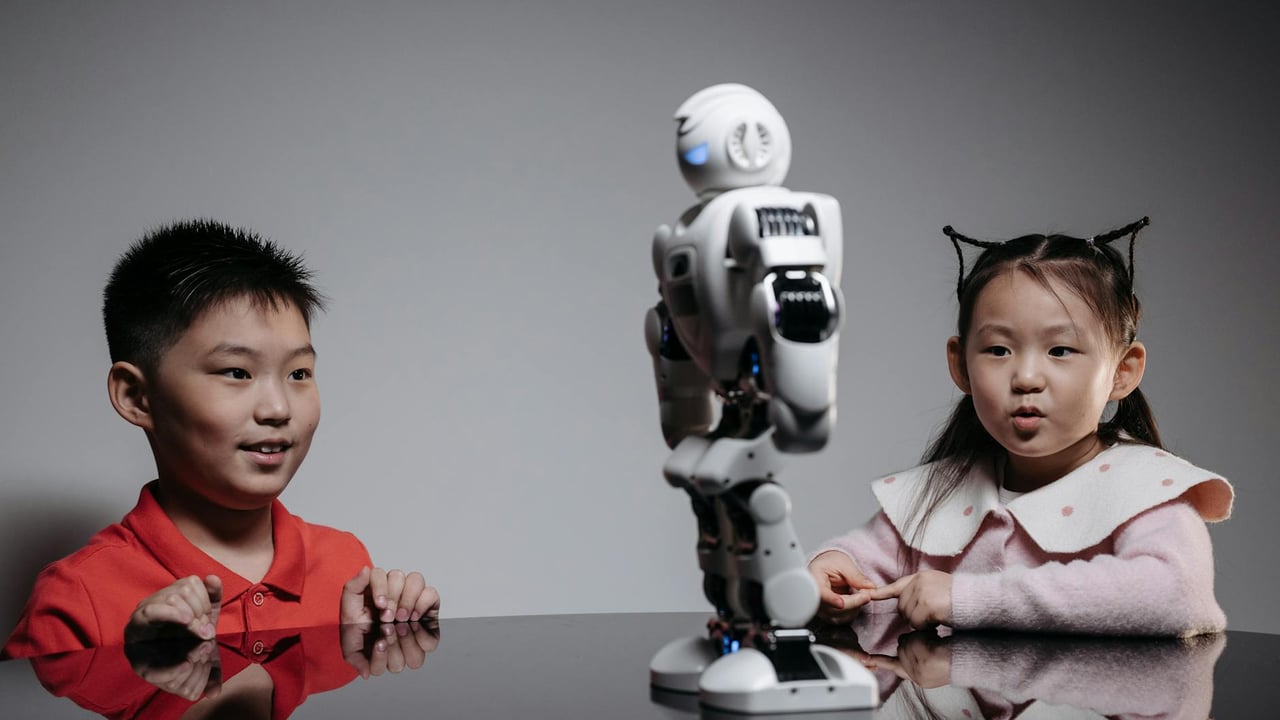

The first Beijing Yizhuang Robot Warrior Challenge concluded on April 18, marking a pivotal moment in the global race for advanced robotics. The Beijing Humanoid Robot Innovation Center’s flagship model, Tiangong 3.0, secured the championship by navigating a series of high-risk obstacles with zero human intervention. This victory underscores a significant shift in Chinese robotics from remote-controlled prototypes to machines capable of independent, real-world decision-making.
While most competitors in the field still rely on manual overrides or pre-programmed scripts, Tiangong 3.0 operated through its proprietary 'Huisikaiwu' general embodied intelligence platform. The robot successfully negotiated complex environments modeled after disaster zones, including swinging pendulums and debris-filled corridors. Unlike its predecessors that required signal-transmitting navigators to lead the way, this new generation utilizes a fused sensor suite of LiDAR, visual cameras, and inertial measurement units to map and react to its surroundings in real-time.
The success of Tiangong 3.0 also challenges a long-standing industry bias that suggests full-sized humanoid robots are inherently less agile than their smaller counterparts. By maintaining stability and precision while clearing obstacles, the 1.6-meter tall robot demonstrated that scale does not necessarily compromise dexterity. This is particularly relevant for the practical deployment of robotics in hazardous industries such as chemical firefighting and earthquake search-and-rescue, where physical stature is necessary to operate human-centric tools and environments.
Beyond the hardware achievement, the event highlighted a growing collaborative ecosystem in Chinese technology. Several university labs, including teams from Hunan University and Renmin University of China, participated by developing secondary applications based on the Tiangong 3.0 interface. This open-platform approach is designed to accelerate the transition from laboratory demonstrations to large-scale industrial application, providing a standardized technical paradigm for the industry at large.
Technological hurdles remain, particularly regarding the latency of perception-to-action loops during high-speed movement. Engineers at the Beijing Innovation Center noted that identifying track lines and maintaining directional stability at a run remain the most difficult challenges for humanoid systems. However, the roadmap for the coming year suggests even bolder ambitions, including a plan for Tiangong to compete in half-marathons without any external guidance or pre-set tracks, signaling that the era of truly autonomous 'embodied AI' is arriving faster than many anticipated.