China’s Robot Sprint: Beijing to Host World’s First Massive Humanoid Half-Marathon

Beijing's Yizhuang district is hosting a groundbreaking half-marathon for over 300 humanoid robots, showcasing China's rapid advancements in bipedal locomotion and its ambition to dominate the global robotics industry by 2027.

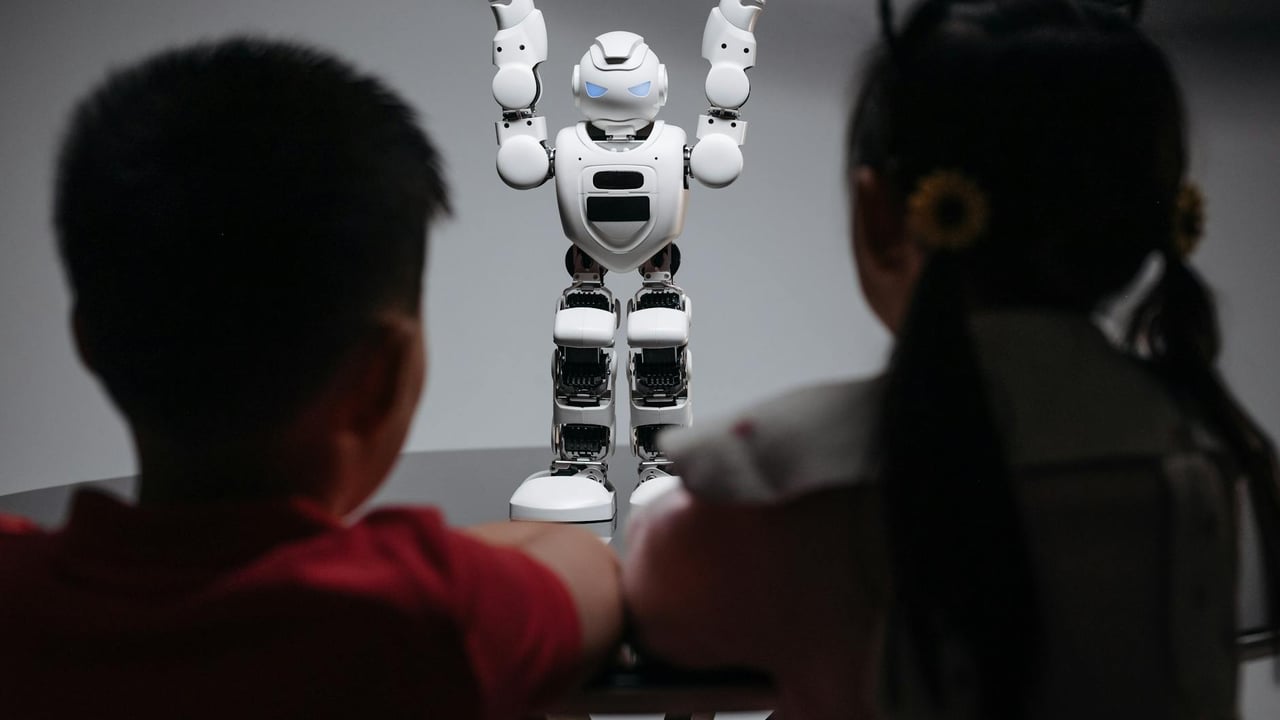
Two children observe a humanoid robot on a table, exploring technology and innovation.

Key Takeaways

  • 1Over 100 teams and 300 humanoid robots will compete in a 21.1km half-marathon in Beijing.
  • 2Major participants include the state-backed Tiangong series and private innovators like Unitree and Honor.
  • 3The event serves as a stress test for endurance, battery life, and autonomous gait control in bipedal machines.
  • 4Beijing Yizhuang is solidifying its role as the national hub for humanoid robot R&D and industrial application.
  • 5Five international teams are participating, indicating an open-door approach to global technological benchmarking.

Editor's
Desk

Strategic Analysis

This event is less about 'sport' and more about industrial policy in motion. China has identified humanoid robots as a 'disruptive technology' equivalent to the smartphone or the electric vehicle. By forcing these machines out of the lab and onto a 21km public road, Beijing is signaling that the era of humanoid prototyping is over and the era of commercial reliability has begun. The participation of a smartphone brand like Honor is particularly telling; it suggests a convergence of consumer AI and hardware robotics that could rapidly lower costs through existing supply chains. While Tesla's Optimus and Boston Dynamics capture headlines in the West, China is leveraging its unique ability to coordinate large-scale public-private 'sandboxes' to iterate on hardware at a speed that Western competitors may find difficult to match.

China Daily Brief Editorial
Strategic Insight
China Daily Brief

On the morning of April 19, 2026, the streets of Beijing’s Yizhuang district will witness a spectacle that sounds more like science fiction than sports. More than 300 humanoid robots from 100 different teams are set to compete in the 2026 Beijing Yizhuang Humanoid Robot Half-Marathon. This event marks a critical milestone in China’s aggressive pursuit of leadership in the global robotics race, shifting the focus from laboratory demos to real-world endurance.

The competition features a high-profile lineup of domestic and international talent. Leading the pack are the 'Tiangong' series robots—developed by the Beijing Humanoid Robot Innovation Center—including the 1.0 Ultra and the latest 2026 models. They will be joined by industry heavyweights like Unitree’s H1 and consumer electronics giant Honor, which is entering the fray with its 'Yuanqizai' and 'Flash' models. These machines must navigate the 21.1-kilometer course, testing the absolute limits of current battery density, gait stability, and thermal management.

Beijing Economic-Technological Development Area, known as Yizhuang, has been designated as the epicenter of this industrial push. By hosting this marathon, the district is positioning itself as a living laboratory for 'new quality productive forces.' The inclusion of five international teams suggests that China is keen to benchmark its progress against global competitors while establishing its own standards for humanoid mobility and autonomous navigation in urban environments.

Running 21 kilometers is an immense physical challenge for humans, but for bipedal robots, it is an engineering nightmare. Maintaining balance over uneven surfaces while managing high-torque servos for hours requires sophisticated edge-computing and AI-driven control systems. The success or failure of these machines on Sunday will serve as a public report card for China’s humanoid robot roadmap, which aims for mass production capabilities by 2027.

Share Article

Related Articles

📰
No related articles found