
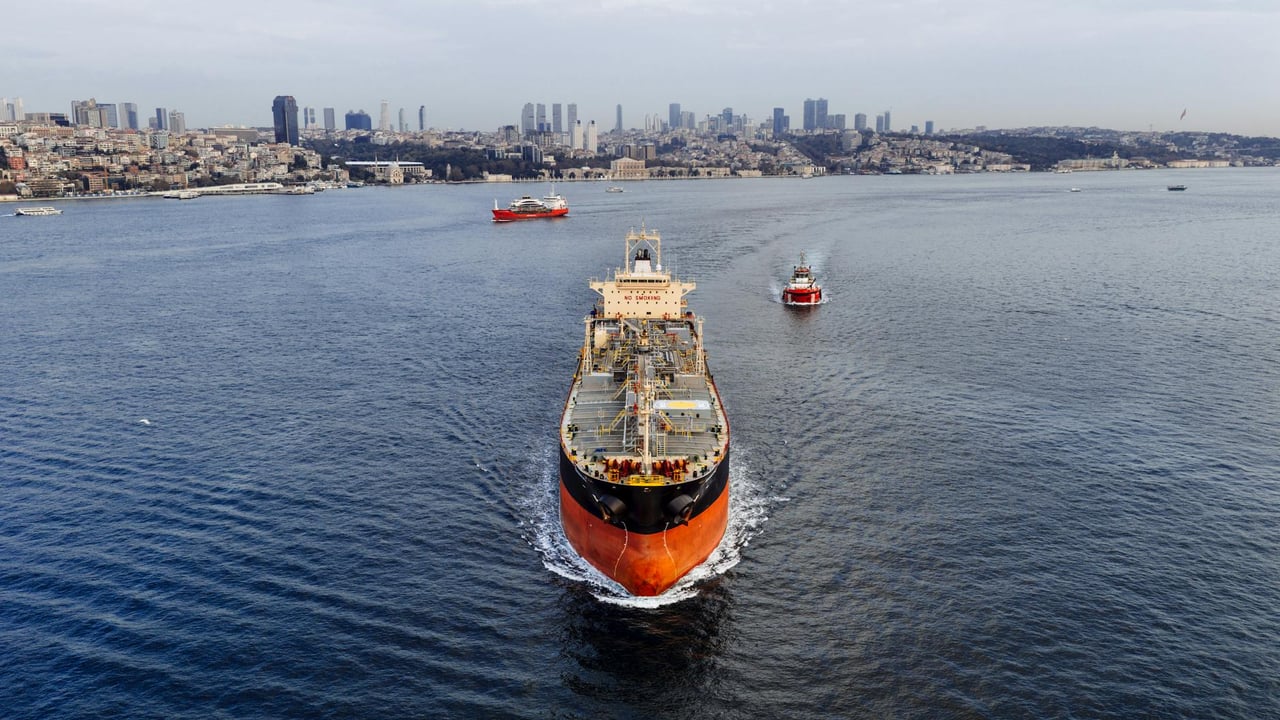

The fragile detente in the Middle East has fractured as Iran abruptly rescinded its decision to keep the Strait of Hormuz open, declaring it will control the vital waterway until the 'end of the war.' This reversal follows a brief moment of optimism where President Donald Trump had thanked Tehran for an initial opening, only to clarify that US-led maritime blockades would remain in place. Tehran’s response was swift and defiant, signaling a return to high-stakes brinkmanship that threatens the jugular vein of global energy markets.
Iran's Islamic Revolutionary Guard Corps (IRGC) has asserted that the Strait will remain closed until the United States lifts its restrictions on Iranian ports and vessels. Senior Iranian officials, including First Vice President Mohammad Reza Aref, have framed the control of the waterway as a sovereign right that they are prepared to defend 'on the battlefield.' This rhetoric is backed by reports from the UK Maritime Trade Operations (UKMTO) of multiple attacks on commercial shipping, including gunfire directed at a tanker and a container ship struck by an unknown projectile near Oman.
In Washington, President Trump has adopted a posture of defiant confidence, dismissing Tehran’s moves as an attempt at 'blackmail' that will ultimately fail. Despite the bellicose atmosphere, Trump suggested that 'very good' dialogues are ongoing and hinted at a possible breakthrough by the end of the day. However, the military reality on the ground tells a more confrontational story. The US Navy is currently orchestrating a massive surge in naval power, potentially moving toward a rare 'three-carrier' deployment in the region with the USS Abraham Lincoln, USS Gerald R. Ford, and USS George H.W. Bush all positioned or en route to the Middle East.
While the threat of kinetic conflict looms, diplomatic back-channels remain active in Islamabad. Pakistan has implemented significant social controls for a ten-day period, a move analysts believe is designed to secure the environment for high-level, secretive negotiations between US and Iranian delegations. These talks appear to be at a critical juncture, with Iran currently reviewing a new proposal from Washington while internal hardliners continue to advocate for increased missile and drone production to maintain leverage.
The global economic implications of a prolonged closure are already manifesting. The International Energy Agency and IATA have warned of a looming aviation fuel crisis, noting that European reserves may only last six weeks if the disruption continues. With oil supply chains at risk, the cost of the standoff is no longer theoretical; it is beginning to impact global logistics, as flight cancellations in Asia serve as a harbinger of potential chaos for Western markets by late May.