
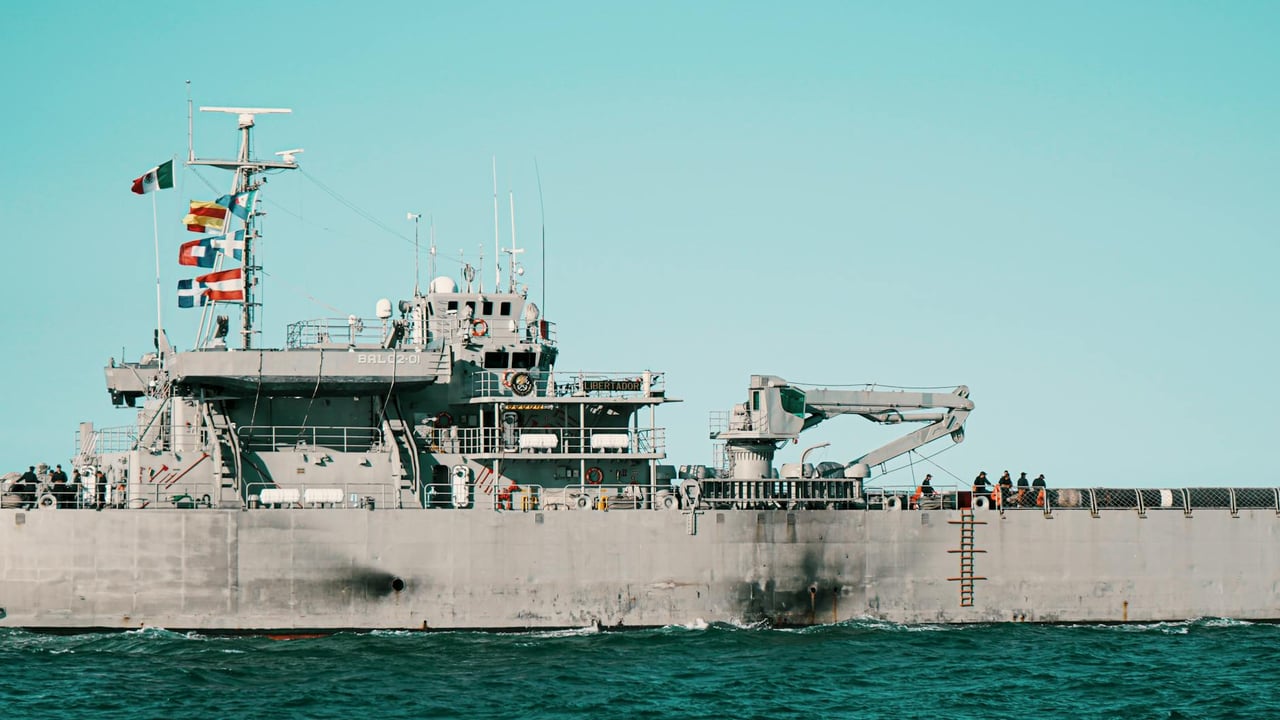

A high-stakes, 20-hour maritime encounter between the People's Liberation Army (PLA) Navy and foreign warships has underscored Beijing's increasingly aggressive posture in contested waters. This prolonged standoff, characterized by continuous monitoring and shadowing, culminated in the 'forceful expulsion' of the foreign vessels, according to accounts circulating in Chinese state-affiliated media. The incident has drawn significant attention from military observers, particularly for the tactical endurance displayed by Chinese crews throughout the nearly day-long engagement.
Retired Taiwanese military officials have noted the technical and psychological significance of the operation, expressing a degree of professional alarm at the PLA’s operational maturity. The ability to maintain high-readiness surveillance for 20 consecutive hours indicates a sophisticated command-and-control structure and a high level of logistical confidence. This is not merely about a single ship-to-ship encounter; it is a demonstration of the PLA Navy’s transition from a defensive coastal force to a proactive maritime power capable of sustained friction.
For international observers, the duration of the engagement is the most telling detail. While brief shadowing is common in the South China Sea and Taiwan Strait, a 20-hour 'entanglement' suggests a deliberate strategy of attrition and psychological pressure. By refusing to break contact, Beijing is signaling that it possesses both the assets and the political will to challenge the presence of 'external forces' in what it considers its sovereign maritime domain.
This incident fits into a broader pattern of 'gray zone' tactics where the PLA seeks to normalize its presence and dominance without crossing the threshold into kinetic conflict. As these encounters become more frequent and prolonged, the risk of miscalculation increases. However, from Beijing's perspective, these operations serve as vital real-world training and a powerful domestic signal of national strength and territorial integrity.