Folding Into the Future: China’s Agibot Solves the Portability Problem for Humanoid Robots

Agibot has unveiled the Yuanzheng A3, a humanoid robot capable of folding itself into a shipping container via a one-click remote command. This improvement over manual packaging methods significantly lowers the logistical barriers to deploying and showcasing humanoid hardware across different markets.

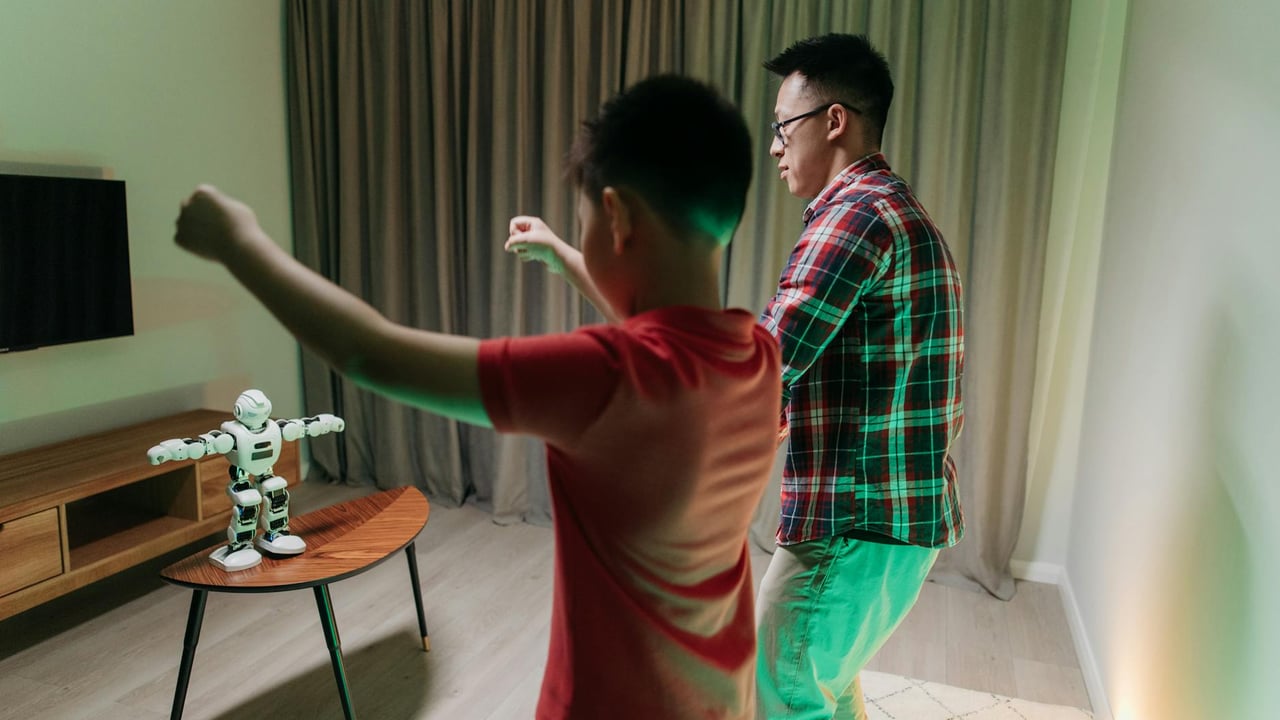
Father and son bonding by dancing with a robotic companion in their living room.

Key Takeaways

  • 1Agibot (Zhiyuan) debuted the Yuanzheng A3 humanoid robot at its 2026 partner conference.
  • 2The A3 features an automated sitting-posture self-packaging capability, a significant upgrade from the manual lying method of previous models.
  • 3The advancement targets the logistical friction of the robotics industry, making it easier for leasing and distribution partners to move units.
  • 4This feature allows a single operator to prepare the robot for transport, reducing labor costs and shipping volume.

Editor's
Desk

Strategic Analysis

The self-packing feature of the Yuanzheng A3 serves as a microcosm of the broader Chinese strategy in the humanoid robotics race: prioritizing commercialization and logistical frictionlessness. While technical benchmarks like degrees of freedom or sensor accuracy are standard metrics, the ability to rapidly deploy and relocate hardware is what will ultimately determine the commercial viability of robotics-as-a-service (RaaS). By streamlining the 'dead time' of transport and setup, Agibot is positioning itself to lead in the middle-market segment where operational cost-efficiency outweighs experimental agility. This signals that the Chinese humanoid sector is moving beyond the laboratory phase and into a high-volume distribution model.

China Daily Brief Editorial
Strategic Insight
China Daily Brief

At the 2026 Agibot Partner Conference, a curious sight greeted attendees: a humanoid robot that effectively packs itself. The Yuanzheng A3, the latest iteration from the Shanghai-based robotics firm, demonstrated an automated folding sequence that allows it to collapse into a compact shipping container with minimal human intervention. This seemingly minor feature addresses one of the most persistent headaches in the robotics industry—the logistical nightmare of transporting fragile, heavy bipedal machines.

Unlike its predecessor, which required a team of technicians to manually position and secure the unit in a prone state, the A3 utilizes a refined sitting-posture packaging scheme. By using a remote trigger, the robot can transition from a standing position to a folded state, significantly reducing the package's physical footprint and the labor costs associated with deployment. This optimization is crucial for Agibot’s ambitions to scale, as it allows channel partners and leasers to move the hardware between demonstration sites and factories with ease.

The development of the Yuanzheng A3 highlights a shift in the Chinese robotics sector from pure mechanical capability to operational efficiency. While many global competitors focus on the physical feats of backflips or complex navigation, Agibot is pivoting toward the essential realities of the supply chain. Making robots easier to ship and store is a prerequisite for the mass adoption that Beijing envisions as it pushes to become a global leader in humanoid technology by the end of the decade.

Share Article

Related Articles

📰
No related articles found