
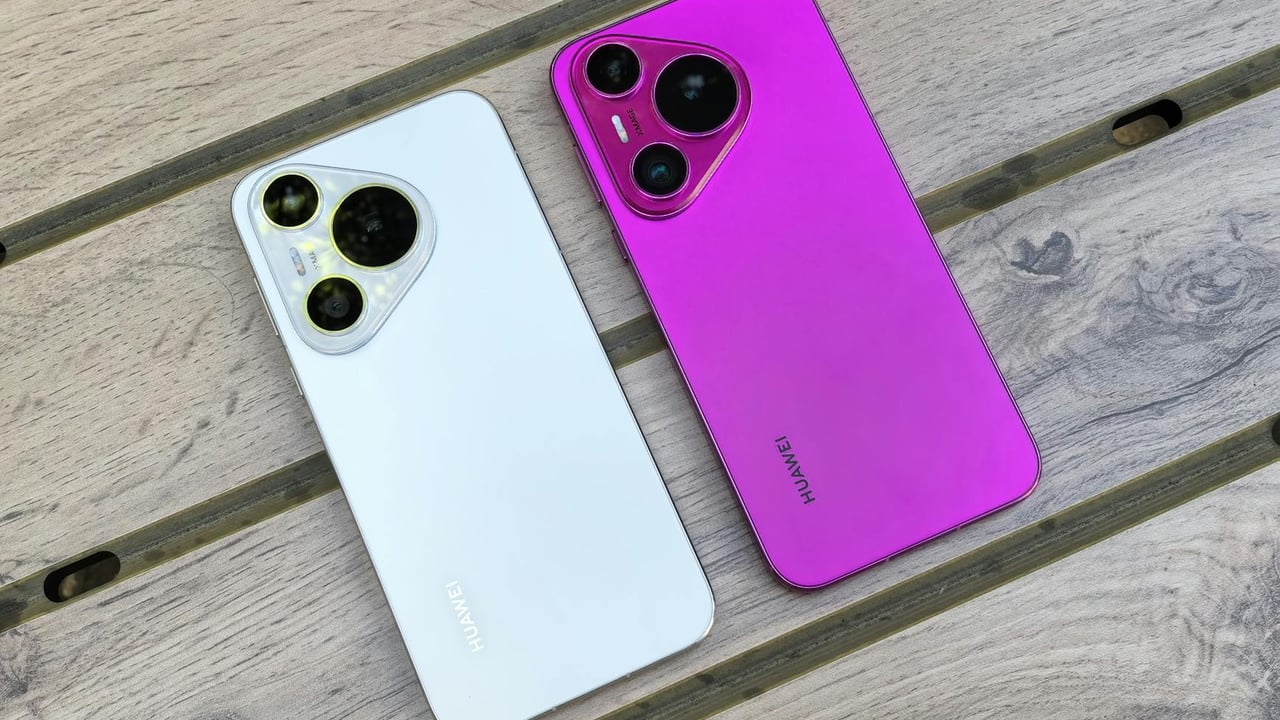

Huawei’s strategic push to redefine the global smartphone landscape reached a new milestone on April 20, 2026, as Executive Chairman Richard Yu unveiled the Pura 90 series and the Pura X Max. These flagship launches serve as the primary vehicles for HarmonyOS 6.1, the latest iteration of Huawei’s proprietary operating system. Beyond mere hardware updates, the announcement signals Huawei's intent to transcend the traditional role of a handset manufacturer and establish itself as a dominant ecosystem architect.
The scale of Huawei’s software ambition is becoming increasingly difficult for global competitors to ignore. According to Yu, the number of devices running HarmonyOS 6 has now surpassed 55 million. This rapid adoption is essential for Huawei’s survival in a post-sanction era, where the company must achieve a critical mass of users to sustain a third-party developer ecosystem capable of rivaling Google’s Android and Apple’s iOS. By moving toward a tri-polar market structure, Huawei is effectively insulating itself from Western software dependencies.
A central feature of this new rollout is the transition from reactive to proactive artificial intelligence. The new 'Companion AI' (Xiaoyi) represents a system-level integration that moves away from the 'ask-and-answer' model. Instead, the AI directly participates in task execution by anticipating user needs in high-frequency scenarios like travel, scheduling, and reading. This evolution from 'tool' to 'assistant' is part of a broader industry trend, but Huawei’s ability to bake these capabilities directly into the kernel of HarmonyOS provides a distinct performance advantage.
On the hardware front, the Pura X Max introduces a 'Broad Fold' (阔折叠) form factor, a strategic attempt to resolve the identity crisis facing vertical foldable phones. By combining the portability of a flip phone with the screen real estate of a larger device, Huawei aims to escape the 'straight-screen replacement' trap that has led some competitors to pause their foldable iterations. This hardware differentiation, coupled with deep integration of Chinese 'super-apps' like WeChat and Douyin, underscores Huawei's strategy to win the domestic market through localized innovation that Western rivals struggle to match.