
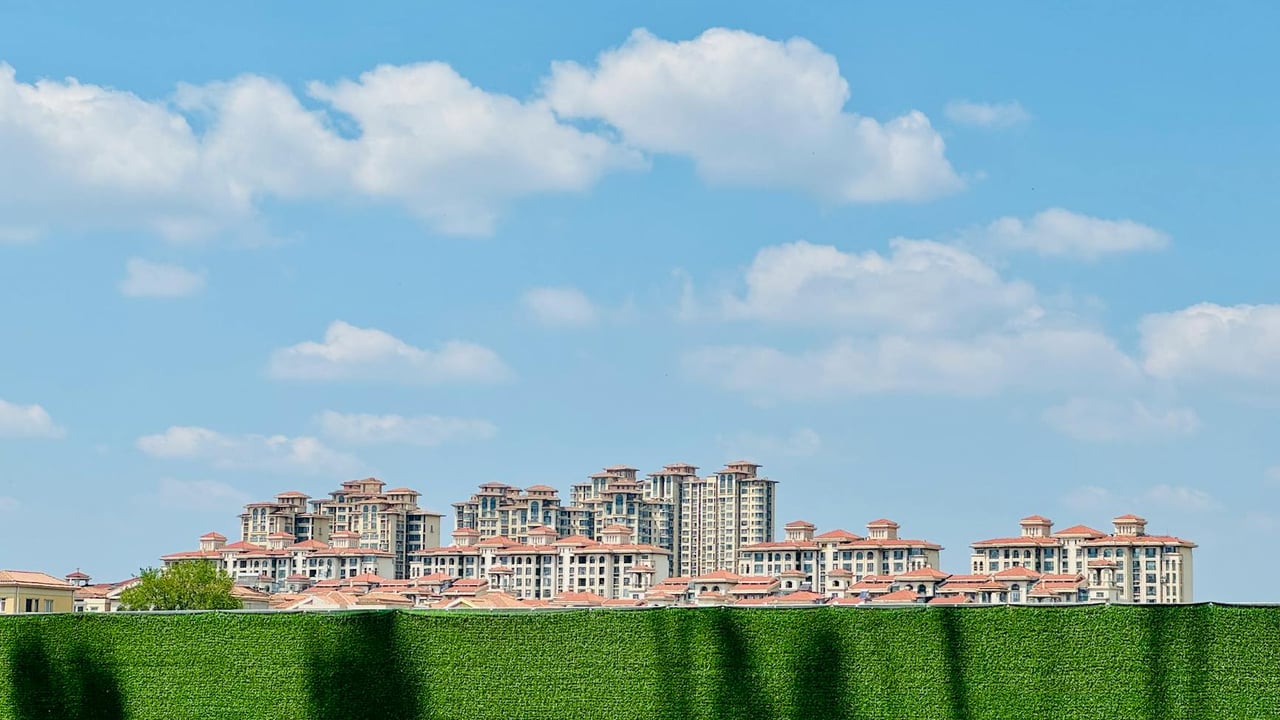

China’s real estate market is witnessing a long-awaited 'Little Spring' recovery. Recent data from the National Bureau of Statistics for March 2026 indicates that secondary housing prices in the four tier-one cities—Beijing, Shanghai, Guangzhou, and Shenzhen—have finally pivoted from decline to growth. In Shanghai, transaction volumes reached a five-year high for the period, signaling a tentative return of confidence among both first-time buyers and those seeking upgrades.
However, this broad recovery masks a profound and permanent shift in the sub-sector that once served as the crown jewel of Chinese real estate: 'Xuequfang,' or school district housing. The market is now defined by an extreme divergence. While a handful of elite properties near top-tier schools in Beijing’s Haidian or Shanghai’s Jing’an districts have stabilized, the vast majority of ordinary school-affiliated housing remains in a deep freeze, with prices struggling at levels far below their historical peaks.
This marks the end of an era. At the height of the frenzy in 2021, parents desperate for elite education drove prices for dilapidated, forty-square-meter apartments to over 150,000 RMB per square meter. These properties were viewed not as homes, but as high-yield investment vehicles that guaranteed entry into the social elite. Today, that logic has been shattered by a combination of aggressive policy intervention and a demographic shift that the Ministry of Education can no longer ignore.
Government efforts to equalize education have effectively decoupled property ownership from guaranteed school placement. New policies, including 'multi-school zoning' and mandatory teacher rotations, ensure that buying a specific apartment no longer secures a spot at a specific school. With the Ministry of Education now requiring that 20% of backbone teachers rotate annually, the 'quality gap' between schools is narrowing by design, eroding the massive price premiums once attached to 'elite' postcodes.
Even more consequential is the demographic cliff. China’s annual births have plummeted from nearly 18 million in 2016 to just over 8 million in 2024. As the student population shrinks, the scarcity that once fueled the Xuequfang bubble has evaporated. In many districts, the problem is no longer a shortage of seats, but a surplus of schools. This supply-demand reversal ensures that the astronomical price surges of the past are unlikely to ever return, as the pool of competing parents continues to contract.
For the modern Chinese middle class, the 'Little Spring' is not a call to speculate, but a window for rational consumption. The market is transitioning from an investment-driven model to one focused on 'living attributes.' While top-tier locations may retain value as defensive assets, the days of the school district apartment as a 'sure-fire' wealth generator have officially concluded. Real estate in China is finally returning to its fundamental purpose: providing a place to live, rather than a ticket to the Ivy League.